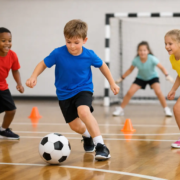

A lot of parents ask the question only after a missed season, a birthday, or a sideline comparison: when should kids start soccer? The honest answer is earlier than many people think for movement, but later than many people think for serious training. Soccer development is not one start line. It is a progression, and the right entry point depends on what your child needs right now.

Some kids are ready for structured movement games at 2 or 3. That does not mean they need intense drills, travel competition, or pressure to perform. It means they can begin learning how to move, listen, balance, react, and enjoy the ball. Other kids may not touch organized soccer until 6, 8, or even 10 and still develop into strong players if the environment is right. The key is not starting as early as possible. The key is starting appropriately.

When should kids start soccer by age?

If you want the shortest answer, most kids can start soccer exposure between ages 2 and 4, and most are ready for more teachable, skill-based group training between 5 and 7. That split matters.

At ages 2 to 4, the goal is not soccer mastery. It is athletic literacy. Can your child run, stop, change direction, hop, follow simple instructions, and stay engaged for short bursts? A quality early program uses the ball as a tool for coordination, confidence, and focus. The best sessions feel active and structured without becoming rigid.

From 5 to 7, kids usually become far more coachable. They can repeat movements with purpose, begin understanding space, and connect technique to outcome. This is often the sweet spot for building clean fundamentals before bad habits settle in. It is also the age when many parents start to notice whether their child simply likes soccer or wants more from it.

By 8 to 10, technical development becomes more urgent. Players can still start and succeed, but the training should be more intentional. First touch, dribbling mechanics, striking, body control, and game awareness all matter more now because peers who started earlier may already have a base.

Starting at 11 or older is still possible, but the path changes. A late starter can improve quickly with disciplined coaching, repetition, and a strong athletic profile. Still, there is less time to build instinctive comfort on the ball. That does not close the door on progress. It just raises the value of smart training.

What matters more than age

Parents often focus on birthdays because they are easy to measure. Coaches look at readiness.

A child is usually ready to begin some form of soccer if they show three basic traits: they can participate in a group for part of a session, they enjoy movement, and they respond to simple coaching. If one of those is missing, the answer is not always to wait a year. Sometimes it means choosing a better format.

That is where many families get it wrong. They put a 3-year-old into a program built for 6-year-olds, or they put a beginner 9-year-old into an environment that assumes years of technical repetition. The result is frustration, not because the child started at the wrong age, but because the training load did not match the developmental stage.

Good soccer development respects sequencing. First comes body control, rhythm, and confidence. Then comes cleaner technique. Then faster decisions under pressure. Then higher-level tactical understanding. Skip steps, and progress slows down.

The best age to start soccer depends on the goal

There is a difference between starting soccer for fun, starting for skill development, and starting for competitive advancement.

If the goal is enjoyment, social development, and early coordination, ages 2 to 4 work well in the right setting. Sessions should be short, energetic, and built around movement patterns, not lectures. Kids this age need engagement and repetition, but they also need freedom to explore.

If the goal is building a strong technical base, 5 to 7 is often the ideal window. Players can absorb coaching while still being young enough to form habits early. This is where disciplined repetition starts to pay off. The touch gets cleaner, the posture improves, and the player starts connecting what they do in training to what happens in games.

If the goal is long-term competitive development, there is no single perfect age, but there is a clear principle: start structured training before the teenage years if possible. Technical quality is hardest to build late. Athleticism can improve later. Speed can improve later. Strength can improve later. But real comfort on the ball is best developed over time.

Signs your child is ready now

Parents do not need to guess blindly. A few signs usually tell you whether this is the right moment to begin.

Your child may be ready for soccer if they naturally chase a ball, like active games, ask to play, or stay engaged in a class for 30 to 45 minutes. Readiness also shows up in small behaviors: they can take turns, recover from mistakes without shutting down, and follow one- or two-step directions.

Just as important, look at emotional readiness. Some children love movement but freeze in group environments. Others are technically capable but become frustrated quickly. Neither issue means soccer is a bad fit. It means the first program should be selected carefully. A strong developmental environment builds confidence first, then intensity.

Common mistakes parents make

One mistake is believing earlier always equals better. Early exposure helps, but only if the coaching matches the child. Random play and age-appropriate instruction can be excellent at 3 or 4. High-pressure competition is usually not.

Another mistake is waiting too long because a child did not start at preschool age. Parents sometimes assume they missed the window by 8 or 9. They have not. What matters is training quality, consistency, and fit. A focused beginner in the right environment can make serious gains fast.

The third mistake is confusing games with development. Weekend games can be fun and useful, but games alone rarely build technical precision. Young players need touches, repetition, correction, and progressive challenges. If the goal is measurable improvement, the training environment matters as much as the roster or league.

How training should change as kids grow

Ages 2 to 4

This stage should emphasize coordination, balance, listening, and comfort with the ball. Coaching should be energetic and clear. The session should move quickly. If kids are standing still for long stretches, the format is wrong.

Ages 5 to 7

This is a prime window for technical foundation. Players can start learning proper dribbling surfaces, turning mechanics, striking form, and basic 1v1 confidence. They still need fun, but the structure should be more deliberate.

Ages 8 to 12

Now the details matter more. Players can handle correction, repetition, and more advanced problem-solving. This is a major development phase for technical speed, awareness, and decision-making under pressure.

Ages 13 and up

Players who start here need targeted work. The training should identify gaps quickly and attack them with purpose. At this age, progress usually depends on intensity, consistency, and honest evaluation.

When should kids start soccer if they seem serious?

If your child is showing real commitment, start structured development as soon as they are ready to receive coaching and repeat movements with focus. For many players, that means around 5 to 7. Serious does not mean overscheduled. It means the work becomes intentional.

That usually includes age-appropriate technical training beyond just games, coaching that emphasizes detail, and a progression model that gets more demanding over time. In a serious development setting, players are not just kept busy. They are taught how to improve.

This is where parents should think long term. A player does not need to be elite at 6. But if they love the sport, they do need a clear environment where habits, confidence, and skill can compound. That kind of structure is what separates participation from development.

The right start is the one that leads to progress

The best answer to when should kids start soccer is simple: start when the child is developmentally ready for the right level of structure, then place them in an environment that matches their stage. For some families, that means beginning with movement-based classes at 2 or 3. For others, it means starting focused technical work at 6, 8, or later.

What matters is not winning the race to start first. What matters is building the base correctly. When training is age-appropriate, challenging, and consistent, players grow with confidence. And once that foundation is in place, progress tends to accelerate.

The first three steps decide more plays than most players realize. Not top speed. Not fancy footwork in warmups. Acceleration is what wins the race to a loose ball, creates the half-yard to beat a defender, and turns a defensive recovery run into a clean tackle. If you want to know how to improve soccer acceleration, start by understanding that this is not just about running harder. It is about producing force quickly, in the right body position, at the exact moment the game demands it.

That matters for young players and serious competitive athletes alike. A fast 30-yard sprint time means very little if your first step is slow, your posture rises too early, or you cannot react under pressure. Soccer acceleration is a blend of mechanics, strength, stiffness through the ankle and foot, and decision-making speed. Train only one piece, and progress usually stalls.

How to improve soccer acceleration on the field

The biggest mistake players make is training acceleration like track speed. Soccer is rarely a clean straight-line sprint from a perfect start. Most accelerations begin after a shuffle, a cut, a deceleration, or a split-second visual cue. That means field speed has to be trained with context.

A better approach is to build acceleration in layers. First, clean up sprint mechanics so the body can project force forward. Then develop the strength and power to make those mechanics useful. After that, add reactive and soccer-specific work so acceleration shows up in matches, not just in testing.

For younger players, this process should stay simple and highly coached. They need posture, coordination, and rhythm before heavy strength loading. For older players, especially those chasing higher-level competition, measurable progress matters more. If the first five yards are not improving, training needs to change.

Start with body position

Acceleration begins with angles. In the first steps, players need a forward lean from the ankles, not a bend at the waist. The shin angle should roughly match the torso angle so force goes backward into the ground and the body drives forward. When players pop upright too early, they lose projection and waste the most important part of the sprint.

Arm action matters more than most athletes think. Strong, direct arm swings help create rhythm and force through the lower body. Loose or side-to-side arms usually come with poor timing and shorter, weaker steps. This is one reason some players look like they are working hard but still do not separate.

Step length is another area where players get it wrong. Overstriding in the first steps slows acceleration because the foot lands too far in front of the body. Better acceleration comes from powerful, compact pushes into the ground. Early steps should be aggressive, not long.

Strength is the engine behind acceleration

If mechanics are the blueprint, strength is the engine. Players who cannot produce force into the ground will always have a lower ceiling for acceleration, no matter how many sprint drills they do.

This does not automatically mean heavy barbell work for every age. It depends on training age, movement quality, and stage of development. A 10-year-old may improve most through bodyweight strength, skipping patterns, and med ball work. A 16-year-old serious about performance may need a more advanced strength program built around squats, split squats, hinges, and loaded jumps.

The goal is not bodybuilding. The goal is relative force production – getting stronger in ways that transfer to faster movement. Single-leg strength is especially valuable in soccer because acceleration happens one leg at a time. Split squats, step-ups, and lateral strength variations can help players produce force while staying balanced and efficient.

Posterior chain strength matters too. Glutes and hamstrings drive projection. Weakness there often shows up as short push phases, upright mechanics, or repeated soft-tissue issues when sprint volume rises. If a player wants better acceleration but avoids lower-body strength work, progress will stay limited.

Train the ankle and foot, not just the big muscles

Elite acceleration is not only about quads and glutes. The foot and ankle complex helps transfer force into the ground quickly. Players with poor stiffness through the lower leg often look delayed off the line. They are pushing, but the energy leaks.

That is why pogo jumps, low-level plyometrics, snap-downs, and controlled landing work can matter. These drills teach the body to handle force and redirect it fast. For youth players, this can be a major missing piece because traditional team training often skips it.

There is a trade-off here. More plyometric work is not always better. If landing mechanics are poor or the player is already carrying fatigue from team sessions, quality drops quickly. Acceleration training should leave the nervous system sharp, not fried.

How to improve soccer acceleration with the right drills

Good drills are simple enough to coach and specific enough to transfer. That usually means fewer fancy cones and more work that reinforces projection, intent, and reaction.

Wall drives are excellent for teaching angles and force direction. Falling starts help players feel what it means to project forward instead of stepping up and down. Sled pushes or light resisted sprints can improve first-step mechanics if the load is light enough to preserve proper posture. Heavy resistance has a place, but if the movement looks nothing like sprinting, transfer drops.

Short accelerations of 5 to 15 yards should be a staple. That is the zone where many decisive soccer actions happen. These reps need full intent and enough rest to stay fast. Conditioning-style sprint sets often ruin acceleration quality because fatigue changes mechanics.

Reactive starts matter just as much. A player should practice accelerating from different positions – split stance, lateral stance, backpedal, crossover, and after a quick deceleration. Add visual or verbal cues so the body learns to organize speed under pressure. This is where game speed starts to appear.

For advanced players, technology can sharpen this process. Timed sprint gates, reaction tools, and systems that measure foot speed and decision-making help remove guesswork. Data is useful because it shows whether the work is producing actual change, not just sweat.

Deceleration makes acceleration better

This is one of the most overlooked truths in player development. A player who cannot stop efficiently will struggle to re-accelerate efficiently. Soccer is constant braking and restarting.

Better deceleration improves body control, lowers injury risk, and creates cleaner exits into the next sprint. Teach players to drop their center of mass, use the hips, and absorb force under control. Then connect that stop to a new acceleration. The sharper the braking pattern, the cleaner the re-acceleration can become.

This is especially important for wingers, outside backs, and central midfielders who change speed and direction constantly. Straight-line sprint training helps, but it is incomplete on its own.

Common reasons acceleration stops improving

Sometimes the issue is not effort. It is programming.

One common problem is doing speed work when the player is already exhausted. Acceleration training belongs near the start of a session, after a thorough warmup, when the nervous system is fresh. If it comes after conditioning or long technical blocks, quality usually drops.

Another issue is too much volume. Players often think more reps equal more speed. In reality, acceleration improves through high-quality exposures, not endless tired sprints. Stop the set when mechanics or times start to fade.

The third issue is a lack of progression. If drills never change, resistance never increases, and performance is never measured, players plateau. Serious development requires structure. That means building from mechanics to force production to reactive game transfer over time.

Sleep, nutrition, and overall workload matter too. Youth players balancing school, club training, games, and extra sessions can hit a ceiling simply because recovery is too poor to adapt. Discipline includes rest.

What parents and players should focus on first

If you are a parent of a younger athlete, prioritize movement quality before chasing advanced speed methods. Look for coaching that teaches posture, rhythm, landing control, and coordination. Early acceleration gains often come from learning how to move well.

If you are a serious middle school or high school player, ask a harder question: does your current training actually measure speed development? If not, you may be working hard without a clear return. Acceleration improves fastest in an environment where coaching, strength, and reaction training are connected instead of treated as separate pieces.

That is why high-performance settings matter. A professional indoor environment, trained coaches, and tools that track movement quality can compress the learning curve. At Soccer Field Academy, that performance model is built around measurable development rather than random effort, which is exactly what ambitious players need when the goal is real separation on the field.

Acceleration is not a gift reserved for naturally fast athletes. It is a trainable quality. The players who improve it most are usually the ones who respect the details – body angles, strength, reaction time, recovery, and consistency. Grind on those details long enough, and your first step stops looking ordinary.

A player’s first touch tells you a lot. So does the way they accelerate to a loose ball, turn under pressure, or stay composed when space disappears. The best soccer drills for kids are not the ones that look flashy on social media. They are the ones that build repeatable habits – clean technique, quick decisions, and confidence that carries into real games.

For parents and coaches, that distinction matters. A fun session is useful. A developmental session is better. The right drills should match the player’s age, attention span, and current level, while still demanding concentration and execution. That is how young players improve with purpose instead of just burning energy.

What makes the best soccer drills for kids actually work

A strong youth drill does three things at once. First, it gives players a high number of quality repetitions. Second, it forces them to solve a simple problem, not just perform a movement in isolation. Third, it can be scaled up or down depending on age and ability.

That last point is where many sessions fail. A 6-year-old does not need the same complexity as a 14-year-old academy player. Younger players need shorter work periods, more touches, and clear visual targets. Older players can handle tighter spaces, faster transitions, and more decision-making under pressure.

If you are choosing drills for home, team training, or supplemental technical work, think in categories. You want activities that train ball mastery, dribbling, passing, finishing, speed of play, and awareness. A balanced development plan is always stronger than repeating the same cone pattern every week.

12 best soccer drills for kids by skill area

1. Ball mastery box

Set up a small square and keep each player inside it with a ball. The objective is simple – constant touches with different surfaces of the foot. Use inside-inside, outside-outside, sole rolls, toe taps, pull-push moves, and scissors.

This drill is foundational because it builds comfort on the ball without the pressure of defenders. For younger kids, keep the commands simple and the intervals short. For advanced players, demand eyes up, changes of speed, and weak-foot repetition.

2. Red light, green light dribbling

This is one of the best early-stage dribbling drills because it teaches acceleration and control at the same time. Players dribble forward on green, stop the ball on red, and perform a turn or skill move on yellow.

It feels like a game, which helps younger players stay engaged. But it also teaches something serious – how to slow down without losing possession and how to explode again on command.

3. Gates dribbling

Scatter small cone gates across the space. Players dribble through as many gates as possible in a set time. You can assign points, require specific turns after each gate, or limit touches between gates.

This drill trains scanning. Players cannot stare at the ball and succeed for long. They have to look up, find space, and adjust their path. That game-awareness element is what turns a simple dribbling drill into a better developmental tool.

4. 1v1 attack and defend

If a player never trains 1v1 situations, their game will plateau. Set up a short channel or small grid. One player attacks, one defends, and the attacker tries to beat the defender under control.

This is where confidence gets tested. Attackers learn timing, deception, and change of direction. Defenders learn body shape, patience, and angle control. For younger kids, keep the space larger so they have success. For older players, shrink the area and increase pressure.

5. Passing triangles

Three players, one ball, constant movement. Pass and follow your pass, or pass and check to a new angle. Start with two-touch play, then progress to one-touch when technique allows.

This is one of the most efficient passing drills because it teaches weight of pass, first touch, and body positioning. It also introduces rhythm. Good players do not just complete passes. They prepare the next action before the ball arrives.

6. Wall passing and receive across body

A rebounder, wall, or partner can be used here. The player passes, receives with the back foot, and plays the next touch into space. Repeat on both feet.

This drill looks basic, but it develops a high-value habit. Receiving across the body creates cleaner exits from pressure and better passing angles. That matters as the game gets faster and defenders close space earlier.

7. Small-sided possession games

A 3v3 or 4v4 possession game is one of the best soccer drills for kids because it teaches nearly everything at once – spacing, support, scanning, pressing, and transitions. Use a tight grid and give players a target number of passes or mini-goals to find.

There is a trade-off here. Small-sided games are excellent for realism, but only if players already have enough technical quality to function in them. If the level is too low, the session can become chaotic. In that case, reduce the pressure and build the technical base first.

8. Finishing from different angles

Set up balls at the top of the box, wider channels, or central lanes. Players receive, take a touch, and finish quickly. Then vary it – one-touch finishes, weaker foot, finishes after a dribble, or shots after a turn.

Young players often love shooting, but they need structure if finishing is going to improve. Repetition matters, but so does the quality of the service and the type of finish being trained. A striker’s development depends on more than power. Balance, body shape, and decision-making are part of every finish.

9. Reaction sprint and ball chase

Players start in an athletic stance. On a visual or verbal cue, they sprint to a loose ball, win it, and attack a cone gate or mini-goal. You can add a defender for older players.

This drill connects speed to soccer, which is critical. Straight-line sprinting has value, but the game is built on reaction, first-step explosiveness, and the ability to execute immediately after acceleration.

10. Shadow play for turns and escapes

In a small area, have players dribble toward pressure and perform a specific turn – inside hook, outside cut, Cruyff, pullback, or drag turn. Then accelerate away.

The key here is not just the move. It is the exit. Many young players can perform a turn slowly in open space. Far fewer can escape with intent after the turn. Training that second action is what makes the move useful in matches.

11. Rondos for awareness

A basic 4v1 or 5v2 rondo can be excellent for older or more advanced kids. It develops quick passing, first-touch quality, defensive pressing habits, and composure under pressure.

This drill is not ideal for every age group. For younger players or beginners, it can become frustrating if the technical gap is too large. But for players who already have a base level of passing quality, rondos sharpen the mind as much as the feet.

12. Small-sided game with conditions

End with a game, but make the game teach something. You might require three passes before scoring, award extra points for weak-foot goals, or count only goals that come after a successful 1v1 move.

This is where training transfers. Players need chances to apply the skill in a live environment. Without that final bridge to the game, drills can become isolated and less meaningful.

How to choose the right drills by age

For ages 2 to 5, keep the session simple, visual, and movement-heavy. At that stage, the goal is coordination, comfort with the ball, and basic listening skills. Drills should feel like guided play with structure, not rigid technical correction.

For ages 6 to 9, introduce more repetition and clearer technique standards. Players can begin to understand inside and outside touches, passing mechanics, dribbling under control, and basic 1v1 actions. This is a prime window for building confidence and habits.

For ages 10 to 13, the best drills include more pressure and more decisions. Players should not just perform skills. They should use them to solve realistic problems. Receiving under pressure, combining with teammates, and transitioning quickly become far more important.

For ages 14 to 18, intensity and detail matter. The best sessions train execution at speed, positional understanding, and technical consistency under fatigue. At that level, every drill should connect to game performance, not just isolated repetition.

Why repetition alone is not enough

Parents often ask how often a child should train. The better question is how well they train. Two focused sessions with coaching detail can outperform four unstructured sessions full of careless repetitions.

Quality coaching changes everything. A drill becomes more effective when the coach corrects body shape, first touch direction, scanning habits, and tempo. Measurable feedback matters too. Players improve faster when they can see progress in speed, reaction time, passing accuracy, or technical execution rather than guessing whether training is working.

That is why serious development environments stand out. At Soccer Field Academy, the difference is not just that players work hard. It is that the work is structured, age-appropriate, and tied to clear progression.

Building a better training week

A strong weekly plan does not need to be complicated. For most kids, one ball mastery day, one passing and receiving day, one finishing or 1v1 day, and one small-sided game day creates a solid base. More advanced players can add speed, cognitive reaction work, and position-specific details.

The key is consistency without overload. If a player is mentally flat or physically fatigued, more volume is not always the answer. Sometimes the best adjustment is a shorter, sharper session with higher concentration and better execution.

The best soccer drills for kids do more than keep players busy. They build technique that holds up under pressure, decision-making that shows up in matches, and confidence that comes from real progress. If a drill does not move a player toward those outcomes, it is probably not worth much no matter how entertaining it looks. Train with purpose, demand quality, and let improvement be visible.

One hard truth in player development is that talent fades fast when training is seasonal. A player who works for eight weeks in the summer and then disappears for months is not on a real development path. Year round soccer training gives young athletes something far more valuable than short-term sharpness – it builds technical habits, decision-making speed, physical readiness, and confidence that hold up across an entire season.

For parents, this matters because progress is easier to see when training is consistent. For players, it matters because the game keeps getting faster. If a player wants cleaner touches, better movement, stronger 1v1 play, and more confidence under pressure, the answer is not random extra sessions. It is a structured year-round plan.

What year round soccer training actually means

Year round soccer training does not mean going full intensity every month of the year. That is where many families get it wrong. Serious development is not constant overload. It is intelligent progression.

A strong training calendar changes emphasis as the year moves. During one stretch, the focus may be technical repetition and correcting movement patterns. In another, it may shift toward speed, power, and game realism. For younger players, it may center on coordination, ball mastery, and confidence. For older competitive players, it often includes tactical understanding, position-specific detail, and higher-speed execution.

The goal is not to keep players busy. The goal is to keep them developing.

Why seasonal training creates plateaus

Soccer is a skill sport first. Technical quality depends on thousands of quality repetitions over time. When a player trains only during a team season, there are often too many games and not enough targeted correction. Then the season ends, touches disappear, and the player returns months later trying to rebuild what should have been maintained.

That cycle creates a pattern many parents recognize. A player looks rusty at the start of each season, regains form halfway through, and then the season ends before real progress compounds. It feels like effort is happening, but development is slow.

Year round soccer training breaks that cycle. Instead of restarting every few months, players keep stacking gains. First touch improves and stays improved. Passing speed becomes more natural. Sprint mechanics sharpen. Decision-making gets quicker because the brain keeps seeing the game, not just the body.

The four pieces every player needs year-round

A complete plan goes beyond extra ball work. Players improve fastest when training hits four areas consistently.

Technical training

This is the base. Ball mastery, first touch, passing quality, striking mechanics, receiving under pressure, and 1v1 moves all require repeatable, coached reps. Not all touches are equal. Unsupervised repetition can reinforce poor habits just as easily as good ones.

A licensed coach can spot details players miss on their own – body shape before receiving, balance through a cut, plant foot position on a finish, scanning before the ball arrives. Those small corrections are where measurable growth starts.

Physical development

Many youth players are undertrained physically and overplayed competitively. They play match after match without ever really developing speed, deceleration, coordination, or strength. Then they wonder why they lose duels, arrive second to the ball, or fatigue late in games.

Year-round development should include age-appropriate speed and movement work. That does not mean every player needs a heavy gym program. It means they need to learn how to move efficiently, accelerate cleanly, stop under control, and handle the demands of the sport.

Cognitive training

The game rewards players who read situations early. That comes from more than watching soccer. It comes from training environments that force quick choices, scanning, reaction, and execution under pressure.

Technology can help here when it is used with purpose. Tools that measure reaction speed, decision quality, and technical efficiency are valuable because they make progress visible. Players stay engaged when they can see improvement, and parents can understand what development looks like beyond goals scored on the weekend.

Recovery and load management

This is the part ambitious families sometimes skip. More training is not always better. Better training is better. A smart year-round plan includes lighter phases, recovery days, and enough variation to avoid burnout.

Young athletes still need sleep, strength balance, and time to absorb coaching. If a player is always tired, mentally flat, or carrying nagging soreness, the training plan needs adjustment. Discipline matters. So does restraint.

What changes by age and level

A 7-year-old does not need the same training model as a 16-year-old preparing for high-level competition. Year-round work should match the player, not just the calendar.

For early ages, the priority is enjoyment with structure. Players need coordination, balance, basic movement patterns, and comfort on the ball. This is where confidence is built. If training is too rigid or too intense too early, players can lose the freedom that makes them creative.

For middle developmental ages, the work should become more detailed. Technical standards rise. Players need cleaner execution with both feet, better awareness, and more accountability in repetition. This is often the age where gaps begin to widen between players who train consistently and players who only rely on team practice.

For advanced players, year-round training becomes more individualized. Position-specific work, speed development, finishing under pressure, tactical awareness, and college-prep expectations all become more relevant. At that level, generic sessions are usually not enough. Serious players need an environment that can challenge specific weaknesses and track progress.

The value of indoor consistency

One reason families struggle to stay on a development schedule is simple – weather, field availability, and canceled sessions destroy momentum. That is why indoor training matters, especially in places like Columbus where winter can shut down outdoor rhythm for months.

A professional indoor environment gives players consistency. Reps happen on schedule. Technical work stays sharp. Speed and reaction training can continue without interruption. Parents also benefit because they can rely on a system instead of constantly adjusting to the forecast.

Consistency is underrated. In player development, it is often the difference between hoping for improvement and actually seeing it.

How parents can tell if training is working

Not every improvement shows up immediately in stats. A young player may not score more goals right away, but their body position may be stronger, their first touch calmer, and their choices faster. Those are signs of real progress.

Parents should look for a few practical indicators. Is the player more confident receiving the ball? Are they moving with more control? Do they recover faster from mistakes? Are coaches correcting specifics instead of giving generic praise? Can progress be measured in some way, whether through performance testing, video review, or training benchmarks?

Good development is visible over time. Great development is visible and explainable.

What a smart year-round schedule looks like

The best training plans are demanding but realistic. A player balancing school, team training, and family life cannot sustain a professional workload. Most youth athletes improve with a steady weekly structure rather than extremes.

For some players, that means one or two high-quality academy sessions each week plus team activities. For others, it may include private coaching, speed work, or targeted technology-based sessions layered in strategically. The right volume depends on age, level, recovery, and goals.

What matters most is that each session has a purpose. If technical work is weak, fix it. If speed is lagging, address it. If confidence under pressure is the problem, train that specifically. Random work creates random results.

This is where a progression-based environment stands out. At Soccer Field Academy, the strongest development models are built around clear pathways, qualified coaching, and measurable tools that show players where they are and what comes next. That kind of structure turns effort into momentum.

The trade-off families should understand

Year-round training requires commitment. It takes time, planning, and financial investment. Not every family wants the same level of intensity, and not every player needs the same pathway.

That is fine. The point is not to force every athlete into an elite track. The point is to match the training plan to the player’s ambition and stage of development. A recreational player may need consistency and confidence. A serious competitive player may need technical refinement, speed gains, and exposure to higher standards. Both benefit from structure. The difference is in depth and intensity.

The families who get the best return are usually the ones who stop asking, “How much training can we fit in?” and start asking, “What kind of training will move this player forward?”

The game does not wait for players to catch up. Year-round work, done intelligently, gives them the chance to stay ready, keep growing, and build a level of confidence that holds when the lights come on.

One missed first touch in traffic can change an entire game. So can one clean turn under pressure, one better passing angle, or one faster recovery step. That is why private soccer coaching matters. In a team setting, players improve in groups. In a private session, improvement gets personal, specific, and measurable.

For families trying to decide whether 1-on-1 training is worth the investment, the real question is not whether extra reps help. They do. The better question is what kind of player needs private work, what those sessions should focus on, and how to tell if the training is actually producing results.

What private soccer coaching does that team training cannot

Team training is essential. Players need game models, positional understanding, communication, and the rhythm of working within a group. But even strong team environments have limits. A coach with 14 to 18 players on the field cannot stop every repetition, correct every body angle, and build a development plan around one athlete’s weaknesses.

Private soccer coaching closes that gap. It gives a player time on the ball, immediate correction, and a session built around individual needs rather than team objectives. If a player struggles to receive across the body, strike cleanly with the weak foot, scan before turning, or defend 1v1 with proper timing, that issue can become the entire focus of the session.

That level of attention matters because technical habits form quickly and stay with players for years. Good habits compound. So do flawed ones.

Who benefits most from private soccer coaching

The short answer is that almost any player can benefit, but not every player needs the same version of it.

For younger players, private coaching often works best when the goal is confidence, coordination, and clean technical foundations. A six-year-old does not need a lecture on tactical periodization. That player needs repetition, rhythm, and a coach who can build comfort on the ball while reinforcing discipline and focus.

For middle-school players, private work usually becomes more targeted. This is the stage where first touch, passing mechanics, dribbling control, speed of play, and decision-making start to separate average players from advanced ones. Group training still matters, but individual correction becomes more valuable because the game is moving faster.

For high school players, especially those pursuing top club environments, varsity impact, or college opportunities, private sessions can become highly specific. The work may center on position-based details, game-speed execution, movement efficiency, weak-foot development, finishing patterns, or cognitive speed. At that level, small gains are not small. They change selection, playing time, and performance under pressure.

What a strong private session should include

Not all private training is equal. More touches alone do not guarantee progress. If the session is just cones, random shooting, and encouragement, the player may leave tired without actually improving.

A strong session starts with assessment. The coach should identify what is holding the player back right now, not what sounds impressive on paper. That may be balance during changes of direction. It may be poor passing weight. It may be late scanning before receiving. It may be hesitation in duels.

From there, the training should be structured around a clear objective. The best private soccer coaching usually blends three things: technical repetition, decision-making under pressure, and standards of execution. Repetition builds consistency, but repetition without accountability can reinforce the wrong pattern. Players need correction on body shape, timing, tempo, and intent.

The strongest environments also measure progress. That can include ball mastery benchmarks, passing speed and accuracy, reaction work, sprint mechanics, or cognitive response training. Technology is not a substitute for coaching, but when used properly, it adds proof. Parents should not have to guess whether a player is improving.

The biggest mistake families make

The most common mistake is using private training as a rescue plan after problems become obvious. A player loses confidence, gets less playing time, or looks overwhelmed in games, and then the family starts looking for help.

That approach can still work, but development is usually more efficient when private coaching is part of a plan rather than a last-minute fix. Players make the best gains when sessions are timed with their stage of growth, competition demands, and training load.

Another mistake is chasing volume over quality. Two unfocused sessions a week are not automatically better than one precise, high-level session with clear objectives. It depends on the player’s age, schedule, recovery, and ability to absorb coaching.

How often should a player train privately?

It depends on age, level, and goals.

A younger player may benefit from one session a week or even a short-term training block designed to strengthen fundamentals. For that age group, consistency matters more than overload.

A competitive travel player might use private soccer coaching once or twice a week to target technical efficiency and confidence in key game actions. That often works well when paired with team training and small-group work.

An advanced player chasing a higher standard may need a more detailed schedule. In those cases, private sessions should complement the team environment, not compete with it. If the athlete is already overloaded with practices, games, and strength work, adding more field sessions without a plan can hurt more than help.

Serious development is not about doing everything. It is about doing the right work at the right time.

Private soccer coaching and confidence

Confidence gets talked about loosely in youth sports, but real confidence is not built from praise alone. It comes from preparation. Players feel confident when they know they can execute under pressure.

Private coaching helps because it creates enough repetition for skills to become reliable. A player who has rehearsed receiving on the half-turn, finishing across the goalkeeper, or defending in isolation with proper footwork is more likely to trust those actions in a match.

That said, confidence should not be confused with comfort. The best coaches push players into demanding repetitions. They correct details, raise standards, and expect focus. The session should challenge the player while still producing visible growth. That balance is where development happens.

What parents should look for in a coach

Credentials matter, but so does coaching quality in the moment. A strong coach should be able to teach, demonstrate, correct, and connect the session to match performance.

Parents should look for a coach who can explain what the player needs, why it matters, and how progress will be tracked. The language should be clear, specific, and development-based. Vague promises are a red flag.

The training environment matters too. A professional indoor setting offers consistency, especially during cold or wet months in Columbus, and that consistency leads to better development blocks. Access to high-level tools such as cognitive reaction systems, technical repetition platforms, or speed-training equipment can add real value when they are integrated into a serious training plan. Used correctly, they sharpen execution rather than distract from it.

When private coaching may not be the answer

There are cases where private sessions are not the first fix. If a player lacks enjoyment, resists coaching, or is already carrying too much physical and mental fatigue, adding more training may not solve the problem.

There is also a limit to what private work can do on its own. Soccer is still a game of relationships, spacing, and decisions around teammates and opponents. A player needs both individual development and real game context. The best path is usually a progression that combines private coaching, quality group training, and competitive match play.

That is where serious academies separate themselves. They do not treat private sessions as isolated add-ons. They use them as part of a larger development model with age-appropriate coaching, performance tools, and a clear pathway from foundational training to elite preparation.

The real value of private soccer coaching

Private soccer coaching is worth it when the sessions are purposeful, the coaching is high level, and the player is ready to work. It is not a shortcut. It is a way to accelerate development by removing distractions and attacking the details that most influence performance.

For some players, that means building a technical base early. For others, it means fixing one weakness before it becomes a ceiling. For advanced athletes, it may be the difference between staying where they are and moving into a more demanding level of play.

The right session does more than add touches. It builds cleaner habits, faster decisions, sharper confidence, and a standard the player can carry into every team environment. Grind now, shine later only means something when the work is specific enough to change the game.

If you wait until junior year to think seriously about recruiting, you are already playing from behind. A strong guide to college soccer recruiting starts with one truth: college coaches do not recruit potential alone. They recruit fit, consistency, character, academic reliability, and players who have done the work long before the spotlight shows up.

That is the part many families miss. Recruiting is not one big moment. It is a long evaluation process shaped by training habits, match performance, communication, and timing. The players who give themselves real options usually build their profile early, improve with purpose, and stay disciplined when the process feels slow.

What college soccer recruiting actually is

College soccer recruiting is a matching process, not a popularity contest. Coaches are not simply looking for the most talented player in a region. They are trying to fill very specific needs inside a roster. That might mean a left back with pace, a center midfielder who can cover ground for 90 minutes, or a goalkeeper with strong distribution and command in the box.

That is why recruiting can feel uneven from the outside. One player may be technically gifted but get little attention because the schools they want do not need that profile in that class year. Another player may be slightly less flashy but become a priority because their position, athletic tools, grades, and personality fit what a coach needs.

For players and parents, this changes the mindset. The goal is not to chase attention from every program. The goal is to identify the right level, build a real recruiting profile, and show coaches why you fit their system.

Guide to college soccer recruiting by timeline

The timeline matters because strong recruiting is built in phases. Freshman and sophomore years should focus heavily on development. That means technical quality, speed of play, movement off the ball, physical preparation, and game understanding. If the foundation is weak, no amount of emailing fixes it.

Early high school is also when players should start organizing academics. Coaches care about transcripts more than many families realize. Strong grades widen your options, reduce risk for coaches, and can help with admissions support. A player with good soccer ability and strong academics will almost always have more pathways than a similar player with weak classroom habits.

By sophomore year, players should begin building a list of target schools. That list should include realistic range, not just dream logos. Think in tiers. Include schools where you are likely recruitable, schools where you are a solid competitive fit, and a few aspirational programs if your level supports it.

Junior year is where the process usually becomes more active. This is when outreach should be consistent, film should be updated, and camps or ID events should be selected carefully. Senior year is often about follow-up, final evaluations, roster movement, and making smart decisions rather than emotional ones.

The exact pace depends on level. Some elite prospects get identified very early. Many solid college players develop later and find the right fit after patient work. That does not mean the process is broken. It means the process is selective.

Build the player profile before you market it

A common mistake in any guide to college soccer recruiting is putting too much attention on branding and not enough on actual player development. Coaches still care most about what they see on film and in person. If your first touch breaks down under pressure, if your speed of decision is too slow, or if your defending lacks discipline, those issues show up quickly.

That is why serious players need honest evaluation. Not praise. Not vague encouragement. Real feedback tied to performance standards. Are you technically clean enough for the level you want? Can you play faster than you currently do? Can you repeat high-intensity actions late in games? Can you solve problems in tight spaces?

This is where structured training makes a difference. Players who train with purpose, measure progress, and address weaknesses directly tend to be more recruitable than players who only rely on team sessions. Development should be visible. Better movement, cleaner execution, stronger physical output, and improved confidence under pressure all matter.

How to contact college coaches the right way

Coach outreach should be direct, organized, and professional. Families sometimes overcomplicate this. Coaches do not need a dramatic life story. They need clear information that helps them evaluate quickly.

An effective email includes your name, graduation year, position, team information, academic basics, and a short note on why that school interests you. Add upcoming match or event details and your film. Keep it concise. A coach scanning dozens of emails will respond better to clarity than length.

Personalization matters, but only if it is real. Mentioning a team style, academic program, or roster need makes sense if you actually understand it. Generic outreach copied to 100 schools usually reads exactly that way.

Follow-up is part of the process. Not every coach responds immediately, and some will not respond at all. That is normal. The key is to stay professional, keep improving, and send meaningful updates instead of constant noise.

Your highlight video needs to answer questions fast

Most recruiting film is too long, too slow, or too confusing. Coaches should know which player to watch immediately. The best video starts with a brief title card, then gets into meaningful actions fast.

For field players, that means showing moments that reflect your position honestly. If you are a center back, include defending in space, aerial duels, recovery actions, and passing range. If you are a winger, show 1v1 quality, final-third decisions, pressing, and movement without the ball. If you are a midfielder, coaches want to see scanning, tempo control, first touch, decision-making, and work rate.

Do not build a film that hides weaknesses so aggressively that it stops looking real. Coaches know the difference between a polished edit and a complete player. Highlight video gets attention, but full match film often confirms whether that attention turns into interest.

Choosing camps, showcases, and visits wisely

Not every event is worth your time or money. Families can burn through a large budget chasing exposure in the wrong places. The best events are the ones where there is a realistic fit between the player and the programs attending.

A camp at a school that has no recruiting need at your position may still be useful for learning, but it is not the same as a strong recruiting opportunity. A smaller event with schools that match your level can be more productive than a massive showcase where you get lost.

Visits matter too. When you step on campus, pay attention to more than facilities. Watch how the players interact. Ask about training load, travel, class scheduling, and expectations outside the season. A polished presentation is easy to deliver. Daily culture is what you actually join.

Be realistic about level without limiting ambition

This is one of the hardest parts for families. Ambition is good. Unrealistic targeting is expensive and discouraging. Players should absolutely aim high, but they also need a grounded understanding of level.

That means comparing your current speed, physicality, technical quality, and game influence against actual college players, not just against your local peer group. It also means understanding that divisions are not simple quality rankings. A strong Division III or NAIA program may be a better soccer and academic fit than a lower-level Division I option.

The right question is not, What is the highest logo I can chase? The better question is, Where can I compete, develop, earn minutes, and thrive for four years?

Parents need to support without taking over

Parents play a major role, but recruiting works best when the player leads communication. Coaches are recruiting young adults, not just athletes. They want to know whether a player can handle responsibility, respond maturely, and communicate clearly.

Parents still matter in smart ways. They help with timelines, budgeting, travel, organization, and perspective. They can also keep emotion from driving every decision. A delayed response from a coach is not always bad news. A big-name program showing mild interest is not the same as a real opportunity. Calm judgment matters.

What players need most from parents is support tied to standards. Show up. Ask good questions. Help them stay organized. But let them own the process.

What separates recruited players from interested players

Many players want to play in college. Fewer build themselves into clear recruiting options. The difference usually comes down to daily habits.

Recruited players train consistently when no one is impressed by it. They improve weaknesses instead of protecting their ego. They recover well, compete hard, handle feedback, and stay on top of school. They understand that confidence is built through preparation, not talk.

At an academy level, that is exactly why structured development matters. High-level coaching, measurable training, and honest performance feedback help players close the gap between where they are and where college soccer demands they be. In a serious environment, progress is not guessed at. It is tracked.

The recruiting process can feel crowded and unpredictable, but strong players and organized families create clarity by controlling what they can control. Get better. Build a real fit list. Communicate professionally. Be patient enough to let development lead the process. The right opportunity usually finds the player who is prepared to match it.

A player hits 100 clean touches in training, then disappears on Saturday. Another player looks less flashy in drills but keeps solving problems in real matches. That gap is exactly why parents and players ask how to evaluate soccer training progress – because effort alone is not the same as development, and highlights are not the same as consistency.

Real progress in soccer is measurable, but it is not always obvious week to week. Young players grow at different rates. Confidence rises and dips. Technical gains often show up in training before they hold under pressure in games. If you want an honest read on development, you need a standard that goes beyond goals scored or whether a coach says, “Good session.”

How to evaluate soccer training progress the right way

The strongest evaluation starts with one question: progress toward what? A six-year-old learning balance, coordination, and comfort on the ball should not be judged by the same standards as a 15-year-old preparing for varsity, academy, or college-level competition. Serious development requires age-appropriate benchmarks.

For younger players, progress usually looks like better body control, improved listening, cleaner first touches, and growing confidence to engage. For middle age groups, it starts shifting toward technical consistency, faster decision-making, and stronger habits in 1v1 moments. For advanced players, the standard becomes sharper – execution speed, tactical awareness, physical output, and the ability to perform under game pressure.

That is why vague feedback creates problems. “They looked better today” is not a development plan. A better approach is to evaluate five areas over time: technical execution, speed and movement quality, decision-making, competitive transfer, and mindset.

Technical progress should be visible and repeatable

Technical development is usually the first thing families watch, but it needs to be evaluated correctly. One great rep means very little. Ten clean reps under control matter more. Then the real test is whether those reps still hold up when the tempo increases.

Start with first touch. Is the player receiving the ball into space, or does the touch kill momentum? Then look at passing quality. Are passes weighted correctly and played with purpose, or simply completed? Dribbling should also be judged beyond flashy moves. Can the player change direction cleanly, protect the ball, and beat pressure without losing balance?

Shooting tells the same story. Power gets attention, but accuracy, speed of preparation, and consistency matter more in player development. A player who can strike one great ball but needs four setup touches is not yet game-ready at a high level.

The key is repetition under increasing difficulty. A player has truly improved technically when clean execution becomes normal, not occasional.

What technical improvement actually looks like

It often appears in small details before it appears in statistics. The receiving foot is cleaner. The head comes up earlier. The ball stays closer during acceleration. Weaker-foot hesitancy starts to disappear. Those details are not cosmetic. They are signs that the player is building reliable habits.

This is also where technology and structured training can help. Timed ball mastery work, reaction-based touch patterns, and tracked repetition scores create objective markers. In a serious training environment, tools like SoccerBot360 can show whether a player is just working hard or actually processing and executing faster.

Physical gains matter, but only if they serve soccer

Parents often notice speed first. A player looks quicker, stronger, or more explosive. That matters, but only in context. Soccer speed is not just sprint speed. It is how fast a player can see the moment, adjust body position, and execute the next action.

When evaluating physical progress, separate raw athleticism from soccer movement. Is the player closing space faster? Recovering better after transitions? Changing direction with control instead of drifting or crossing feet? Does the player hold technique late in the session, or fall apart once fatigue sets in?

A stronger athlete who still arrives late to the duel has not solved the real problem. On the other hand, a player with sharper footwork, better balance, and faster reactions may suddenly look “quicker” even without dramatic top-speed gains.

Movement quality is often the missing piece

This is where many players plateau. They train hard, but their mechanics limit them. Poor deceleration, weak posture, and slow first-step reactions reduce everything else. Speed tools and reaction systems, including platforms like the Speed Court, can expose those issues clearly because they measure response time, directional efficiency, and repeatability, not just effort.

That kind of data is useful because it removes guesswork. If reaction speed improves but ball execution lags, the training focus changes. If movement quality improves and match duels improve with it, the player is transferring gains the right way.

Decision-making is a major part of training progress

A technically gifted player can still stagnate if decision-making does not advance. This is where many families misread progress. The player may look excellent in isolated drills but struggle when the picture becomes unpredictable.

So ask better questions. Is the player scanning before receiving? Can they recognize when to play quickly and when to hold? Are they choosing the right moments to dribble, combine, switch play, or press? Better decisions usually show up as calmer play, fewer wasted touches, and stronger timing.

This part of development is harder to measure on paper, but easier to spot on film or through trained coaching eyes. Watch whether the player solves recurring problems faster than they did a month ago. If they used to force play into pressure and now consistently find safer or more dangerous options, that is real progress.

For advanced players, decision speed becomes a separator. At higher levels, it is not enough to know the right answer. The player must find it early enough for it to matter.

Game transfer is the standard that matters most

If training is working, something from the training ground should appear in competition. Not everything transfers immediately, but over time, there should be evidence. A better first touch should lead to cleaner possession. Stronger 1v1 work should lead to more successful duels. Improved scanning should reduce panic. Finishing work should produce better shot selection, not just harder shots.

This is the part parents should watch carefully. Do not judge a player only by goals, assists, or wins. Those can be distorted by team level, position, and match context. Instead, watch for repeatable actions. Is the player getting on the ball more often? Escaping pressure more consistently? Defending with better timing? Competing harder in second-ball moments?

If training performance never appears in games, one of two things is happening. Either the training is too disconnected from match demands, or the player has not yet built enough confidence to apply the skill under pressure. Both can be fixed, but only if they are identified honestly.

Confidence, discipline, and response to coaching count too

Not all progress is physical or technical. Some of the most important gains happen in mentality. A serious player starts training with purpose. They recover faster after mistakes. They take correction without shutting down. They compete harder even when they are not the best player in the group.

That matters because long-term development is not linear. A player may look worse for a short period while rebuilding mechanics or adjusting to a more demanding level. Families who only track outcomes can panic too early. Sometimes a temporary dip is part of a bigger rise.

This is why discipline is part of evaluation. Is the player arriving ready? Are they focused during instruction? Are they putting in quality reps or coasting through sessions? A player with the right mindset often keeps progressing after others stall.

How to build a simple progress review system

The best way to evaluate development is to review it monthly, not emotionally after every session or game. Choose a few categories that match the player’s stage and position. For example, a wide player might track first touch under pressure, 1v1 success, crossing quality, repeat sprint output, and defensive recovery habits. A younger beginner may focus on ball control, coordination, confidence, and listening.

Write brief notes. Use short video clips if possible. Compare over four to six weeks, not four to six days. That time frame is long enough to reveal patterns and short enough to make training adjustments.

If you are working in a professional training setting, ask for specific feedback instead of general praise. Ask what has improved, what is still limiting the player, and what the next benchmark should be. High-level coaching should provide a pathway, not just encouragement.

One mention here matters: in a structured academy environment like Soccer Field Academy, progress is easier to evaluate because training, technology, and coaching language are aligned around development standards rather than guesswork.

What slows progress even when a player is talented

Sometimes the issue is not effort. It is mismatch. The training may be too easy, too random, or not specific enough. The player may need more repetitions, a smaller coach-to-player ratio, or a better performance plan around speed, strength, and recovery. In other cases, the player is improving, but the game environment does not allow those gains to show yet.

That is why honest evaluation matters. It protects families from false confidence, but it also protects players from being underestimated during the quieter stages of growth.

The best players are not the ones who look impressive once. They are the ones who keep raising their baseline. If you measure progress with that standard, you will see development more clearly and train with far more purpose.

Keep your eyes on repeatable improvement, not random flashes. That is where real players are built.

If your toddler spends more time chasing butterflies than the ball, that is not a problem to solve. It is the starting point. Great soccer training for toddlers does not begin with tactics, pressure, or long lines of drills. It begins with movement, attention, and confidence. At ages 2 to 4, the real win is not clean technique. It is helping a young player learn how to listen, move with purpose, and enjoy the ball enough to come back ready to work again.

Parents often hear two extremes. One says toddlers are too young for real training. The other treats early soccer like a race to create a prodigy. Neither view is useful. The truth is that early training matters, but only when it matches how toddlers actually learn. The right environment can build coordination, body control, and early soccer habits without pushing children beyond their developmental stage.

What soccer training for toddlers should actually do

At this age, soccer is a vehicle for athletic development. A ball gives structure to movement. A coach gives direction to attention. The session should improve balance, running mechanics, stopping and starting, spatial awareness, and the ability to follow simple commands.

That may sound basic, but basic is exactly where high-level development starts. A toddler who learns how to move under control, react to cues, and stay engaged in a structured activity is building a foundation that will matter later when technical and tactical demands increase. Early discipline does not mean harshness. It means clear expectations, repetition, and an environment where young players know what comes next.

This is also why unstructured chaos is not the same as development. Free play has value, but if every session turns into random running with no coaching intention, progress will be inconsistent. Toddlers need fun, but they also need structure. The best programs blend both.

The biggest mistake parents make early

The most common mistake is judging toddler soccer by older-player standards. Parents look for passing patterns, game awareness, or perfect dribbling touches. That is too early. For a toddler, success looks different. Can they keep the ball close for a few steps? Can they stop when asked? Can they change direction? Can they participate for most of the session without shutting down?

If the answer is yes, training is working.

Another mistake is overloading the child with too many instructions. Toddlers do not need a speech about inside-of-the-foot technique. They need one clear cue at a time. Push the ball. Stop the ball. Turn to the cone. Run back fast. Strong coaching at this age is simple, direct, and consistent.

What a quality toddler session looks like

A good session moves quickly. Toddlers do not have the attention span for long explanations or stationary drills. The strongest programs use short activity blocks, frequent transitions, and a lot of touches on the ball. Waiting in line is lost training time and, for this age group, usually a fast path to distraction.

The session should open with movement patterns that wake up coordination. That might include running, jumping, balance work, or simple reaction games. From there, the ball should become part of the activity, not a separate event saved for the end. Young players need to associate the ball with movement from the beginning.

Then comes repetition with variety. A toddler may practice stopping the ball five different ways in one class, but the objective stays the same. This matters because repetition builds skill, while variety keeps attention. High-level coaching for toddlers is not about making things more complex. It is about making the same core action engaging enough to repeat.

Sessions should also end before quality drops too far. When toddlers are mentally done, they are done. More time does not always equal more development. In many cases, 30 to 45 focused minutes is far more productive than an hour that drifts into fatigue and frustration.

Skills that matter most at ages 2 to 4

The priority list is narrower than many parents expect. Ball mastery matters, but in an age-appropriate way. The early focus should be on dribbling with both feet, stopping the ball, changing direction, and becoming comfortable moving near other players without fear.

Just as important are non-soccer athletic qualities. Coordination, balance, rhythm, acceleration, and body awareness all shape future soccer performance. A toddler who cannot yet control their body under movement will struggle to control a soccer ball consistently. That is why serious early development includes general athletic training woven into soccer activities.

Listening and emotional regulation belong here too. A toddler who can hear a cue, respond, and re-engage after a mistake is building competitive tools even before competition becomes the point.

Why environment matters more than equipment

Parents sometimes assume they need mini goals, specialty cones, or a pile of training aids at home. Those tools can help, but they are not the main factor. The environment matters more. Toddlers improve when the setting is predictable, safe, and led by coaches who understand early childhood behavior as well as soccer fundamentals.

That is where many casual programs fall short. If the coach lacks a progression plan, sessions can become entertainment with a ball rather than training with purpose. There is a difference between keeping children busy and actually developing them. Strong coaching creates a sequence. First comfort, then control, then consistency. That progression should be visible even at the youngest ages.

For families training year-round, indoor consistency can make a major difference. In a place like Columbus, Ohio, weather can interrupt momentum for months at a time. A professional indoor environment removes that variable and helps toddlers build familiarity through routine. At this age, routine is not a luxury. It is a performance tool.

How often toddlers should train

For most toddlers, one to two structured sessions per week is enough. More is not automatically better. It depends on the child’s energy, maturity, and overall activity level. Some toddlers thrive with a second class because they love repetition and quickly settle into routine. Others need more recovery and more free movement outside of formal training.

The key is consistency over intensity. A toddler who trains once a week for several months in a focused environment will usually make better progress than a toddler who does three sessions in one week and then disappears for a month. Development at this age is cumulative.

Parents should also watch the child’s response after training. If they leave energized and proud, the workload is probably appropriate. If they regularly leave overwhelmed, withdrawn, or resistant to returning, the environment or volume may need adjustment.

What parents can do at home without overdoing it

Home training should stay short and positive. Five to ten minutes is enough. The goal is not to recreate a full session. It is to reinforce familiarity with the ball and confidence in movement.

A simple dribble-and-stop game in the backyard or living room can be effective. So can short races to a cone, toe taps with assistance, or asking the child to push the ball to different colored markers. The best home sessions feel like play, but they still have a coaching objective.

What parents should avoid is constant correction. If every touch becomes a teaching moment, the child can start to associate the ball with pressure. At this age, enthusiasm drives repetition, and repetition drives progress. Protect that cycle.

When toddler soccer becomes a real developmental advantage

Early training becomes an advantage when it builds habits that carry forward. That includes comfort in a coached setting, willingness to engage, clean movement patterns, and early ball confidence. It does not guarantee elite performance later. Plenty depends on the child’s long-term interest, coaching quality, and consistency over time.

Still, there is a real edge in starting correctly. Players who enter later youth stages with better coordination, stronger listening habits, and less fear around the ball can absorb technical training faster. They are not starting from zero. They already understand how to train.

That is the bigger point. Soccer training for toddlers is not about forcing advanced soccer onto very young kids. It is about building the athletic and cognitive base that makes future development possible. When the work is structured, age-appropriate, and led with purpose, those early sessions do more than fill time. They create momentum.

For parents, the smart question is not whether your toddler looks like a soccer player yet. The better question is whether they are learning to move, listen, and grow in the right environment. If that foundation is being built, the progress is real, even before the game fully arrives.

The fastest way to expose a weak player is simple – put them in a tight space and speed up the ball. First touch shows up immediately. It shows in how quickly a player can settle the ball, escape pressure, and play the next action with control. If you want to know how to train first touch indoors, start by accepting one truth: indoors does not limit technical growth. Done correctly, it sharpens it.

Indoor training strips away excuses. The space is tighter, the surfaces are cleaner, and the number of quality repetitions can be much higher than in a full outdoor session. For youth players, that matters. For parents, it means development does not have to stall because of weather, field conditions, or seasonal breaks. For serious players, it means every rep can be more intentional.

Why indoor first touch training works

A great first touch is not just about cushioning the ball. It is about solving the next problem before pressure arrives. Indoors, players get more touches in less time, and that changes the learning environment. The ball comes back faster off walls, passes travel cleanly, and mistakes are obvious. That feedback loop is valuable.

There is also less room to hide. In big outdoor spaces, a poor touch can sometimes be recovered with speed. Indoors, a heavy touch usually becomes a turnover. That is why indoor work can accelerate technical discipline. Players begin to understand that the first touch must have purpose, not just contact.

The trade-off is that indoor sessions can become too predictable if all the work is stationary. If a player only traps balls against a wall with no scanning, no body shape changes, and no pressure cues, the improvement will be limited. Good indoor training builds control, but it also builds awareness, timing, and decision-making.

How to train first touch indoors with purpose

The biggest mistake players make is chasing volume without quality. One hundred careless reps do less than thirty focused ones. The goal is to train the first touch the way it appears in real matches – receiving with different surfaces, under changing angles, while preparing the next action.

Start with body shape. Before the ball arrives, players should be side-on whenever possible, balanced on the balls of the feet, and ready to receive across the body. That alone changes the quality of the touch. A player who receives flat and square usually kills the next pass option. A player who opens up can receive and play forward faster.

Then work through the main receiving surfaces. Inside of the foot is the foundation because it is reliable and clean. Outside of the foot matters because it allows quicker escapes and changes of direction. The laces can be useful on driven balls, and the sole has value indoors, especially in tight areas, but it should not become a crutch. Overusing the sole can slow play if it replaces cleaner directional touches.

Distance matters too. In a small indoor lane, the first touch should usually move the ball just far enough to create the next action. Not three yards. Not a dramatic drag into empty space. Just enough. That level of precision is what separates technical players from players who are only comfortable in easy patterns.

The best indoor first touch setup at home or in a facility

You do not need a full field to improve first touch. You need a ball, a wall or rebound surface, and enough room to adjust your body and take two or three steps. If you have cones, shoes, or markers, use them to create targets and receiving gates. The setup should force direction, not just contact.

A wall is still one of the best tools in the game because it gives immediate repetition. Pass firmly, receive with one touch into space, and play back with control. The key is not standing still. Change the angle after each pass. Open the hips. Receive right foot, then left. Move across the body. Receive on the back foot. If every rep looks the same, the session is too easy.

If you are training in a professional indoor environment, the advantage is even greater. Clean surfaces, consistent rebounds, and structured coaching create a more demanding standard. At Soccer Field Academy, this is where players make faster gains – not because the ball magically behaves better, but because the environment demands concentration and repeatable execution.

Drills that actually improve first touch indoors

The simplest effective drill is wall pass and exit. Play the ball into the wall, receive with one touch out of the feet at an angle, then reset and repeat from the other side. This teaches players to avoid dead touches. The ball should not stop under the body unless that is the specific goal.

Next, add a two-cone gate. After the wall pass, the first touch must take the ball through the gate before the next pass. This creates a directional standard. Now the touch has a target, which is much closer to the demands of a match.

A stronger progression is to number the gates or call colors. If a coach or parent calls “left” or “blue” as the ball travels, the player has to process the cue before receiving. That turns a simple technical drill into perception training. Elite first touch is not just soft feet. It is fast recognition.

Another strong indoor pattern is receive-turn-play. Pass into the wall, receive on the back foot, pivot around a cone or marker, then play the next pass. This is excellent for midfielders and defenders who need to receive while opening out of pressure. Wingers and attackers can use the same pattern but accelerate after the touch to simulate driving into space.

For younger players, keep the challenge level realistic. They still need repetition and confidence. A six-year-old does not need complex scanning cues every second. They need a clean setup, encouragement to use both feet, and a standard for controlling the ball within reach. For older competitive players, the demands should rise quickly. Less time on the ball, more unpredictable service, and stronger emphasis on receiving into the next action.

How to progress indoor first touch training

If you are serious about development, do not keep repeating the same comfortable drill for months. Progression is what drives improvement. Start with static service, then move to angled service. Start with one-touch control into a set area, then reduce the space. Start with no pressure, then add passive pressure from a coach, sibling, or training partner.

Tempo should progress too. Early reps can be deliberate, especially when introducing a new receiving surface. But once the movement pattern is understood, the pace needs to increase. Match play is not patient. If training never challenges reaction speed, the touch may look good in practice and disappear in games.

One useful benchmark is whether the player can keep posture, balance, and directional control as the speed rises. Many players look technical at low tempo. Fewer can maintain quality when the ball is fired in harder and the decision must happen earlier. That is the standard worth chasing.

Common mistakes when learning how to train first touch indoors

The first mistake is trapping the ball instead of directing it. A first touch that stops the ball completely often slows the entire sequence. Sometimes you do need to secure possession, especially under heavy pressure, but most of the time the touch should prepare the next pass, dribble, or turn.

The second mistake is training only the dominant foot. This becomes obvious in games. Players get closed down onto the weak side and suddenly lose all rhythm. Indoors is the perfect place to fix that because the number of repetitions is high and the environment is controlled.

The third mistake is poor intensity. Technical work should not feel rushed, but it should feel alive. Lazy passes create lazy receptions. If the service lacks quality, the touch never gets tested.

The fourth mistake is ignoring vision. Players who stare at the ball through the entire reception usually struggle under pressure. Even indoors, build the habit of checking space early, then receiving with a picture of what comes next.

What parents and players should look for in quality first touch training

Not all technical training is equal. If a session is built on long lines, low repetitions, and generic praise, progress will be slow. Quality first touch training should be measurable. Are touches getting cleaner? Is the player receiving on both feet? Can they handle faster service? Are they turning out of pressure more often instead of playing safe backward every time?

That is where structured coaching matters. Good coaches do not just say “soft touch.” They correct body angle, timing, surface selection, and the purpose of the touch. They know when a player needs more repetition and when they need more complexity. That balance is how confidence gets built the right way – through evidence, not guesswork.

If your player trains indoors consistently, expect improvement to show up in small but meaningful ways first. They will settle difficult passes sooner. They will need fewer corrective touches. They will play faster in tight areas. Those are the signs that the work is transferring.

First touch is one of the clearest indicators of a player’s ceiling, but it is also one of the most trainable skills in the game. Indoors gives you the chance to rehearse it with discipline, detail, and enough repetition to make the improvement stick. Train it with intent, demand quality from every rep, and the ball will start feeling slower even when the game gets faster.

A lot of families ask the same question right after a player starts showing real potential – should we stay in club soccer, or is it time for an academy environment? The soccer academy vs club soccer decision is not really about which one sounds more elite. It is about which setting gives your child the right level of coaching, structure, competition, and long-term development.

That distinction matters more than most parents realize. A player can be on a strong team and still plateau if training is inconsistent, feedback is vague, or technical work gets sacrificed for weekend results. On the other hand, a player can be in a highly structured academy and struggle if the environment is too demanding for their age, maturity, or current goals.

Soccer academy vs club soccer: the real difference

At a basic level, club soccer is usually team-centered. Players join a roster, train with their age group, and compete in league matches and tournaments. The experience often revolves around seasonal schedules, team chemistry, and game performance.

A soccer academy is usually player-centered. The focus is less on just preparing for the next match and more on building the individual athlete over time. That often means more deliberate technical repetition, clearer development benchmarks, stronger coaching standards, and training that addresses not only skill but decision-making, movement quality, speed, and confidence under pressure.

This does not mean every academy is better than every club. It means the priorities are different. A club may provide a great competitive experience and strong social environment. An academy is more likely to provide a systematic development model with measurable progression.

For families, the key question is simple: does your child need a team to play on, or a training environment designed to accelerate growth?

What club soccer does well

Club soccer plays an important role in youth development, especially for players who need regular match experience, team identity, and a manageable entry point into the sport. Many clubs give young athletes their first taste of competition, responsibility, and commitment.

For some players, that is exactly the right fit. They want to improve, enjoy being part of a team, and compete at a level that matches their current stage. A good club coach can absolutely help a player develop, particularly when the club values teaching and not just winning.

Club soccer also tends to be easier for families to understand. There is usually a team, a schedule, league games, and tournament weekends. The pathway feels familiar. For younger or newer players, that simplicity can be useful.

The limitation is that club environments can vary widely. One team may have excellent coaching and a clear methodology. Another may rely on volunteer support, limited technical detail, and a game-heavy model where the strongest players improve while everyone else simply participates. In many clubs, training time is shared across the entire team, so individual needs do not always get enough attention.

What a soccer academy is designed to do

An academy environment is built for progression. That usually means players train inside a more intentional system, where sessions are not just about preparing for Saturday. They are about sharpening first touch, passing speed, body shape, scanning habits, finishing technique, acceleration mechanics, and composure under pressure.

The strongest academies treat development like a process, not a slogan. Coaches evaluate where a player is now, identify gaps, and build training around those needs. That could mean small-group technical work, position-specific detail, cognitive training, speed sessions, or private coaching to correct habits that team practices rarely have time to address.

This is where serious players often separate themselves. In a club setting, a player may get two or three practices a week focused largely on team function. In an academy, training can become far more precise. Repetition is more purposeful. Feedback is more immediate. Standards are higher.

For parents, the biggest difference is usually visible progress. When an academy is run correctly, improvement should not feel random. You should be able to see cleaner technique, faster decision-making, stronger movement, and greater confidence in games.

Soccer academy vs club soccer for different types of players

Not every player needs the same environment at the same time. That is why the soccer academy vs club soccer conversation should always start with the athlete, not the label.

For young beginners, club soccer can be a strong first step if the main goal is enjoyment, coordination, and learning the basics through regular play. But if a player is eager to improve quickly, responds well to coaching, and wants more touches and more detailed instruction, an academy model can create a stronger technical foundation early.

For the motivated middle-school player, the gap becomes more obvious. This is often the age when raw enthusiasm stops being enough. Players either build disciplined habits or fall behind. If your child is ambitious and wants to compete at a higher level, an academy structure can provide the extra repetition and accountability that standard team training often lacks.

For advanced high school players, the question gets even more serious. If college soccer is a real goal, development cannot be left to chance. Players need more than match minutes. They need high-level coaching, physical preparation, technical sharpness, and honest evaluation. A quality academy environment is often better equipped to support that path than a general club setup.

The trade-offs parents should understand

Academy training sounds attractive because it promises structure and results, but it also asks more from the player and the family. Standards are higher. Expectations are clearer. Progress requires consistency.

That can be a positive for the right athlete. It can also be a mismatch for a player who enjoys the sport but is not ready for a more demanding environment. Some kids thrive when they are challenged. Others need a lighter, more social entry point before they are ready for performance-focused training.

Cost and schedule also matter. Academy programs, private sessions, and specialized performance work can require a bigger investment than a typical club season. For many families, that investment makes sense when the coaching quality, training environment, and development outcomes are clearly stronger. But parents should still ask the hard question: are we paying for real player growth, or just a more impressive name?

That is an important distinction. Not every academy operates at a true high-performance standard. Families should look beyond branding and evaluate the actual training model.

How to judge the right environment

The best decision usually comes down to coaching, training quality, and pathway clarity.

Start with the coaching staff. Are the coaches experienced, licensed, and able to teach details, or are they mainly organizing drills and managing teams? Serious development requires more than enthusiasm. It requires technical knowledge, communication skill, and a clear training methodology.

Then look at the sessions themselves. Is the player getting meaningful repetition? Are coaches correcting body shape, timing, decision-making, and execution? Is there a development plan, or are sessions just moving from drill to drill without a clear purpose?

Finally, ask about progression. What happens if your child improves quickly? What support exists if they need extra technical work, speed training, or position-specific help? Strong academies tend to offer a full ecosystem, not a one-size-fits-all program. That is one reason families in Columbus often look for year-round indoor training environments where coaching, performance work, and technical development can happen under one roof.

When the best answer is both

For many players, this is not an either-or decision forever. Some of the most effective development paths combine club competition with academy training. A player may stay with a team for games while using academy sessions to sharpen technical ability, athletic movement, and tactical understanding.

That hybrid approach makes sense because games expose weaknesses, while academy training gives players the tools to fix them. If your child struggles with speed of play, confidence on the ball, weak-foot development, or consistency under pressure, those issues usually improve through focused training, not just more matches.

This is where disciplined families gain an edge. Instead of hoping games create development, they place players in environments that train it directly.

A serious academy should not just keep athletes busy. It should make them better in ways that are measurable and obvious. That is the standard development-focused parents should expect.

If your child loves the game, wants to improve, and is ready for higher expectations, choose the environment that builds the player, not just the schedule. The right setting should challenge them, sharpen them, and give them a clear path forward.