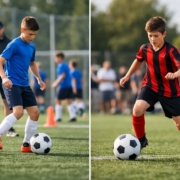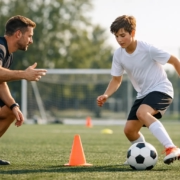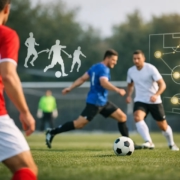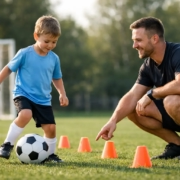

A player hits 100 clean touches in training, then disappears on Saturday. Another player looks less flashy in drills but keeps solving problems in real matches. That gap is exactly why parents and players ask how to evaluate soccer training progress – because effort alone is not the same as development, and highlights are not the same as consistency.

Real progress in soccer is measurable, but it is not always obvious week to week. Young players grow at different rates. Confidence rises and dips. Technical gains often show up in training before they hold under pressure in games. If you want an honest read on development, you need a standard that goes beyond goals scored or whether a coach says, “Good session.”

How to evaluate soccer training progress the right way

The strongest evaluation starts with one question: progress toward what? A six-year-old learning balance, coordination, and comfort on the ball should not be judged by the same standards as a 15-year-old preparing for varsity, academy, or college-level competition. Serious development requires age-appropriate benchmarks.

For younger players, progress usually looks like better body control, improved listening, cleaner first touches, and growing confidence to engage. For middle age groups, it starts shifting toward technical consistency, faster decision-making, and stronger habits in 1v1 moments. For advanced players, the standard becomes sharper – execution speed, tactical awareness, physical output, and the ability to perform under game pressure.

That is why vague feedback creates problems. “They looked better today” is not a development plan. A better approach is to evaluate five areas over time: technical execution, speed and movement quality, decision-making, competitive transfer, and mindset.

Technical progress should be visible and repeatable

Technical development is usually the first thing families watch, but it needs to be evaluated correctly. One great rep means very little. Ten clean reps under control matter more. Then the real test is whether those reps still hold up when the tempo increases.

Start with first touch. Is the player receiving the ball into space, or does the touch kill momentum? Then look at passing quality. Are passes weighted correctly and played with purpose, or simply completed? Dribbling should also be judged beyond flashy moves. Can the player change direction cleanly, protect the ball, and beat pressure without losing balance?

Shooting tells the same story. Power gets attention, but accuracy, speed of preparation, and consistency matter more in player development. A player who can strike one great ball but needs four setup touches is not yet game-ready at a high level.

The key is repetition under increasing difficulty. A player has truly improved technically when clean execution becomes normal, not occasional.

What technical improvement actually looks like

It often appears in small details before it appears in statistics. The receiving foot is cleaner. The head comes up earlier. The ball stays closer during acceleration. Weaker-foot hesitancy starts to disappear. Those details are not cosmetic. They are signs that the player is building reliable habits.

This is also where technology and structured training can help. Timed ball mastery work, reaction-based touch patterns, and tracked repetition scores create objective markers. In a serious training environment, tools like SoccerBot360 can show whether a player is just working hard or actually processing and executing faster.

Physical gains matter, but only if they serve soccer

Parents often notice speed first. A player looks quicker, stronger, or more explosive. That matters, but only in context. Soccer speed is not just sprint speed. It is how fast a player can see the moment, adjust body position, and execute the next action.

When evaluating physical progress, separate raw athleticism from soccer movement. Is the player closing space faster? Recovering better after transitions? Changing direction with control instead of drifting or crossing feet? Does the player hold technique late in the session, or fall apart once fatigue sets in?

A stronger athlete who still arrives late to the duel has not solved the real problem. On the other hand, a player with sharper footwork, better balance, and faster reactions may suddenly look “quicker” even without dramatic top-speed gains.

Movement quality is often the missing piece

This is where many players plateau. They train hard, but their mechanics limit them. Poor deceleration, weak posture, and slow first-step reactions reduce everything else. Speed tools and reaction systems, including platforms like the Speed Court, can expose those issues clearly because they measure response time, directional efficiency, and repeatability, not just effort.

That kind of data is useful because it removes guesswork. If reaction speed improves but ball execution lags, the training focus changes. If movement quality improves and match duels improve with it, the player is transferring gains the right way.

Decision-making is a major part of training progress

A technically gifted player can still stagnate if decision-making does not advance. This is where many families misread progress. The player may look excellent in isolated drills but struggle when the picture becomes unpredictable.

So ask better questions. Is the player scanning before receiving? Can they recognize when to play quickly and when to hold? Are they choosing the right moments to dribble, combine, switch play, or press? Better decisions usually show up as calmer play, fewer wasted touches, and stronger timing.

This part of development is harder to measure on paper, but easier to spot on film or through trained coaching eyes. Watch whether the player solves recurring problems faster than they did a month ago. If they used to force play into pressure and now consistently find safer or more dangerous options, that is real progress.

For advanced players, decision speed becomes a separator. At higher levels, it is not enough to know the right answer. The player must find it early enough for it to matter.

Game transfer is the standard that matters most

If training is working, something from the training ground should appear in competition. Not everything transfers immediately, but over time, there should be evidence. A better first touch should lead to cleaner possession. Stronger 1v1 work should lead to more successful duels. Improved scanning should reduce panic. Finishing work should produce better shot selection, not just harder shots.

This is the part parents should watch carefully. Do not judge a player only by goals, assists, or wins. Those can be distorted by team level, position, and match context. Instead, watch for repeatable actions. Is the player getting on the ball more often? Escaping pressure more consistently? Defending with better timing? Competing harder in second-ball moments?

If training performance never appears in games, one of two things is happening. Either the training is too disconnected from match demands, or the player has not yet built enough confidence to apply the skill under pressure. Both can be fixed, but only if they are identified honestly.

Confidence, discipline, and response to coaching count too

Not all progress is physical or technical. Some of the most important gains happen in mentality. A serious player starts training with purpose. They recover faster after mistakes. They take correction without shutting down. They compete harder even when they are not the best player in the group.

That matters because long-term development is not linear. A player may look worse for a short period while rebuilding mechanics or adjusting to a more demanding level. Families who only track outcomes can panic too early. Sometimes a temporary dip is part of a bigger rise.

This is why discipline is part of evaluation. Is the player arriving ready? Are they focused during instruction? Are they putting in quality reps or coasting through sessions? A player with the right mindset often keeps progressing after others stall.

How to build a simple progress review system

The best way to evaluate development is to review it monthly, not emotionally after every session or game. Choose a few categories that match the player’s stage and position. For example, a wide player might track first touch under pressure, 1v1 success, crossing quality, repeat sprint output, and defensive recovery habits. A younger beginner may focus on ball control, coordination, confidence, and listening.

Write brief notes. Use short video clips if possible. Compare over four to six weeks, not four to six days. That time frame is long enough to reveal patterns and short enough to make training adjustments.

If you are working in a professional training setting, ask for specific feedback instead of general praise. Ask what has improved, what is still limiting the player, and what the next benchmark should be. High-level coaching should provide a pathway, not just encouragement.

One mention here matters: in a structured academy environment like Soccer Field Academy, progress is easier to evaluate because training, technology, and coaching language are aligned around development standards rather than guesswork.

What slows progress even when a player is talented

Sometimes the issue is not effort. It is mismatch. The training may be too easy, too random, or not specific enough. The player may need more repetitions, a smaller coach-to-player ratio, or a better performance plan around speed, strength, and recovery. In other cases, the player is improving, but the game environment does not allow those gains to show yet.

That is why honest evaluation matters. It protects families from false confidence, but it also protects players from being underestimated during the quieter stages of growth.

The best players are not the ones who look impressive once. They are the ones who keep raising their baseline. If you measure progress with that standard, you will see development more clearly and train with far more purpose.

Keep your eyes on repeatable improvement, not random flashes. That is where real players are built.

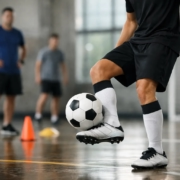
If your toddler spends more time chasing butterflies than the ball, that is not a problem to solve. It is the starting point. Great soccer training for toddlers does not begin with tactics, pressure, or long lines of drills. It begins with movement, attention, and confidence. At ages 2 to 4, the real win is not clean technique. It is helping a young player learn how to listen, move with purpose, and enjoy the ball enough to come back ready to work again.

Parents often hear two extremes. One says toddlers are too young for real training. The other treats early soccer like a race to create a prodigy. Neither view is useful. The truth is that early training matters, but only when it matches how toddlers actually learn. The right environment can build coordination, body control, and early soccer habits without pushing children beyond their developmental stage.

What soccer training for toddlers should actually do

At this age, soccer is a vehicle for athletic development. A ball gives structure to movement. A coach gives direction to attention. The session should improve balance, running mechanics, stopping and starting, spatial awareness, and the ability to follow simple commands.

That may sound basic, but basic is exactly where high-level development starts. A toddler who learns how to move under control, react to cues, and stay engaged in a structured activity is building a foundation that will matter later when technical and tactical demands increase. Early discipline does not mean harshness. It means clear expectations, repetition, and an environment where young players know what comes next.

This is also why unstructured chaos is not the same as development. Free play has value, but if every session turns into random running with no coaching intention, progress will be inconsistent. Toddlers need fun, but they also need structure. The best programs blend both.

The biggest mistake parents make early

The most common mistake is judging toddler soccer by older-player standards. Parents look for passing patterns, game awareness, or perfect dribbling touches. That is too early. For a toddler, success looks different. Can they keep the ball close for a few steps? Can they stop when asked? Can they change direction? Can they participate for most of the session without shutting down?

If the answer is yes, training is working.

Another mistake is overloading the child with too many instructions. Toddlers do not need a speech about inside-of-the-foot technique. They need one clear cue at a time. Push the ball. Stop the ball. Turn to the cone. Run back fast. Strong coaching at this age is simple, direct, and consistent.

What a quality toddler session looks like

A good session moves quickly. Toddlers do not have the attention span for long explanations or stationary drills. The strongest programs use short activity blocks, frequent transitions, and a lot of touches on the ball. Waiting in line is lost training time and, for this age group, usually a fast path to distraction.

The session should open with movement patterns that wake up coordination. That might include running, jumping, balance work, or simple reaction games. From there, the ball should become part of the activity, not a separate event saved for the end. Young players need to associate the ball with movement from the beginning.

Then comes repetition with variety. A toddler may practice stopping the ball five different ways in one class, but the objective stays the same. This matters because repetition builds skill, while variety keeps attention. High-level coaching for toddlers is not about making things more complex. It is about making the same core action engaging enough to repeat.

Sessions should also end before quality drops too far. When toddlers are mentally done, they are done. More time does not always equal more development. In many cases, 30 to 45 focused minutes is far more productive than an hour that drifts into fatigue and frustration.

Skills that matter most at ages 2 to 4

The priority list is narrower than many parents expect. Ball mastery matters, but in an age-appropriate way. The early focus should be on dribbling with both feet, stopping the ball, changing direction, and becoming comfortable moving near other players without fear.

Just as important are non-soccer athletic qualities. Coordination, balance, rhythm, acceleration, and body awareness all shape future soccer performance. A toddler who cannot yet control their body under movement will struggle to control a soccer ball consistently. That is why serious early development includes general athletic training woven into soccer activities.

Listening and emotional regulation belong here too. A toddler who can hear a cue, respond, and re-engage after a mistake is building competitive tools even before competition becomes the point.

Why environment matters more than equipment

Parents sometimes assume they need mini goals, specialty cones, or a pile of training aids at home. Those tools can help, but they are not the main factor. The environment matters more. Toddlers improve when the setting is predictable, safe, and led by coaches who understand early childhood behavior as well as soccer fundamentals.

That is where many casual programs fall short. If the coach lacks a progression plan, sessions can become entertainment with a ball rather than training with purpose. There is a difference between keeping children busy and actually developing them. Strong coaching creates a sequence. First comfort, then control, then consistency. That progression should be visible even at the youngest ages.

For families training year-round, indoor consistency can make a major difference. In a place like Columbus, Ohio, weather can interrupt momentum for months at a time. A professional indoor environment removes that variable and helps toddlers build familiarity through routine. At this age, routine is not a luxury. It is a performance tool.

How often toddlers should train

For most toddlers, one to two structured sessions per week is enough. More is not automatically better. It depends on the child’s energy, maturity, and overall activity level. Some toddlers thrive with a second class because they love repetition and quickly settle into routine. Others need more recovery and more free movement outside of formal training.

The key is consistency over intensity. A toddler who trains once a week for several months in a focused environment will usually make better progress than a toddler who does three sessions in one week and then disappears for a month. Development at this age is cumulative.

Parents should also watch the child’s response after training. If they leave energized and proud, the workload is probably appropriate. If they regularly leave overwhelmed, withdrawn, or resistant to returning, the environment or volume may need adjustment.

What parents can do at home without overdoing it

Home training should stay short and positive. Five to ten minutes is enough. The goal is not to recreate a full session. It is to reinforce familiarity with the ball and confidence in movement.

A simple dribble-and-stop game in the backyard or living room can be effective. So can short races to a cone, toe taps with assistance, or asking the child to push the ball to different colored markers. The best home sessions feel like play, but they still have a coaching objective.

What parents should avoid is constant correction. If every touch becomes a teaching moment, the child can start to associate the ball with pressure. At this age, enthusiasm drives repetition, and repetition drives progress. Protect that cycle.

When toddler soccer becomes a real developmental advantage

Early training becomes an advantage when it builds habits that carry forward. That includes comfort in a coached setting, willingness to engage, clean movement patterns, and early ball confidence. It does not guarantee elite performance later. Plenty depends on the child’s long-term interest, coaching quality, and consistency over time.

Still, there is a real edge in starting correctly. Players who enter later youth stages with better coordination, stronger listening habits, and less fear around the ball can absorb technical training faster. They are not starting from zero. They already understand how to train.

That is the bigger point. Soccer training for toddlers is not about forcing advanced soccer onto very young kids. It is about building the athletic and cognitive base that makes future development possible. When the work is structured, age-appropriate, and led with purpose, those early sessions do more than fill time. They create momentum.

For parents, the smart question is not whether your toddler looks like a soccer player yet. The better question is whether they are learning to move, listen, and grow in the right environment. If that foundation is being built, the progress is real, even before the game fully arrives.

The fastest way to expose a weak player is simple – put them in a tight space and speed up the ball. First touch shows up immediately. It shows in how quickly a player can settle the ball, escape pressure, and play the next action with control. If you want to know how to train first touch indoors, start by accepting one truth: indoors does not limit technical growth. Done correctly, it sharpens it.

Indoor training strips away excuses. The space is tighter, the surfaces are cleaner, and the number of quality repetitions can be much higher than in a full outdoor session. For youth players, that matters. For parents, it means development does not have to stall because of weather, field conditions, or seasonal breaks. For serious players, it means every rep can be more intentional.

Why indoor first touch training works

A great first touch is not just about cushioning the ball. It is about solving the next problem before pressure arrives. Indoors, players get more touches in less time, and that changes the learning environment. The ball comes back faster off walls, passes travel cleanly, and mistakes are obvious. That feedback loop is valuable.

There is also less room to hide. In big outdoor spaces, a poor touch can sometimes be recovered with speed. Indoors, a heavy touch usually becomes a turnover. That is why indoor work can accelerate technical discipline. Players begin to understand that the first touch must have purpose, not just contact.

The trade-off is that indoor sessions can become too predictable if all the work is stationary. If a player only traps balls against a wall with no scanning, no body shape changes, and no pressure cues, the improvement will be limited. Good indoor training builds control, but it also builds awareness, timing, and decision-making.

How to train first touch indoors with purpose

The biggest mistake players make is chasing volume without quality. One hundred careless reps do less than thirty focused ones. The goal is to train the first touch the way it appears in real matches – receiving with different surfaces, under changing angles, while preparing the next action.

Start with body shape. Before the ball arrives, players should be side-on whenever possible, balanced on the balls of the feet, and ready to receive across the body. That alone changes the quality of the touch. A player who receives flat and square usually kills the next pass option. A player who opens up can receive and play forward faster.

Then work through the main receiving surfaces. Inside of the foot is the foundation because it is reliable and clean. Outside of the foot matters because it allows quicker escapes and changes of direction. The laces can be useful on driven balls, and the sole has value indoors, especially in tight areas, but it should not become a crutch. Overusing the sole can slow play if it replaces cleaner directional touches.

Distance matters too. In a small indoor lane, the first touch should usually move the ball just far enough to create the next action. Not three yards. Not a dramatic drag into empty space. Just enough. That level of precision is what separates technical players from players who are only comfortable in easy patterns.

The best indoor first touch setup at home or in a facility

You do not need a full field to improve first touch. You need a ball, a wall or rebound surface, and enough room to adjust your body and take two or three steps. If you have cones, shoes, or markers, use them to create targets and receiving gates. The setup should force direction, not just contact.

A wall is still one of the best tools in the game because it gives immediate repetition. Pass firmly, receive with one touch into space, and play back with control. The key is not standing still. Change the angle after each pass. Open the hips. Receive right foot, then left. Move across the body. Receive on the back foot. If every rep looks the same, the session is too easy.

If you are training in a professional indoor environment, the advantage is even greater. Clean surfaces, consistent rebounds, and structured coaching create a more demanding standard. At Soccer Field Academy, this is where players make faster gains – not because the ball magically behaves better, but because the environment demands concentration and repeatable execution.

Drills that actually improve first touch indoors

The simplest effective drill is wall pass and exit. Play the ball into the wall, receive with one touch out of the feet at an angle, then reset and repeat from the other side. This teaches players to avoid dead touches. The ball should not stop under the body unless that is the specific goal.

Next, add a two-cone gate. After the wall pass, the first touch must take the ball through the gate before the next pass. This creates a directional standard. Now the touch has a target, which is much closer to the demands of a match.

A stronger progression is to number the gates or call colors. If a coach or parent calls “left” or “blue” as the ball travels, the player has to process the cue before receiving. That turns a simple technical drill into perception training. Elite first touch is not just soft feet. It is fast recognition.

Another strong indoor pattern is receive-turn-play. Pass into the wall, receive on the back foot, pivot around a cone or marker, then play the next pass. This is excellent for midfielders and defenders who need to receive while opening out of pressure. Wingers and attackers can use the same pattern but accelerate after the touch to simulate driving into space.

For younger players, keep the challenge level realistic. They still need repetition and confidence. A six-year-old does not need complex scanning cues every second. They need a clean setup, encouragement to use both feet, and a standard for controlling the ball within reach. For older competitive players, the demands should rise quickly. Less time on the ball, more unpredictable service, and stronger emphasis on receiving into the next action.

How to progress indoor first touch training

If you are serious about development, do not keep repeating the same comfortable drill for months. Progression is what drives improvement. Start with static service, then move to angled service. Start with one-touch control into a set area, then reduce the space. Start with no pressure, then add passive pressure from a coach, sibling, or training partner.

Tempo should progress too. Early reps can be deliberate, especially when introducing a new receiving surface. But once the movement pattern is understood, the pace needs to increase. Match play is not patient. If training never challenges reaction speed, the touch may look good in practice and disappear in games.

One useful benchmark is whether the player can keep posture, balance, and directional control as the speed rises. Many players look technical at low tempo. Fewer can maintain quality when the ball is fired in harder and the decision must happen earlier. That is the standard worth chasing.

Common mistakes when learning how to train first touch indoors

The first mistake is trapping the ball instead of directing it. A first touch that stops the ball completely often slows the entire sequence. Sometimes you do need to secure possession, especially under heavy pressure, but most of the time the touch should prepare the next pass, dribble, or turn.

The second mistake is training only the dominant foot. This becomes obvious in games. Players get closed down onto the weak side and suddenly lose all rhythm. Indoors is the perfect place to fix that because the number of repetitions is high and the environment is controlled.

The third mistake is poor intensity. Technical work should not feel rushed, but it should feel alive. Lazy passes create lazy receptions. If the service lacks quality, the touch never gets tested.

The fourth mistake is ignoring vision. Players who stare at the ball through the entire reception usually struggle under pressure. Even indoors, build the habit of checking space early, then receiving with a picture of what comes next.

What parents and players should look for in quality first touch training

Not all technical training is equal. If a session is built on long lines, low repetitions, and generic praise, progress will be slow. Quality first touch training should be measurable. Are touches getting cleaner? Is the player receiving on both feet? Can they handle faster service? Are they turning out of pressure more often instead of playing safe backward every time?

That is where structured coaching matters. Good coaches do not just say “soft touch.” They correct body angle, timing, surface selection, and the purpose of the touch. They know when a player needs more repetition and when they need more complexity. That balance is how confidence gets built the right way – through evidence, not guesswork.

If your player trains indoors consistently, expect improvement to show up in small but meaningful ways first. They will settle difficult passes sooner. They will need fewer corrective touches. They will play faster in tight areas. Those are the signs that the work is transferring.

First touch is one of the clearest indicators of a player’s ceiling, but it is also one of the most trainable skills in the game. Indoors gives you the chance to rehearse it with discipline, detail, and enough repetition to make the improvement stick. Train it with intent, demand quality from every rep, and the ball will start feeling slower even when the game gets faster.

A lot of families ask the same question right after a player starts showing real potential – should we stay in club soccer, or is it time for an academy environment? The soccer academy vs club soccer decision is not really about which one sounds more elite. It is about which setting gives your child the right level of coaching, structure, competition, and long-term development.

That distinction matters more than most parents realize. A player can be on a strong team and still plateau if training is inconsistent, feedback is vague, or technical work gets sacrificed for weekend results. On the other hand, a player can be in a highly structured academy and struggle if the environment is too demanding for their age, maturity, or current goals.

Soccer academy vs club soccer: the real difference

At a basic level, club soccer is usually team-centered. Players join a roster, train with their age group, and compete in league matches and tournaments. The experience often revolves around seasonal schedules, team chemistry, and game performance.

A soccer academy is usually player-centered. The focus is less on just preparing for the next match and more on building the individual athlete over time. That often means more deliberate technical repetition, clearer development benchmarks, stronger coaching standards, and training that addresses not only skill but decision-making, movement quality, speed, and confidence under pressure.

This does not mean every academy is better than every club. It means the priorities are different. A club may provide a great competitive experience and strong social environment. An academy is more likely to provide a systematic development model with measurable progression.

For families, the key question is simple: does your child need a team to play on, or a training environment designed to accelerate growth?

What club soccer does well

Club soccer plays an important role in youth development, especially for players who need regular match experience, team identity, and a manageable entry point into the sport. Many clubs give young athletes their first taste of competition, responsibility, and commitment.

For some players, that is exactly the right fit. They want to improve, enjoy being part of a team, and compete at a level that matches their current stage. A good club coach can absolutely help a player develop, particularly when the club values teaching and not just winning.

Club soccer also tends to be easier for families to understand. There is usually a team, a schedule, league games, and tournament weekends. The pathway feels familiar. For younger or newer players, that simplicity can be useful.

The limitation is that club environments can vary widely. One team may have excellent coaching and a clear methodology. Another may rely on volunteer support, limited technical detail, and a game-heavy model where the strongest players improve while everyone else simply participates. In many clubs, training time is shared across the entire team, so individual needs do not always get enough attention.

What a soccer academy is designed to do

An academy environment is built for progression. That usually means players train inside a more intentional system, where sessions are not just about preparing for Saturday. They are about sharpening first touch, passing speed, body shape, scanning habits, finishing technique, acceleration mechanics, and composure under pressure.

The strongest academies treat development like a process, not a slogan. Coaches evaluate where a player is now, identify gaps, and build training around those needs. That could mean small-group technical work, position-specific detail, cognitive training, speed sessions, or private coaching to correct habits that team practices rarely have time to address.

This is where serious players often separate themselves. In a club setting, a player may get two or three practices a week focused largely on team function. In an academy, training can become far more precise. Repetition is more purposeful. Feedback is more immediate. Standards are higher.

For parents, the biggest difference is usually visible progress. When an academy is run correctly, improvement should not feel random. You should be able to see cleaner technique, faster decision-making, stronger movement, and greater confidence in games.

Soccer academy vs club soccer for different types of players

Not every player needs the same environment at the same time. That is why the soccer academy vs club soccer conversation should always start with the athlete, not the label.

For young beginners, club soccer can be a strong first step if the main goal is enjoyment, coordination, and learning the basics through regular play. But if a player is eager to improve quickly, responds well to coaching, and wants more touches and more detailed instruction, an academy model can create a stronger technical foundation early.

For the motivated middle-school player, the gap becomes more obvious. This is often the age when raw enthusiasm stops being enough. Players either build disciplined habits or fall behind. If your child is ambitious and wants to compete at a higher level, an academy structure can provide the extra repetition and accountability that standard team training often lacks.

For advanced high school players, the question gets even more serious. If college soccer is a real goal, development cannot be left to chance. Players need more than match minutes. They need high-level coaching, physical preparation, technical sharpness, and honest evaluation. A quality academy environment is often better equipped to support that path than a general club setup.

The trade-offs parents should understand

Academy training sounds attractive because it promises structure and results, but it also asks more from the player and the family. Standards are higher. Expectations are clearer. Progress requires consistency.

That can be a positive for the right athlete. It can also be a mismatch for a player who enjoys the sport but is not ready for a more demanding environment. Some kids thrive when they are challenged. Others need a lighter, more social entry point before they are ready for performance-focused training.

Cost and schedule also matter. Academy programs, private sessions, and specialized performance work can require a bigger investment than a typical club season. For many families, that investment makes sense when the coaching quality, training environment, and development outcomes are clearly stronger. But parents should still ask the hard question: are we paying for real player growth, or just a more impressive name?

That is an important distinction. Not every academy operates at a true high-performance standard. Families should look beyond branding and evaluate the actual training model.

How to judge the right environment

The best decision usually comes down to coaching, training quality, and pathway clarity.

Start with the coaching staff. Are the coaches experienced, licensed, and able to teach details, or are they mainly organizing drills and managing teams? Serious development requires more than enthusiasm. It requires technical knowledge, communication skill, and a clear training methodology.

Then look at the sessions themselves. Is the player getting meaningful repetition? Are coaches correcting body shape, timing, decision-making, and execution? Is there a development plan, or are sessions just moving from drill to drill without a clear purpose?

Finally, ask about progression. What happens if your child improves quickly? What support exists if they need extra technical work, speed training, or position-specific help? Strong academies tend to offer a full ecosystem, not a one-size-fits-all program. That is one reason families in Columbus often look for year-round indoor training environments where coaching, performance work, and technical development can happen under one roof.

When the best answer is both

For many players, this is not an either-or decision forever. Some of the most effective development paths combine club competition with academy training. A player may stay with a team for games while using academy sessions to sharpen technical ability, athletic movement, and tactical understanding.

That hybrid approach makes sense because games expose weaknesses, while academy training gives players the tools to fix them. If your child struggles with speed of play, confidence on the ball, weak-foot development, or consistency under pressure, those issues usually improve through focused training, not just more matches.

This is where disciplined families gain an edge. Instead of hoping games create development, they place players in environments that train it directly.

A serious academy should not just keep athletes busy. It should make them better in ways that are measurable and obvious. That is the standard development-focused parents should expect.

If your child loves the game, wants to improve, and is ready for higher expectations, choose the environment that builds the player, not just the schedule. The right setting should challenge them, sharpen them, and give them a clear path forward.

A player who touches the ball 300 times in a session will almost always develop faster than a player who waits through lines, traffic, and group pacing. That is the core value of one on one soccer coaching. It removes wasted reps, exposes weaknesses faster, and gives serious players a training environment built around their actual needs instead of the average pace of a team session.

For parents, the question is rarely whether personalized training can help. It can. The real question is when it makes sense, what it should focus on, and how to tell whether the investment is producing measurable progress. For players, especially those who want more than recreational improvement, private coaching can become the difference between staying stuck and making a real jump in confidence, execution, and decision-making.

What one on one soccer coaching actually does

Team training matters. Players need to learn spacing, timing, communication, and the rhythm of the game. But team environments are not designed to solve every individual issue. A coach with 14 to 18 players on the field cannot stop every repetition, correct every body shape, or tailor every drill to one athlete’s technical ceiling.

One on one soccer coaching changes that equation. The session can be built around first touch, striking mechanics, weak-foot development, scanning habits, change of direction, finishing under pressure, or position-specific work. Instead of splitting attention across a roster, the coach can watch details that usually go unchecked – ankle lock on contact, first-step explosiveness, receiving angles, hips before turning, timing of release, and recovery between actions.

That level of specificity matters because development is usually limited by small errors repeated hundreds of times. A player may be highly motivated and still plateau because those errors are never isolated and corrected with enough repetition.

Why some players improve much faster in private sessions

The biggest advantage is training density. In a strong private session, the player is engaged almost continuously. There is less standing, less waiting, and less hiding. Every technical action is visible. Every mistake has a consequence. Every correction can be applied immediately on the next rep.

There is also a psychological benefit. Many young players know they are struggling with something but cannot name it. Maybe their first touch pops up under pressure. Maybe they rush their finish. Maybe they look down too long when dribbling. In a private setting, those issues stop being vague frustrations and become trainable problems. That shift builds confidence because progress becomes visible.

For advanced players, the benefit is often even greater. Strong players do not need random volume. They need precise training. If a winger needs to sharpen end product after beating the first defender, or a center midfielder needs to receive on the half-turn more cleanly, private coaching can target that gap with far more efficiency than a generic team practice.

When one on one soccer coaching makes the most sense

It is not only for elite prospects. It can help beginners, developing players, and high-level athletes for different reasons.

A younger player may need one on one work to build comfort on the ball, improve coordination, and gain confidence before stepping into a more competitive environment. In that case, the goal is not pressure for pressure’s sake. It is technical foundation and a positive sense of mastery.

A mid-level player often benefits when progress has stalled. This is common around the ages when team play gets faster and technical flaws become more exposed. The player is working hard, but game speed starts to punish weak touch, poor mechanics, or limited awareness. Private coaching can address those bottlenecks before they become habits.

For serious competitive players, the need is usually about refinement. They may already train several times a week, but they need extra work that is intentional, measurable, and aligned with larger goals such as making a top team, earning more minutes, preparing for showcases, or building toward college-level expectations.

The right time depends on the player. If motivation is low and the athlete does not want more training, adding sessions may create resistance instead of growth. But if the player wants improvement and needs structure, private coaching can provide the missing edge.

What to expect from high-level one on one soccer coaching

Not all private training is equal. A quality session should look organized, demanding, and purposeful. It should not feel like random drills stitched together to make the hour look busy.

The best coaches begin with evaluation. They identify what the player does well, where the technical leaks are, and which corrections will create the biggest return. From there, the session should move through a progression. Mechanics first, then repetition, then increased speed, then pressure, then transfer into realistic actions.

For example, if finishing is the focus, a serious session should not stop at shooting from a cone. It should address approach angle, plant foot placement, body control, choice of surface, finishing after movement, and execution under fatigue or time pressure. If first touch is the focus, training should involve different service types, directional control, speed of setup, and decision-making after the touch.

This is also where technology can add value when used correctly. Tools that measure reaction time, foot speed, passing accuracy, or cognitive response can make progress easier to track. Data does not replace coaching, but it can sharpen it. When a player sees measurable gains, motivation usually rises with it.

One on one soccer coaching vs team training

This is not an either-or decision. The strongest development model usually combines both.

Team training teaches players how to function inside the game. Private coaching helps them upgrade the tools they bring into that game. One teaches collective execution. The other sharpens individual performance.

If a player only does private training, they may improve technically but miss game-context learning. If they only do team training, they may stay exposed in the same weak areas for months because no one has time to isolate them. The balance matters.

For many families, one targeted private session per week alongside regular team training is enough to create noticeable progress. During certain periods, such as offseason blocks, recovery from a poor season, or preparation for tryouts, players may benefit from a more concentrated phase.

How parents can tell if it is working

Visible effort during the session is not enough. Good training should produce observable changes over time.

The first sign is cleaner execution. The player’s touch settles sooner. Passes arrive with better pace and accuracy. Finishing becomes less rushed. Movements look more controlled. These are not dramatic overnight transformations, but they are real markers.

The second sign is game transfer. Confidence under pressure improves. The player asks for the ball more. Decisions come faster. Instead of avoiding difficult actions, they begin to handle them. This is where training proves its value.

The third sign is clarity. A strong coach can explain what is being trained, why it matters, and what progress looks like. Families should not feel like they are guessing. Development should be intentional.

Choosing the right coach and environment

Credentials matter, but so does the ability to teach. A high-level playing background or license is valuable only if the coach can communicate clearly, correct efficiently, and hold standards without draining confidence.

Look for an environment that supports repetition and concentration. Indoor training can be especially valuable in a market like Columbus, Ohio, where weather can interrupt consistency. Players improve faster when their schedule is not constantly derailed by field conditions or seasonal downtime.

It also helps to choose a program with a broader developmental model, not just isolated sessions. When private coaching exists inside a serious training ecosystem, the work can align with age, stage, and performance goals. That is where personalized sessions become more than extra touches. They become part of a long-term plan.

At Soccer Field Academy, that standard is built around licensed coaching, structured progression, and measurable development tools that give players and parents a clearer picture of growth.

Is one on one soccer coaching worth it?

If the player is motivated, the coaching is high quality, and the sessions are built around real developmental needs, yes. It can accelerate progress in ways group training often cannot. But the value is not in the format alone. It is in the precision.

One on one soccer coaching works best when it is disciplined, demanding, and connected to a bigger purpose. For some players, that purpose is confidence. For others, it is technical correction, more playing time, or preparation for higher levels of competition. The path is not identical for every athlete, and it should not be.

The right private session does more than make a player sweat. It gives them a better standard to train toward, a better understanding of their game, and a better chance to turn effort into real progress.

The best players are not always the fastest, strongest, or most technical. Often, they are simply earlier. They scan earlier, recognize the picture earlier, and act earlier. If you want to learn how to improve soccer decision making, that is the starting point – not just better choices, but better timing.

For youth players, decision-making is usually where matches speed up. A player may look excellent in isolated drills, then struggle when space closes and pressure arrives. Parents notice it as hesitation. Coaches see it as late passes, forced dribbles, poor defensive angles, or a first touch that creates a second problem. The good news is that decision-making can be trained. The better news is that it improves fastest when technical work, game awareness, and competitive repetition are built together.

What soccer decision-making really means

Soccer decision-making is not just choosing whether to pass, dribble, or shoot. It is the ability to read the environment, predict the next action, and execute the best option at game speed. That includes recognizing pressure, understanding field position, judging risk, and knowing what your teammates and opponents are likely to do next.

This is why two players with similar technical ability can perform very differently in games. One player receives the ball already knowing the next play. The other needs an extra touch, an extra second, or an extra glance. At higher levels, that gap matters.

For younger players, the decision may be simple: Is there space to turn? For older competitive players, it becomes more layered: Can I break a line here, or should I secure possession and move the block first? Better decisions come from better perception, not from random confidence.

How to improve soccer decision making in training

Many players try to solve decision-making problems by repeating more ball touches alone. Technical repetition matters, but isolated work has limits. If the training environment does not force a player to perceive pressure, process information, and react, the transfer to match play will be incomplete.

The most effective training blends technique with choice. Instead of rehearsing one predetermined answer, players need sessions where multiple answers are possible. That is where real growth happens.

Train scanning before the ball arrives

Most poor decisions begin before the first touch. A player who has not checked both shoulders is already late. Scanning gives context – where pressure is coming from, where the next pass is, whether there is room to turn, and whether the safer or more aggressive option is available.

This habit should be trained deliberately. Players need reminders to look away from the ball, gather information, and update that picture as the play moves. Younger players may need simple prompts such as check left, check right, then receive. Older players should build a rhythm of constant visual updates. The goal is not just seeing more. It is seeing earlier.

Reduce time, reduce space

If every drill gives players too much room and too much time, decision-making will stay comfortable and slow. Strong developmental training adjusts the environment so players are required to solve problems faster.

That might mean smaller grids, touch limits, directional games, or numerical disadvantages. There is a trade-off here. If the space becomes too tight too soon, technique can collapse and confidence can drop. If it stays too easy, players never adapt to real match demands. Good coaching finds the level where the player is stretched but still capable of success.

Use game-like repetition, not random chaos

Decision-making improves through repetition, but only if the repetition has a clear purpose. Small-sided games are especially effective because they increase touches, transitions, duels, and moments of choice. A player in a 4v4 will make far more decisions than in a passive line drill.

Still, not all game-like training is equal. If the exercise is just open play with no coaching focus, players may repeat the same poor habits. Better sessions isolate a principle. One day the focus may be receiving on the half-turn. Another day it may be finding the third-man pass or recognizing when to play forward versus when to reset.

Build the habits behind faster choices

Players often think decision-making is purely mental. It is not. Good choices depend on technical and physical foundations. If a player cannot execute a clean first touch, separate from pressure, or strike the ball accurately, even the correct idea may fail.

That is why true development is layered. The brain sees the option, but the body must be ready to carry it out.

Improve first touch and body shape

A player with an active first touch has more options. A player whose body shape is closed has fewer. This is one of the most overlooked parts of how to improve soccer decision making.

When body position allows vision of more of the field, decisions become easier. When the first touch takes the player away from pressure or into the next action, the game slows down. Poor body shape does the opposite. It hides options and forces recovery touches.

This is especially important for midfielders, but every position benefits. Outside backs need to open up to play forward. Forwards need receiving angles that protect the ball and set the next action. Center backs need body shape that allows them to switch play or break pressure.

Develop speed of action, not just speed of feet

A fast player who thinks slowly can still be easy to defend. What matters is speed of action – see it, decide it, do it. This includes reaction time, footwork, balance, and the ability to execute under pressure.

Modern training tools can help here when they are used for performance, not entertainment. Reaction-based systems, light cue work, and decision-driven movement platforms can sharpen recognition and response. But technology should support coaching, not replace it. A machine can deliver stimulus. A coach still has to connect that stimulus to soccer reality.

Teach risk, not fear

Some players hesitate because they are careless. Others hesitate because they are afraid to make a mistake. Those are different problems, and they need different coaching.

Elite decision-making is not about always choosing the safest option. It is about understanding the moment. A line-breaking pass in the attacking half may be worth the risk. The same pass in front of your own box may be poor management. Players need permission to be brave in the right zones and disciplined in the wrong ones.

That balance is where mature decision-makers separate themselves. They are not passive. They are selective.

Position matters more than most players realize

Decision-making should never be coached in a generic way. A winger, a center back, and a number 6 do not solve the same pictures.

A winger may need to decide whether to isolate 1v1, combine inside, or attack the space behind. A center back must judge when to step, when to delay, and when to break lines with a pass. A holding midfielder needs constant scanning, awareness of pressure behind, and the discipline to connect play instead of forcing it.

This is why position-specific training matters for advanced players. General game intelligence helps, but role-specific repetition creates confidence. Players improve faster when they repeatedly solve the decisions their position actually demands.

What parents should watch for in games

Parents often ask whether decision-making is improving, but they usually look only at obvious outcomes like goals, assists, or turnovers. That misses a lot.

A player may be developing well if you notice earlier scanning, cleaner body shape, quicker release, better support angles, or smarter defensive recovery runs. Those details usually improve before the highlight moments do. Progress in cognition is often visible in the rhythm of play before it shows up on the stat sheet.

It also helps to judge players by level and role. A defender who clears danger early made a strong decision even if it was not flashy. A midfielder who recycles possession instead of forcing a crowded pass may be showing maturity. Good soccer is not always dramatic.

The fastest way to improve is a demanding environment

Players get better at decision-making when the environment demands concentration, accountability, and repetition at the right level. That means coaching that corrects details, training partners who raise the speed of play, and a structure that tracks progress instead of guessing.

For some players, that comes through high-level small-group work. For others, it comes through private training that slows the moment down, corrects the habit, and rebuilds it properly before reintroducing pressure. At Soccer Field Academy, that developmental approach is central because decision-making is not treated as a mystery trait. It is trained through game-realistic repetition, measurable feedback, and standards that push players to think faster and play with more authority.

The player who looks calm under pressure usually did not start that way. Calm is often the result of preparation. Train the eyes, train the body, train the moment, and better decisions stop feeling lucky. They start becoming your level.

A lot of parents ask the same question after a child starts chasing a ball around the living room or signs up for a first team – what age for soccer training actually makes sense? The right answer is not one number. It depends on what you mean by training, how the child is developing, and whether the goal is basic coordination, technical growth, or serious performance.

The biggest mistake is treating all training the same. A 3-year-old does not need the same environment as a 10-year-old, and a 10-year-old should not train like a 16-year-old chasing college opportunities. Strong player development works in stages. When the training matches the stage, kids progress faster, stay more confident, and build a better long-term relationship with the game.

What age for soccer training depends on the type of training

If you are asking when a child can begin, the answer is earlier than many parents think. If you are asking when serious technical training should begin, that answer is more specific.

Around ages 2 to 4, soccer training should mean movement education with a ball. This is not about tactics, positions, or long lines of repetitive drills. It is about balance, coordination, rhythm, listening, body control, and early comfort using the feet. At this age, the best sessions feel playful, but they still have structure. Good coaching builds habits without overloading attention span.

From ages 5 to 7, kids can begin learning more deliberate soccer actions. Dribbling, turning, stopping the ball, changing direction, and striking with basic form all become more teachable. This is often the best window to introduce consistent weekly training because players are old enough to absorb instruction while still being in a prime motor-learning phase.

From ages 8 to 12, technical development should accelerate. This is where serious repetition matters. Players can refine first touch, passing detail, ball mastery, scanning, and decision-making under pressure. If a parent wants to know when focused skill training starts paying visible dividends, this is usually the range.

By the teenage years, training becomes more individualized. Some players need advanced technical sharpening. Others need speed development, strength work, finishing, tactical understanding, or position-specific training. The question is no longer just what age for soccer training. It becomes what kind of training will move this player forward now.

The best starting point by age

There is no benefit in waiting for a child to be “old enough” if the environment is built correctly. At the same time, starting earlier is not automatically better if the coaching is chaotic, overly demanding, or disconnected from how children learn.

Ages 2 to 4: build coordination and confidence

This is the introduction stage. The win is not mastering soccer technique. The win is creating positive association with movement, space, the ball, and following simple coaching cues.

At this age, confidence is everything. Children need a training environment where they can run, stop, turn, kick, and recover without feeling corrected every second. The coach matters as much as the curriculum. The right coach can begin laying a technical foundation through simple repetition while keeping the session engaging enough for very young attention spans.

Parents sometimes worry that this age is too early. It is only too early if expectations are wrong. If the goal is early athletic literacy and comfort with the ball, this stage is highly valuable.

Ages 5 to 7: introduce real soccer habits

This is often the ideal age to begin structured weekly soccer training. Players can start understanding instructions, patterns, and purposeful repetition. They are also young enough to absorb clean movement habits before bad ones become ingrained.

This is the stage for developing dribbling under control, using both feet, changing speed, and striking the ball with better mechanics. It is also the stage where many kids either start to love training or start to feel overwhelmed. That is why session design matters. High-quality training at this age should be disciplined but not rigid.

Ages 8 to 12: the technical foundation years

If a player is serious about improving, these years matter. This is the stage where clean repetition builds separation. Players who train consistently in this window usually develop sharper technique, faster processing, and greater confidence in game situations.

It is also the stage when many families notice the gap between just playing games and actually training. Games expose strengths and weaknesses. Training corrects them. A player who struggles with first touch, passing speed, or confidence in tight spaces rarely fixes that by waiting for match day. They need deliberate reps in a demanding environment.

Ages 13 to 18: specialize and sharpen

Teen players still improve dramatically, but the training has to become more precise. General sessions still help, but serious players often need targeted work tied to position, performance goals, and competitive level.

For one player, that may mean private training focused on weaker-foot passing and receiving under pressure. For another, it may mean speed and reaction work, video-informed decision-making, or college-prep style sessions built around real recruiting timelines. The older the player, the more important measurable progress becomes.

When starting later is still a good decision

Parents often worry they missed the window if a child starts at 9, 11, or even 14. That fear is understandable, but it is not always accurate.

A later start creates challenges, especially if the player wants to compete at a high level quickly. Technical habits usually take longer to build when peers already have years of repetition behind them. Decision-making under pressure can also lag because game situations feel faster to inexperienced players.

But older beginners often have advantages too. They can focus longer, process coaching faster, and handle correction better. If they enter a serious development setting with structured coaching, clear progression, and consistent attendance, they can improve quickly. The key is honesty about the starting point and a training plan that closes gaps efficiently.

Signs your child is ready for more structured soccer training

Age matters, but readiness matters too. Some kids are eager for coaching at 4. Others need more time. A few signals usually show when a player can handle a more developmental environment.

They can follow simple directions without constant redirection. They show repeated interest in the ball outside organized play. They recover well from mistakes instead of shutting down. They can handle short periods of focus and repetition. Most importantly, they enjoy the challenge of getting better, not just the idea of playing a game.

That last point is a major separator. Players who love improvement usually thrive in stronger training environments. Players who only want entertainment may still belong in soccer, but they need a different setup.

What parents should avoid at every age

The first trap is pushing intensity too early. More sessions are not always better if the quality is low or the child is mentally fried. Young players need progression, not overload.

The second trap is confusing games with development. Weekend matches have value, but they do not replace technical training. A player can be busy all season and still stagnate if no one is correcting movement, touch, timing, and decision-making.

The third trap is choosing convenience over coaching quality. Not every program is designed for long-term development. Parents should look for licensed coaches, a clear age progression model, and a system that teaches skills in sequence rather than running generic sessions for everyone.

In a serious academy environment, training should become more demanding as the player matures, but the demand should always match the player’s stage. That is where real confidence comes from – not empty praise, but seeing measurable improvement.

What age for soccer training if your child has big goals?

If a player wants to pursue high-level club soccer, academy pathways, or eventually college opportunities, the answer is simple: start structured training as soon as the child is developmentally ready, and increase specificity with age.

That usually means playful ball-based movement in the preschool years, consistent technical training in the early elementary years, accelerated skill development by middle childhood, and individualized performance work in the teen years. The timeline is flexible. The standard is not. Serious goals require serious training.

For families in Columbus looking for that progression under one roof, Soccer Field Academy has built programs that match each developmental stage rather than forcing every player into the same model. That matters because the right pathway keeps players improving without skipping steps.

The best time to begin is not when other parents say it is. It is when your child is ready for structure, quality coaching, and the kind of work that turns interest into real growth.

A player loses a 50-50 ball by half a step, and most people call it a speed problem. Usually, it is a training problem. If you want to understand how to train soccer speed, stop thinking only about straight-line sprinting. In soccer, real speed is the ability to accelerate, react, decelerate, change direction, and repeat those efforts with control.

That distinction matters for youth players and parents. A player can post a decent sprint time and still look slow in matches because the first three steps are weak, the body position is poor, or the decision comes late. True soccer speed is physical and cognitive. It is built through structure, not random effort.

How to train soccer speed for the game

Soccer speed starts with acceleration. Most actions in a match happen over short distances, not 40 yards. Closing down a defender, bursting into space, attacking a loose touch, or recovering after transition usually comes down to the first 5 to 15 yards. That is why training should prioritize explosive starts over long conditioning runs.

Body angle is the first detail. Players who pop upright too early waste force and lose momentum. A strong acceleration position keeps the chest slightly forward, shin angle positive, and pushes powerful through the ground. Arms matter too. Loose, slow arm action often leads to lazy footwork. Sharp arm drive helps create rhythm and force.

The next piece is force production. Speed is not just about moving your legs faster. It is about applying force into the ground quickly and efficiently. Younger players can improve this through skipping patterns, resisted starts, sprint mechanics, and landing control. Older players need that foundation plus strength work that develops glutes, hamstrings, core stability, and single-leg power.

Then comes deceleration. This is where many players get exposed. If an athlete can accelerate but cannot stop under control, every cut becomes slower. Good deceleration training teaches players to lower the center of mass, control the trunk, and absorb force without collapsing at the knee or drifting wide. Faster stops create faster changes of direction.

Speed in soccer is more than running fast

Parents often ask why a player looks quick in track-style testing but not in a match. The answer is simple. Soccer is chaotic. Players do not sprint in perfect lanes with a planned start. They read cues, scan space, react to pressure, and execute with the ball or without it.

That means the best speed training includes reaction. A coach’s visual command, a colored target, a moving opponent, or a timed decision all make the drill more game-relevant. A player who processes faster often appears physically faster, even against athletes with similar raw speed.

This is also why endless ladder work is overrated when it becomes the main training method. Ladders can help rhythm and foot placement for younger players, but they do not automatically create explosive soccer movement. If the feet move quickly but there is no force, no projection, and no decision-making, the transfer is limited.

The best way to build first-step quickness

First-step speed changes games. It wins races to loose balls, creates separation on the dribble, and helps defenders recover before danger grows. Training it starts with short efforts and full intent.

Use sprints of 5, 10, and 15 yards. Keep the volume low enough that quality stays high. Once mechanics fade, the drill becomes conditioning, not speed development. Rest matters here. If players are breathing hard and dragging through reps, they are not training maximum acceleration.

Starts should vary. Some reps can begin from an athletic stance. Others can begin after a shuffle, a backpedal, a lateral movement, or a quick reaction to a cue. Soccer players rarely start from a perfect set position, so the training should reflect that.

Resisted acceleration can help when used correctly. Light resistance from a sled or band can teach players to push longer and apply force better. Too much resistance changes mechanics and slows movement so much that it stops looking like sprinting. The load should challenge posture and projection, not destroy them.

How to train soccer speed with change of direction

Straight-line speed helps, but soccer rewards players who can cut hard and re-accelerate. That is where change-of-direction work becomes essential.

The mistake is treating every agility drill like a conditioning test. Fast feet through cones does not always equal better movement. Good change-of-direction training teaches entry speed, body control, braking mechanics, and clean re-acceleration angles.

A useful starting point is simple patterns with high technical demand. Players can sprint, plant, and cut at 45 or 90 degrees while focusing on hip level, foot placement, and balance through the turn. The outside leg should not fly out wildly. The torso should not sway all over the place. Efficient cuts are compact and violent.

Once those mechanics improve, add reaction. Instead of knowing the cut in advance, the player responds to a coach’s signal or a visual target. That one change brings the exercise closer to what happens in a match, where the body must organize itself after the brain makes a split-second decision.

Strength training is part of speed training

If a player wants to get faster, the weight room or bodyweight strength work cannot be treated like an optional extra. Speed improves when athletes can create and absorb force more effectively.

For younger players, this does not mean chasing heavy numbers. It means mastering movement. Squats, split squats, lunges, hinge patterns, planks, hops, and landing drills build the foundation. The goal is coordination, posture, and control.

For older and more advanced players, progressive strength work matters more. Single-leg strength is especially valuable because soccer is played one leg at a time. Split squats, rear-foot elevated work, lateral lunges, hamstring strengthening, and rotational core training all support speed. Plyometrics help too, but only when landing mechanics are solid. Jumping without control is not elite training. It is just impact.

There is always a trade-off. More volume is not better if the player is already overloaded with team training, matches, and private sessions. Speed gains often come from sharper programming, not from cramming in extra work.

Don’t ignore mobility and mechanics

Some players work hard and still stay stuck because the body cannot get into the right positions. Limited ankle mobility, stiff hips, poor trunk control, and weak foot stability all affect speed mechanics.

This does not mean every session needs a long mobility routine. It means preparation should be specific. If a player cannot strike the ground well because the ankle is restricted, that issue needs attention. If posture falls apart during acceleration, core control and mechanics need attention. Efficient movement is usually faster movement.

Video feedback can help here. Players often do not feel the mistake they repeat. Seeing posture, arm action, stride length, or braking position gives coaches and athletes something measurable to correct.

How often should soccer players train speed?

For most youth players, two focused speed sessions per week is enough to create progress when the work is high quality. Three can work for advanced players if the overall schedule supports recovery. More than that is not automatically better, especially during heavy match periods.

The best time for speed training is when the nervous system is fresh. Early in the session is usually best, after a smart warm-up. Trying to train top speed after long conditioning blocks or intense small-sided play usually leads to poor mechanics and low output.

Younger athletes should keep sessions simple and sharp. Older players can handle more complexity with resisted work, reactive components, and integrated strength progressions. Either way, consistency beats intensity spikes. A disciplined plan over 12 weeks will outperform random hard sessions every time.

Common mistakes that make players slower

One of the biggest mistakes is confusing fatigue with development. If every speed session leaves a player exhausted, the focus is probably wrong. Speed training should challenge the athlete, but quality has to stay high.

Another mistake is copying track workouts without adapting them to soccer. Track athletes and soccer players have different movement demands. A soccer player needs repeated acceleration, cutting ability, reaction speed, and technical control under pressure.

A third mistake is separating speed from the game for too long. Pure sprint work has value, but eventually players need to express that speed in soccer actions. Closing space, attacking gaps, pressing, recovering, and exploding with the ball all need to be trained.

That is where technology and measured feedback can make a difference. Timed reactions, movement tracking, and controlled testing environments help players see whether training is actually translating. At Soccer Field Academy, that performance mindset matters because serious players deserve more than guesswork.

The fastest player on the field is not always the one with the best highlight sprint. It is the player who reads the moment early, hits the first step with intent, controls the stop, and explodes again. Train that combination with discipline, and speed stops being a talent label. It becomes a repeatable advantage.

A player who can strike cleanly, accelerate fast, and read the game well still loses value if their body cannot handle the demands of training and competition. That is why soccer injury prevention exercises should be part of every serious development plan, not treated as an optional warm-up. For youth players especially, the goal is not just avoiding missed games. It is building movement quality that supports long-term performance.

The mistake many families make is assuming injury prevention means doing a few stretches before practice. It does not. The right approach improves how a player lands, decelerates, cuts, stabilizes, and absorbs contact. Those qualities matter whether your child is just learning coordination or competing in high-level matches with heavier weekly loads.

Why soccer injury prevention exercises matter

Soccer asks a lot from a young athlete. Sprinting, stopping, changing direction, jumping, tackling, and striking all place repeated stress on the ankles, knees, hips, groin, and hamstrings. Growth spurts can make that harder. A player may suddenly look less coordinated for a period of time, not because they are regressing, but because their body is changing faster than their control can keep up.

That is where structured injury prevention work earns its place. It teaches players to own their body positions under speed and fatigue. It also gives coaches and parents a better foundation for performance training. Strength and speed matter, but if movement quality is poor, adding more intensity can expose weaknesses instead of building resilience.

There is also a simple reality here. The best development plans are consistent. A player who trains regularly over months and years has a better chance to improve technically, physically, and tactically. Availability is not everything, but it is a major part of progress.

The best soccer injury prevention exercises target movement, not just muscles

A strong program does not chase random exercises. It addresses the patterns that most often break down in soccer – unstable single-leg control, poor landing mechanics, weak deceleration, stiff hips, and lack of trunk stability. These eight exercises are effective because they train those patterns directly.

1. Single-leg balance with reach

This is one of the simplest ways to expose control issues around the ankle, knee, and hip. The player stands on one leg with a soft bend in the knee and reaches the free leg forward, diagonally, and to the side without losing posture.

It looks easy until the athlete starts wobbling, collapsing the knee inward, or shifting too much through the trunk. Those compensations matter. In games, they show up during cuts, challenges, and awkward landings. Younger players can start with short reaches. Older or more advanced players can progress by reaching farther or adding a slight pause.

2. Split squat

A split squat builds lower-body strength in a soccer-specific stance. One foot stays forward, one foot back, and the player lowers under control while keeping the front knee tracking over the middle of the foot.

This exercise helps develop the glutes and quads while reinforcing alignment. That matters because many non-contact issues are tied less to one dramatic event and more to repeated poor mechanics under load. If a player cannot control a split squat, it usually shows up when they decelerate or change direction at speed.

3. Lateral bound and stick

Soccer is not a straight-line sport. Players need to move side to side, absorb force, and re-stabilize quickly. A lateral bound trains exactly that. The athlete jumps sideways off one foot, lands on the opposite foot, and holds the landing for two or three seconds.

The key is not how far they jump. The key is whether they can land quietly, keep the knee stable, and control the torso. If the landing is loud or the knee caves in, the distance is too aggressive. Good injury prevention work is about precision before power.

4. Nordic hamstring curl

Hamstring strains are common in soccer, especially as players sprint more often and at higher speeds. The Nordic hamstring curl is demanding, but it remains one of the strongest options for building eccentric hamstring strength. The athlete kneels with ankles anchored, keeps the body straight from knees to shoulders, and lowers forward slowly.

Younger athletes or beginners may not be ready for full range. That is fine. They can focus on a shorter controlled lowering or use assistance. The point is not to force the hardest version. The point is to build capacity progressively.

5. Copenhagen plank

Groin and adductor issues are another common problem in soccer because of cutting, reaching, and striking demands. The Copenhagen plank targets the inner thigh while also challenging trunk control. The athlete supports the top leg on a bench or elevated surface and holds the body in a side plank.

This exercise is advanced for some players, so progression matters. Start with short holds or a bent knee position. Overloading too early defeats the purpose. When applied correctly, it is excellent for players who need more lateral hip and groin resilience.

6. Drop landing

A lot of young players have never actually been coached on how to land. They jump well enough, but when they come down, the knees collapse, the heels slam, and the trunk falls forward. A drop landing fixes attention on that pattern.

The athlete steps off a low box, lands with both feet, and freezes in an athletic position. Coaches should look for soft contact, bent hips and knees, and balanced alignment. It sounds basic, but basic done well is high-level work. Before a player starts advanced plyometrics, they should own this pattern.

7. Dead bug

Core training for soccer should not just mean doing endless crunches. Players need trunk control that helps them transfer force and stay organized during sprints, turns, and contact. The dead bug is effective because it teaches the athlete to stabilize the torso while moving the arms and legs.

The player lies on their back with knees and hips bent, presses the lower back gently into the ground, and extends opposite arm and leg without losing position. If the ribs flare or the back arches, they have lost control. For younger athletes, this is an excellent starting point because it builds awareness before heavier loading is introduced.

8. Deceleration run to stick

Most people train acceleration. Far fewer train braking. Yet many soccer injuries happen when a player cannot decelerate efficiently before cutting, pressing, or reacting. In this drill, the player runs forward for a short distance, then stops under control in a balanced athletic position.

This teaches force absorption, posture, and foot placement. It also connects the weight room and the field. A player who gets stronger but still cannot stop cleanly is leaving a major gap in their athletic development.

How to use these exercises in a weekly routine

The best plan is the one a player can repeat consistently. For most youth athletes, two or three short sessions per week is enough to make a real difference. These exercises work especially well before field training, after a dynamic warm-up, when players are alert and able to focus on technique.

That session does not need to be long. Fifteen to twenty minutes can cover a lot if the work is organized well. A player might do single-leg balance with reach, split squats, drop landings, dead bugs, and deceleration runs in one session, then rotate in Nordics, Copenhagen planks, and lateral bounds on another day. The exact mix depends on age, training history, and current needs.

This is where families should avoid the one-size-fits-all mindset. A 7-year-old needs coordination and body control more than heavy strength loading. A 16-year-old preparing for a demanding club schedule may need more structured eccentric strength and higher-speed deceleration work. Same goal, different dosage.

Common mistakes parents and players should avoid

The first mistake is skipping progressions. Social media tends to reward advanced-looking drills, but high-performance training is not about looking advanced. It is about building the right sequence. If a player cannot hold position on a single-leg balance or land correctly from a low drop, adding more speed and complexity is not smart development.

The second mistake is treating fatigue as proof of quality. Injury prevention is skill-based work. Once mechanics break down, the value drops. These drills should sharpen movement, not turn into sloppy conditioning.

The third mistake is separating injury prevention from performance. They are connected. Better landing mechanics can improve explosiveness. Better trunk control can improve striking stability. Better deceleration can improve change of direction. Serious players should not see this work as time away from soccer. It supports soccer.

What high-level development looks like over time

The strongest athletes are rarely built by random effort. They are built by consistent, measurable training that respects development. At Soccer Field Academy, that means coaching players not just to work harder, but to move better, absorb force better, and prepare their bodies for the real demands of the game.

For parents, that is the bigger picture. Injury prevention is not about fear. It is about giving a young athlete the structure to train with confidence, handle increasing demands, and stay on the field long enough for real progress to compound. When the body is prepared, the player has a much better chance to show everything they have worked to build.

The wrong academy usually looks good for the first two weeks. The facility is clean, the branding is sharp, and the training session feels busy. Then the real question shows up: is your player actually improving, or just attending?

If you are figuring out how to choose a youth soccer academy, start with one standard – development must be visible. Not promised. Not implied. Visible in the coaching, the training structure, the player feedback, and the athlete’s confidence over time. A serious academy should do more than fill a schedule. It should build better players with intention.

How to choose a youth soccer academy by starting with the right fit

Not every strong academy is the right academy for your child. That matters more than most parents realize. A 6-year-old who needs confidence on the ball requires a very different environment than a 15-year-old preparing for varsity, club showcases, or college recruiting conversations.

Start by defining your player’s current stage. Is your child brand new to the game and learning coordination, balance, and basic ball mastery? Is your player already competing and now needs sharper decision-making, faster feet, or more refined technical repetition? The best academy for one athlete can be the wrong choice for another if the training does not match age, maturity, and ambition.

This is where many families get pulled off course. They choose based on hype, social proof, or the presence of older elite players in the building. But a younger athlete does not benefit from being placed in an environment that skips foundational development. Real progression is built in layers. First touch, body control, scanning, passing quality, finishing mechanics, speed, and tactical awareness all need to be trained at the right time and in the right sequence.

A serious academy should be able to explain exactly where your player fits and what the next stage looks like.

Coaching quality matters more than marketing

The single biggest variable in player development is coaching. Not the logo. Not the uniform package. Not how many teams the academy advertises. Coaching is what shapes habits, confidence, and long-term performance.

Ask direct questions. Who is actually training the players each week? What are the coaches’ licenses and competitive backgrounds? How do they correct mistakes? How do they teach decision-making, not just drills? Strong coaches do not simply keep sessions moving. They teach details, demand discipline, and know how to adjust the challenge level to the player standing in front of them.

There is also a difference between energy and expertise. A loud coach is not automatically an effective one. A coach who can break down body position during receiving, explain timing in combination play, or improve striking mechanics in a measurable way is delivering real value.

For younger players, the coaching should build confidence without lowering standards. For advanced players, the environment should be demanding, technical, and specific. In both cases, the player should leave training understanding what was trained, what needs work, and what progress looks like next.

Look for a development system, not random sessions

A quality academy operates on a progression model. That means training is not improvised week to week based on whatever seems fun or convenient. It is organized around outcomes.

Parents should be able to see a roadmap. What does development look like for a beginner? What changes as the player ages? When does the academy introduce more tactical work, speed training, position-specific coaching, or higher-level competitive preparation?

This does not mean every child needs an elite pathway immediately. It means the academy should know how to move a player from introductory training to more advanced performance work when the athlete is ready. Structure protects players from stagnation.

The training environment should support serious improvement

A great coach can do a lot, but environment still matters. Players need a setting that allows repetition, focus, and consistency. If the academy is constantly battling weather, overcrowded fields, or chaotic scheduling, development gets interrupted.

That is why indoor training can be a major advantage, especially in places like Columbus where outdoor conditions can be unpredictable for much of the year. Consistency is not a luxury for a developing player. It is part of the process. Reps add up only when training happens reliably.

Beyond the facility itself, look at how the space is used. Is the session organized? Are players standing around for long stretches? Are groups separated by level and age appropriately? Are the training stations purposeful, or just busy? High-performance environments are usually efficient. Players get many touches, frequent corrections, and clear expectations.

Some academies also use technology to measure progress in ways traditional training cannot. That can be a real asset when the tools are integrated with coaching rather than used as a gimmick. Reaction systems, ball mastery platforms, and speed testing can help players see improvement and identify weaknesses faster. The key is that data should support development, not replace coaching judgment.

How to choose a youth soccer academy that shows progress

Parents should not have to guess whether training is working. A strong academy has ways to track progress and communicate it.

Sometimes that looks like formal evaluations. Sometimes it comes through direct coach feedback, training notes, or clear movement from one level to the next. Either way, there should be evidence that the player is being assessed and developed with intention.

Visible progress can show up in several ways. A younger player may begin demanding the ball instead of hiding from it. A competitive player may execute skills at game speed with better consistency. Another may become faster, more balanced, or more composed under pressure. Growth is not always linear, but it should be noticeable over a full training cycle.

Be cautious of academies that promise fast results without defining what those results are. Real player development takes time. The right academy will set ambitious expectations while staying honest about the work required.

Watch how the academy handles different player goals

Some families want a strong foundation and a positive first experience in the game. Others are looking for advanced technical development, private training, or a more serious pathway toward high-level competition. A quality academy respects both, but it does not pretend they require the same training model.

That distinction matters. Recreational-level players often need encouragement, skill repetition, and confidence-building in a structured setting. Advanced players need sharper accountability, greater intensity, and more individualized correction. If every player receives the exact same experience regardless of age and ambition, the academy may be organized for convenience rather than development.

The best programs build a ladder. They offer entry points for beginners, progression for committed players, and demanding environments for athletes who want more. That kind of system gives families room to grow without needing to start over every year.

Ask practical questions before you commit

The strongest decision is usually made after a trial session, an evaluation, or a direct conversation with staff. Marketing gives you a first impression. Operational details tell you what life inside the program is really like.

Ask how often players train and what happens between sessions. Ask about coach-to-player ratio. Ask whether private coaching, small-group training, camps, or speed and performance work are available if your player needs more support. Ask how players move into more advanced groups.

Also ask what the academy expects from your family. Serious environments usually ask for consistency, punctuality, focus, and commitment. That is a good sign. Player development works best when standards are shared by coaches, athletes, and parents.

Price matters too, but it should be evaluated in context. The cheapest option can become expensive if it produces no meaningful growth. The highest-priced option is not automatically elite either. What matters is whether the investment buys qualified coaching, a structured plan, and a training environment that helps your player improve.

Trust what you see in your player

After all the questions, credentials, and facility tours, one of the best indicators is still your child’s response. Do they leave training energized? Do they talk about what they learned? Are they being challenged without being overwhelmed? Do they look more confident after a month, not just more tired?

A strong academy creates hunger. Players start to take ownership. They ask better questions. They want extra touches. They begin to understand that improvement is not random. It comes from disciplined work done in the right environment with the right guidance.

That is the standard families should hold. If an academy cannot clearly coach, measure, and progress your player, it is not the right fit no matter how impressive it looks from the outside. In Columbus, Soccer Field Academy has built its model around that exact principle – structured progression, elite coaching, and measurable development for players who are ready to train with purpose.

Choose the place that treats development like a system, not a slogan. The right academy will not just keep your player busy. It will move them forward.