Soccer Training for Toddlers That Works
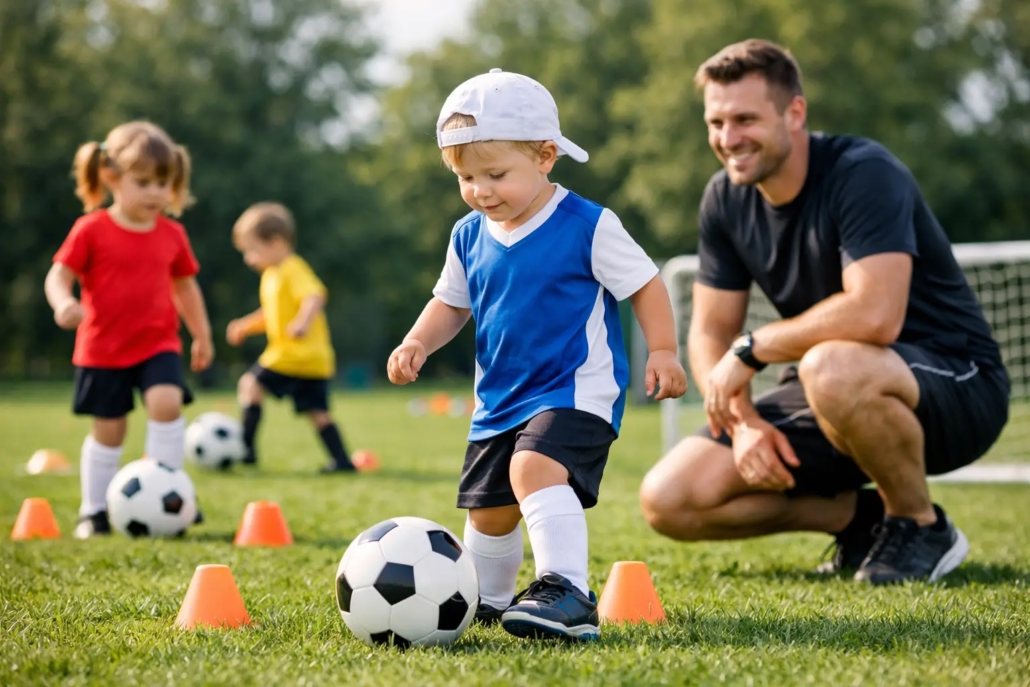
If your toddler spends more time chasing butterflies than the ball, that is not a problem to solve. It is the starting point. Great soccer training for toddlers does not begin with tactics, pressure, or long lines of drills. It begins with movement, attention, and confidence. At ages 2 to 4, the real win is not clean technique. It is helping a young player learn how to listen, move with purpose, and enjoy the ball enough to come back ready to work again.
Parents often hear two extremes. One says toddlers are too young for real training. The other treats early soccer like a race to create a prodigy. Neither view is useful. The truth is that early training matters, but only when it matches how toddlers actually learn. The right environment can build coordination, body control, and early soccer habits without pushing children beyond their developmental stage.
What soccer training for toddlers should actually do
At this age, soccer is a vehicle for athletic development. A ball gives structure to movement. A coach gives direction to attention. The session should improve balance, running mechanics, stopping and starting, spatial awareness, and the ability to follow simple commands.
That may sound basic, but basic is exactly where high-level development starts. A toddler who learns how to move under control, react to cues, and stay engaged in a structured activity is building a foundation that will matter later when technical and tactical demands increase. Early discipline does not mean harshness. It means clear expectations, repetition, and an environment where young players know what comes next.
This is also why unstructured chaos is not the same as development. Free play has value, but if every session turns into random running with no coaching intention, progress will be inconsistent. Toddlers need fun, but they also need structure. The best programs blend both.
The biggest mistake parents make early
The most common mistake is judging toddler soccer by older-player standards. Parents look for passing patterns, game awareness, or perfect dribbling touches. That is too early. For a toddler, success looks different. Can they keep the ball close for a few steps? Can they stop when asked? Can they change direction? Can they participate for most of the session without shutting down?
If the answer is yes, training is working.
Another mistake is overloading the child with too many instructions. Toddlers do not need a speech about inside-of-the-foot technique. They need one clear cue at a time. Push the ball. Stop the ball. Turn to the cone. Run back fast. Strong coaching at this age is simple, direct, and consistent.
What a quality toddler session looks like
A good session moves quickly. Toddlers do not have the attention span for long explanations or stationary drills. The strongest programs use short activity blocks, frequent transitions, and a lot of touches on the ball. Waiting in line is lost training time and, for this age group, usually a fast path to distraction.
The session should open with movement patterns that wake up coordination. That might include running, jumping, balance work, or simple reaction games. From there, the ball should become part of the activity, not a separate event saved for the end. Young players need to associate the ball with movement from the beginning.
Then comes repetition with variety. A toddler may practice stopping the ball five different ways in one class, but the objective stays the same. This matters because repetition builds skill, while variety keeps attention. High-level coaching for toddlers is not about making things more complex. It is about making the same core action engaging enough to repeat.
Sessions should also end before quality drops too far. When toddlers are mentally done, they are done. More time does not always equal more development. In many cases, 30 to 45 focused minutes is far more productive than an hour that drifts into fatigue and frustration.
Skills that matter most at ages 2 to 4
The priority list is narrower than many parents expect. Ball mastery matters, but in an age-appropriate way. The early focus should be on dribbling with both feet, stopping the ball, changing direction, and becoming comfortable moving near other players without fear.
Just as important are non-soccer athletic qualities. Coordination, balance, rhythm, acceleration, and body awareness all shape future soccer performance. A toddler who cannot yet control their body under movement will struggle to control a soccer ball consistently. That is why serious early development includes general athletic training woven into soccer activities.
Listening and emotional regulation belong here too. A toddler who can hear a cue, respond, and re-engage after a mistake is building competitive tools even before competition becomes the point.
Why environment matters more than equipment
Parents sometimes assume they need mini goals, specialty cones, or a pile of training aids at home. Those tools can help, but they are not the main factor. The environment matters more. Toddlers improve when the setting is predictable, safe, and led by coaches who understand early childhood behavior as well as soccer fundamentals.
That is where many casual programs fall short. If the coach lacks a progression plan, sessions can become entertainment with a ball rather than training with purpose. There is a difference between keeping children busy and actually developing them. Strong coaching creates a sequence. First comfort, then control, then consistency. That progression should be visible even at the youngest ages.
For families training year-round, indoor consistency can make a major difference. In a place like Columbus, Ohio, weather can interrupt momentum for months at a time. A professional indoor environment removes that variable and helps toddlers build familiarity through routine. At this age, routine is not a luxury. It is a performance tool.
How often toddlers should train
For most toddlers, one to two structured sessions per week is enough. More is not automatically better. It depends on the child’s energy, maturity, and overall activity level. Some toddlers thrive with a second class because they love repetition and quickly settle into routine. Others need more recovery and more free movement outside of formal training.
The key is consistency over intensity. A toddler who trains once a week for several months in a focused environment will usually make better progress than a toddler who does three sessions in one week and then disappears for a month. Development at this age is cumulative.
Parents should also watch the child’s response after training. If they leave energized and proud, the workload is probably appropriate. If they regularly leave overwhelmed, withdrawn, or resistant to returning, the environment or volume may need adjustment.
What parents can do at home without overdoing it
Home training should stay short and positive. Five to ten minutes is enough. The goal is not to recreate a full session. It is to reinforce familiarity with the ball and confidence in movement.
A simple dribble-and-stop game in the backyard or living room can be effective. So can short races to a cone, toe taps with assistance, or asking the child to push the ball to different colored markers. The best home sessions feel like play, but they still have a coaching objective.
What parents should avoid is constant correction. If every touch becomes a teaching moment, the child can start to associate the ball with pressure. At this age, enthusiasm drives repetition, and repetition drives progress. Protect that cycle.
When toddler soccer becomes a real developmental advantage
Early training becomes an advantage when it builds habits that carry forward. That includes comfort in a coached setting, willingness to engage, clean movement patterns, and early ball confidence. It does not guarantee elite performance later. Plenty depends on the child’s long-term interest, coaching quality, and consistency over time.
Still, there is a real edge in starting correctly. Players who enter later youth stages with better coordination, stronger listening habits, and less fear around the ball can absorb technical training faster. They are not starting from zero. They already understand how to train.
That is the bigger point. Soccer training for toddlers is not about forcing advanced soccer onto very young kids. It is about building the athletic and cognitive base that makes future development possible. When the work is structured, age-appropriate, and led with purpose, those early sessions do more than fill time. They create momentum.
For parents, the smart question is not whether your toddler looks like a soccer player yet. The better question is whether they are learning to move, listen, and grow in the right environment. If that foundation is being built, the progress is real, even before the game fully arrives.