
How to Evaluate Soccer Training Progress
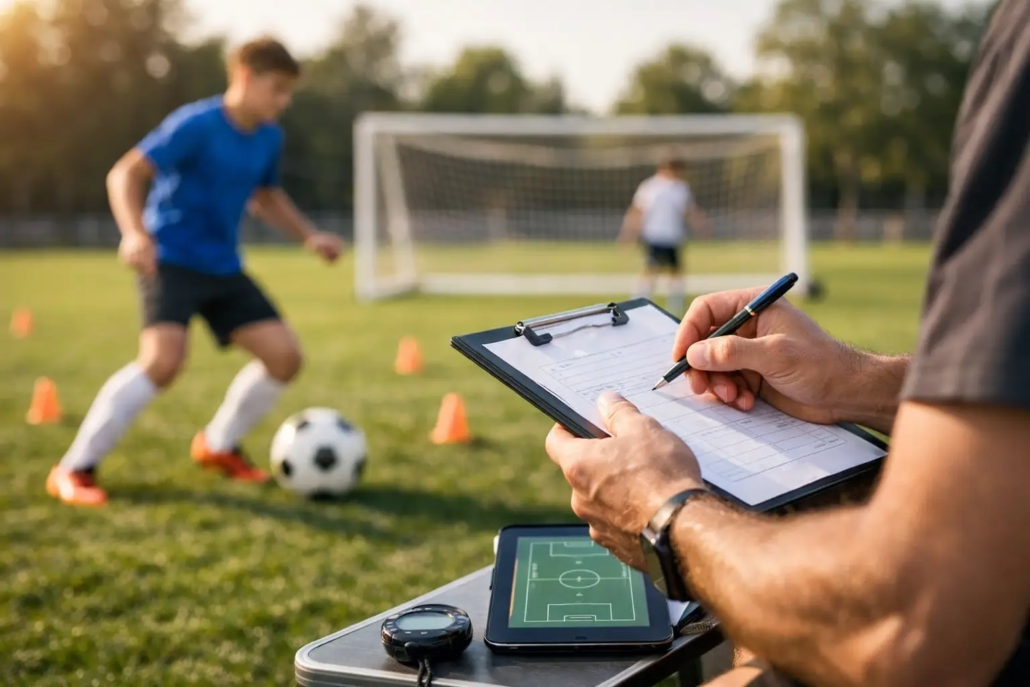
A player hits 100 clean touches in training, then disappears on Saturday. Another player looks less flashy in drills but keeps solving problems in real matches. That gap is exactly why parents and players ask how to evaluate soccer training progress – because effort alone is not the same as development, and highlights are not the same as consistency.
Real progress in soccer is measurable, but it is not always obvious week to week. Young players grow at different rates. Confidence rises and dips. Technical gains often show up in training before they hold under pressure in games. If you want an honest read on development, you need a standard that goes beyond goals scored or whether a coach says, “Good session.”
How to evaluate soccer training progress the right way
The strongest evaluation starts with one question: progress toward what? A six-year-old learning balance, coordination, and comfort on the ball should not be judged by the same standards as a 15-year-old preparing for varsity, academy, or college-level competition. Serious development requires age-appropriate benchmarks.
For younger players, progress usually looks like better body control, improved listening, cleaner first touches, and growing confidence to engage. For middle age groups, it starts shifting toward technical consistency, faster decision-making, and stronger habits in 1v1 moments. For advanced players, the standard becomes sharper – execution speed, tactical awareness, physical output, and the ability to perform under game pressure.
That is why vague feedback creates problems. “They looked better today” is not a development plan. A better approach is to evaluate five areas over time: technical execution, speed and movement quality, decision-making, competitive transfer, and mindset.
Technical progress should be visible and repeatable
Technical development is usually the first thing families watch, but it needs to be evaluated correctly. One great rep means very little. Ten clean reps under control matter more. Then the real test is whether those reps still hold up when the tempo increases.
Start with first touch. Is the player receiving the ball into space, or does the touch kill momentum? Then look at passing quality. Are passes weighted correctly and played with purpose, or simply completed? Dribbling should also be judged beyond flashy moves. Can the player change direction cleanly, protect the ball, and beat pressure without losing balance?
Shooting tells the same story. Power gets attention, but accuracy, speed of preparation, and consistency matter more in player development. A player who can strike one great ball but needs four setup touches is not yet game-ready at a high level.
The key is repetition under increasing difficulty. A player has truly improved technically when clean execution becomes normal, not occasional.
What technical improvement actually looks like
It often appears in small details before it appears in statistics. The receiving foot is cleaner. The head comes up earlier. The ball stays closer during acceleration. Weaker-foot hesitancy starts to disappear. Those details are not cosmetic. They are signs that the player is building reliable habits.
This is also where technology and structured training can help. Timed ball mastery work, reaction-based touch patterns, and tracked repetition scores create objective markers. In a serious training environment, tools like SoccerBot360 can show whether a player is just working hard or actually processing and executing faster.
Physical gains matter, but only if they serve soccer
Parents often notice speed first. A player looks quicker, stronger, or more explosive. That matters, but only in context. Soccer speed is not just sprint speed. It is how fast a player can see the moment, adjust body position, and execute the next action.
When evaluating physical progress, separate raw athleticism from soccer movement. Is the player closing space faster? Recovering better after transitions? Changing direction with control instead of drifting or crossing feet? Does the player hold technique late in the session, or fall apart once fatigue sets in?
A stronger athlete who still arrives late to the duel has not solved the real problem. On the other hand, a player with sharper footwork, better balance, and faster reactions may suddenly look “quicker” even without dramatic top-speed gains.
Movement quality is often the missing piece
This is where many players plateau. They train hard, but their mechanics limit them. Poor deceleration, weak posture, and slow first-step reactions reduce everything else. Speed tools and reaction systems, including platforms like the Speed Court, can expose those issues clearly because they measure response time, directional efficiency, and repeatability, not just effort.
That kind of data is useful because it removes guesswork. If reaction speed improves but ball execution lags, the training focus changes. If movement quality improves and match duels improve with it, the player is transferring gains the right way.
Decision-making is a major part of training progress
A technically gifted player can still stagnate if decision-making does not advance. This is where many families misread progress. The player may look excellent in isolated drills but struggle when the picture becomes unpredictable.
So ask better questions. Is the player scanning before receiving? Can they recognize when to play quickly and when to hold? Are they choosing the right moments to dribble, combine, switch play, or press? Better decisions usually show up as calmer play, fewer wasted touches, and stronger timing.
This part of development is harder to measure on paper, but easier to spot on film or through trained coaching eyes. Watch whether the player solves recurring problems faster than they did a month ago. If they used to force play into pressure and now consistently find safer or more dangerous options, that is real progress.
For advanced players, decision speed becomes a separator. At higher levels, it is not enough to know the right answer. The player must find it early enough for it to matter.
Game transfer is the standard that matters most
If training is working, something from the training ground should appear in competition. Not everything transfers immediately, but over time, there should be evidence. A better first touch should lead to cleaner possession. Stronger 1v1 work should lead to more successful duels. Improved scanning should reduce panic. Finishing work should produce better shot selection, not just harder shots.
This is the part parents should watch carefully. Do not judge a player only by goals, assists, or wins. Those can be distorted by team level, position, and match context. Instead, watch for repeatable actions. Is the player getting on the ball more often? Escaping pressure more consistently? Defending with better timing? Competing harder in second-ball moments?
If training performance never appears in games, one of two things is happening. Either the training is too disconnected from match demands, or the player has not yet built enough confidence to apply the skill under pressure. Both can be fixed, but only if they are identified honestly.
Confidence, discipline, and response to coaching count too
Not all progress is physical or technical. Some of the most important gains happen in mentality. A serious player starts training with purpose. They recover faster after mistakes. They take correction without shutting down. They compete harder even when they are not the best player in the group.
That matters because long-term development is not linear. A player may look worse for a short period while rebuilding mechanics or adjusting to a more demanding level. Families who only track outcomes can panic too early. Sometimes a temporary dip is part of a bigger rise.
This is why discipline is part of evaluation. Is the player arriving ready? Are they focused during instruction? Are they putting in quality reps or coasting through sessions? A player with the right mindset often keeps progressing after others stall.
How to build a simple progress review system
The best way to evaluate development is to review it monthly, not emotionally after every session or game. Choose a few categories that match the player’s stage and position. For example, a wide player might track first touch under pressure, 1v1 success, crossing quality, repeat sprint output, and defensive recovery habits. A younger beginner may focus on ball control, coordination, confidence, and listening.
Write brief notes. Use short video clips if possible. Compare over four to six weeks, not four to six days. That time frame is long enough to reveal patterns and short enough to make training adjustments.
If you are working in a professional training setting, ask for specific feedback instead of general praise. Ask what has improved, what is still limiting the player, and what the next benchmark should be. High-level coaching should provide a pathway, not just encouragement.
One mention here matters: in a structured academy environment like Soccer Field Academy, progress is easier to evaluate because training, technology, and coaching language are aligned around development standards rather than guesswork.
What slows progress even when a player is talented
Sometimes the issue is not effort. It is mismatch. The training may be too easy, too random, or not specific enough. The player may need more repetitions, a smaller coach-to-player ratio, or a better performance plan around speed, strength, and recovery. In other cases, the player is improving, but the game environment does not allow those gains to show yet.
That is why honest evaluation matters. It protects families from false confidence, but it also protects players from being underestimated during the quieter stages of growth.
The best players are not the ones who look impressive once. They are the ones who keep raising their baseline. If you measure progress with that standard, you will see development more clearly and train with far more purpose.
Keep your eyes on repeatable improvement, not random flashes. That is where real players are built.