
Future Soccer Coaching Technology That Matters
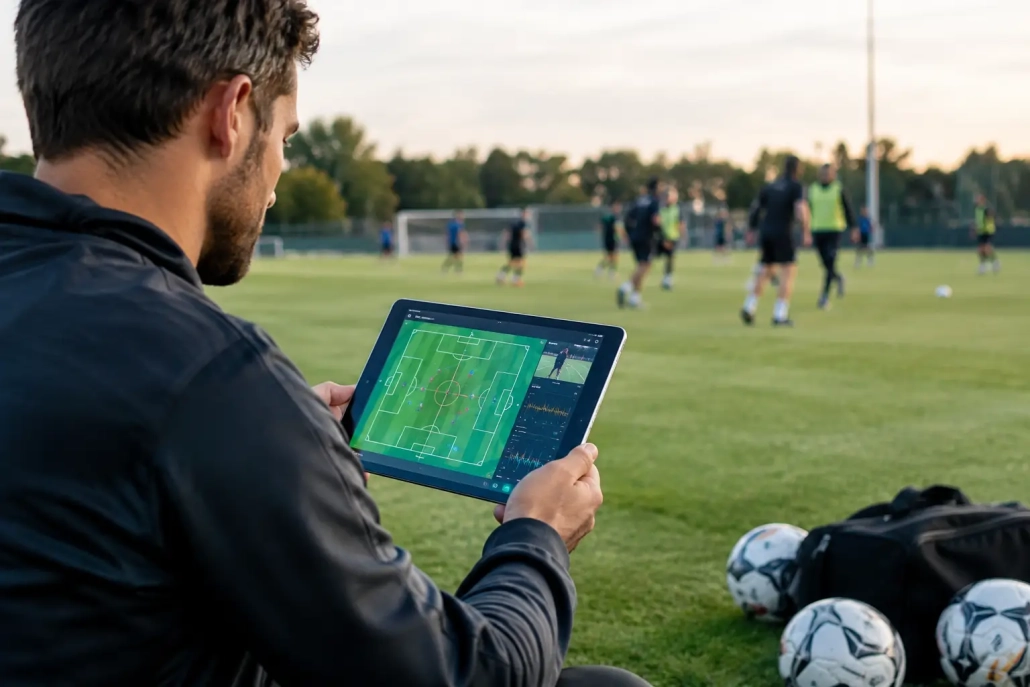
A player can complete 200 touches in a session and still repeat the same mistake 200 times. That is the problem future soccer coaching technology is built to solve. The right tools do not replace hard work, ball mastery, or a demanding coach. They make each repetition more visible, more purposeful, and easier to improve.
For serious youth players, technology is no longer a novelty reserved for professional clubs. It is becoming part of how players measure progress, build confidence under pressure, and train with intention between team practices. For parents, the value is not a screen full of numbers. It is knowing whether training is producing better movement, sharper decisions, and more reliable performance on the field.
Future Soccer Coaching Technology Starts With Better Feedback
The most valuable technology shortens the gap between action and correction. A player strikes a pass, changes direction, scans for an option, or receives on the half-turn. Instead of waiting until the end of practice to hear general feedback, the player can see a result immediately and adjust the next repetition.
That matters because young athletes learn quickly when feedback is specific. “Work harder” is not a coaching point. “Open your hips before receiving so your first touch escapes pressure” is a coaching point. Technology can show the outcome of that adjustment through reaction time, completion rate, touch consistency, movement efficiency, or video review. The coach still identifies the real issue and explains the solution. The tool simply makes the lesson harder to forget.
At Soccer Field Academy, tools such as SoccerBot360 and the Speed Court support that process. They create game-like demands around ball control, visual recognition, reaction, and movement, then provide measurable results players can chase over time. Used correctly, that data gives training a standard beyond simply feeling tired at the end of a session.
The Tools That Will Shape Player Development
The future will not be defined by one machine or one app. It will be defined by training environments that connect technical execution, physical movement, and soccer intelligence. The best systems will help players understand not just what happened, but why it happened.
Smart Ball-Mastery Training
Interactive passing and dribbling systems can challenge players to react to changing lights, targets, colors, and commands. This turns isolated touches into decision-making repetitions. A player may need to receive with the correct foot, recognize the next target, protect the ball, and release quickly.
That is closer to the real game than performing the same cone pattern with no pressure or information to process. It is especially useful for developing first touch, passing accuracy, weak-foot confidence, scanning habits, and speed of play. But there is a trade-off: an interactive system can create speed without teaching game context unless a qualified coach connects the drill to positioning, body shape, and match situations.
Reaction and Movement Measurement
Speed is more than a 40-yard dash. In soccer, a player must recognize a cue, accelerate, decelerate, change direction, and regain control of the ball. Reaction-based training tools can measure how efficiently an athlete moves through those demands.
For a younger player, that may mean improving coordination, balance, and confidence moving in multiple directions. For a competitive player, it may mean identifying whether they lose time when planting off one leg, changing direction, or reacting to a visual cue. Those details can guide better sports performance work while helping players move with more control and reduce avoidable injury risk.
Video That Teaches, Not Just Highlights
Video analysis will become more accessible, but access alone does not produce learning. A highlight clip can build excitement. A well-coached video review can build a smarter player.
The best reviews focus on a few repeatable questions: What did you see before receiving? Where was your first touch taking you? What options did you create or remove? Did your body position match the next action? Players should leave video sessions with one or two clear behaviors to train, not a long list of mistakes.
For advanced players, positional video can accelerate tactical understanding. A midfielder can study spacing before the ball arrives. A defender can identify the moment to delay versus step. A forward can see how an angled run creates a passing lane. The goal is not to make young players overthink every second. The goal is to help them recognize patterns faster when the game moves fast.
Personalized Development Data
As technology improves, player profiles will become more useful. A profile may track technical scores, movement benchmarks, session attendance, training targets, and coach observations over a training cycle. This gives families a clearer picture of development than a single tryout result or one strong weekend tournament.
Data must be interpreted carefully. A player with a lower score is not automatically behind, and a player with a high score is not automatically match-ready. Age, maturity, confidence, position, training history, and competitive environment all matter. The purpose of measurement is to establish a starting point, set an appropriate target, and show whether the training plan is working.
What Technology Cannot Do for a Player
No sensor can teach discipline. No automated drill can create courage in a difficult match. No dashboard can replace a coach who understands how to challenge a player without crushing confidence.
Technology also cannot fully recreate the chaos of 11v11 soccer. A player may perform perfectly in a controlled indoor station yet struggle when an opponent presses from the blind side, teammates move unpredictably, and the score changes late in a game. That is why the strongest development model blends technology-based repetitions with coached small-sided games, technical training, strength and speed work, and real match experience.
Parents should be cautious when a program sells technology as the entire answer. Ask how the results are used. Does the coach review the information with the player? Do training plans change based on the results? Is the tool appropriate for the athlete’s age and goals? If the answer is no, the technology may be impressive, but it is not yet developmental.
How Parents Should Evaluate Future Soccer Coaching Technology
The right investment depends on where a player is in the development pathway. A six-year-old does not need a complex data report. They need fun, consistent coaching that builds coordination, comfort with the ball, and a love for the game. Technology can add engagement, but fundamentals come first.
An ambitious middle-school player may benefit from measurable work on first touch, reaction speed, and movement quality, particularly if they are beginning to train outside their team environment. High school players preparing for elite clubs, showcases, or college pathways may need a more detailed plan that combines video, physical benchmarks, position-specific technical work, and honest coaching feedback.
Look for four signs that technology is being used well: it serves a defined soccer skill, produces information the coach can explain, creates a measurable target for the player, and fits into a larger development plan. If it only creates entertainment, it may still be fun, but it should not be confused with high-level training.
The Future Is More Personal, Not More Automated
The next generation of soccer coaching technology will make individualized training more practical. Players will receive more immediate feedback, coaches will spot patterns sooner, and families will have more evidence of progress across a season. That is a major advantage when the coaching environment is disciplined, structured, and built around long-term development.
Still, the standard remains simple. Technology should help a player become more confident on the ball, quicker in thought, cleaner in movement, and more prepared for the demands of competition. Choose training where the numbers lead to better coaching, then let consistent work turn that feedback into performance when the game is on the line.