Essential Soccer Drills for Goalkeepers at Every Level
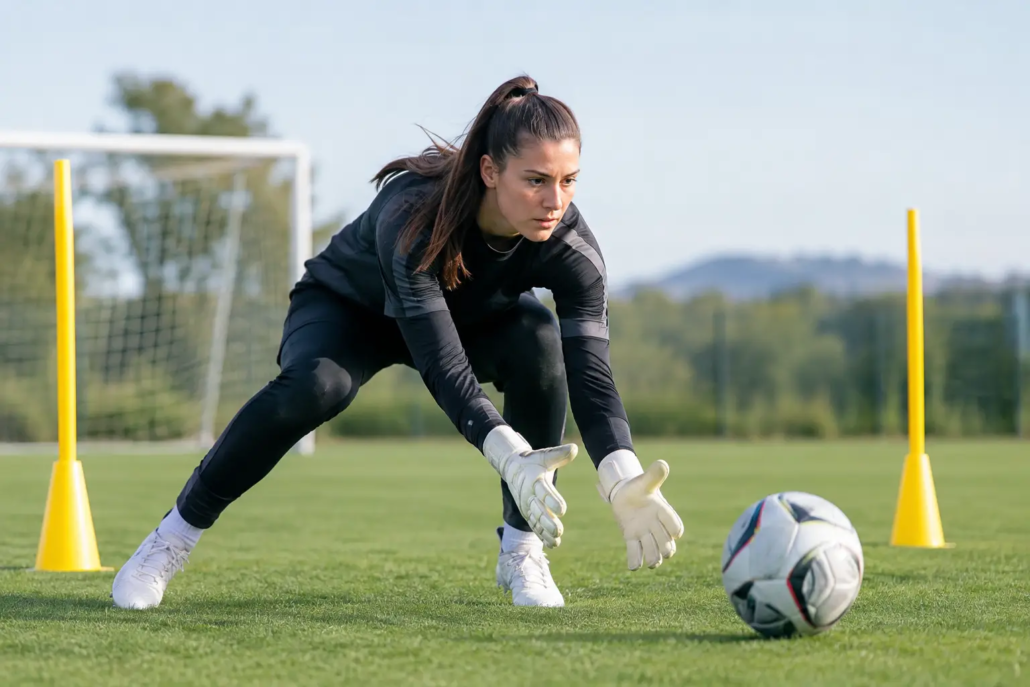
A goalkeeper can make ten routine saves and still be judged by the one moment that decides the match. That is why essential soccer drills for goalkeepers cannot be limited to shooting lines and highlight-reel dives. Great keepers develop reliable hands, fast feet, a clear voice, and the composure to make the next decision when the game speeds up.
For youth players, quality goalkeeper training should build in layers. A younger keeper first needs movement confidence and safe catching technique. An advanced keeper needs to read body shape, manage space behind the back line, play accurately under pressure, and reset quickly after a goal. The drills below create that progression when coaches demand detail, repetition, and purposeful feedback.
Essential Soccer Drills for Goalkeepers Begin With Movement
A goalkeeper who cannot arrive balanced will struggle to catch, dive, or distribute consistently. Before working on difficult saves, train the athletic position: feet just beyond hip width, knees flexed, chest slightly forward, hands available in front of the body, and weight on the balls of the feet. The goal is not to bounce endlessly. It is to be ready to move in any direction.
Set Position and Collapse Save Drill
Set up two cones six to eight yards apart. The keeper starts in the center while a coach or server stands five to seven yards away with a ball. On the server’s call or touch, the keeper adjusts laterally into a balanced set position. The server then rolls a ball to either side for a low save.
For beginner keepers, keep the service slow and close. Teach them to step toward the line of the ball, get their hands down early, and bring the ball safely into the body. For older or more experienced players, increase the pace and require a recovery movement after each save. They should not admire the save. They should secure the ball, get up efficiently, and scan for the next action.
The biggest coaching correction is usually footwork. Many young keepers reach across their body or fall backward because they have not taken the small adjustment step first. Demand the step. Clean footwork makes the save look simple because it makes the save simpler.
W-Catch and High Ball Handling Drill
A goalkeeper’s hands must be dependable when a ball is struck directly at the chest, driven above the shoulders, or dropping from a cross. Place the keeper six to ten yards from a server. Begin with firm throws at chest height, then progress to balls above the head and slightly to either side.
The keeper should present a relaxed catching shape, keep eyes on the ball through contact, and absorb the ball rather than letting it rebound. On high service, encourage the keeper to attack the ball at its highest safe point. Catching above the head should finish with the ball protected, elbows controlled, and the body prepared for contact.
This drill is not about throwing as hard as possible. It is about repetition with standards. If a keeper catches 30 balls with poor hand shape, they have rehearsed a poor habit 30 times. Slow the drill down when necessary, correct the detail, then add speed and movement.
Reaction Drills Should Train Reading, Not Guessing
Fast reactions matter, but goalkeepers rarely react to a shot in isolation. They read the attack first: the striker’s first touch, the angle of approach, the plant foot, the open hip, and the position of defenders. Training should make keepers process visual information before the ball is struck.
Color Call Deflection Drill
Place four colored cones around the top of the six-yard area or, for indoor training, around a marked goal area. The keeper starts in position while a coach stands with several balls. Before shooting or passing a ball toward goal, the coach calls a color. The keeper must identify the cone, adjust toward it, and then react to the service.
The first version can use clean shots. As the player improves, add a deflection player, a screen, or a second ball. This challenges the keeper’s eyes and feet without turning the drill into chaos. The keeper must move, reset, locate the ball, and make a technical save.
For competitive players, ask what they saw before the strike. Did they recognize the shooter was opening their body? Did they get their feet set before the release? A goalkeeper with quick hands but late recognition will always be under pressure. Cognitive speed is part of goalkeeper speed.
Close-Range Rebound Drill
Use a server positioned near the penalty spot and a second server or rebound board nearby. The first ball is played low or at mid-height for a save. Immediately after the save, the second ball is served into a new area. The keeper must recover, find the ball, and make a second action.
This is an excellent drill for teaching that the first save is not always the end of the play. Keepers should direct rebounds away from central danger whenever possible, then recover with urgency. The right progression depends on age. Younger players may need two controlled services with a pause between them. Older keepers can handle volleys, low driven shots, and live rebound pressure.
Train Distribution as a Match-Winning Skill
The modern goalkeeper is a field player with gloves. A keeper who makes saves but gives the ball away every time their team tries to build possession limits the entire team. Distribution needs technical repetition with targets, but it also needs decision-making under pressure.
Three-Gate Distribution Drill
Create three passing gates using cones: one short central option, one wide option, and one longer target. A coach or teammate acts as a light-pressure defender. The keeper receives a back pass, takes a first touch into space, scans, and plays through the best available gate.
At first, the coach can call the target. Then remove the call and let the keeper read the defender’s position. If the central lane is closed, can they play wide? If the defender presses one side, can they shift the ball and find the opposite gate? The value is not just striking accurate passes. It is recognizing the next pass before the first touch.
Use both feet. Young keepers often avoid their weaker foot until the game forces the issue. Build confidence early with shorter distances and clear targets. As precision improves, demand firmer passes, longer range, and quicker release times. Indoor training environments are especially valuable here because every repetition can be controlled, measured, and repeated without weather interruptions.
Overhand Throw and Side-Volley Drill
Not every counterattack begins with a pass from the ground. Set wide targets at different distances. The keeper catches a ball, quickly assesses the target, and delivers either an overhand throw or a side volley based on the coach’s cue.
The overhand throw should be direct, accurate, and released from a balanced base. The side volley requires timing and controlled contact rather than raw power. Players should learn when each option fits the game. A quick throw may exploit space before defenders recover. A longer volley may be necessary when a team is pressing high. The correct choice depends on the tactical moment, not on which technique looks more impressive.
Add Communication and Pressure to Every Goalkeeper Session
Goalkeepers organize what they can see. Even at younger ages, encourage clear, simple commands: “keeper,” “away,” “turn,” “man on,” and “step.” The voice should be early and specific. A late shout adds noise. An early command gives teammates information they can use.
In a finishing drill, require the keeper to call for a defender to close the ball, mark a runner, or clear a rebound before the shot arrives. Do not expect perfect tactical language from an eight-year-old. Expect the habit of communicating. As players mature, the language becomes more detailed and the keeper becomes a more confident leader.
Pressure should also be earned gradually. Constantly blasting shots at a young goalkeeper can create fear, poor technique, and avoidance. On the other hand, a keeper who only receives perfect serves will be unprepared for match disorder. Build from controlled repetition to realistic decision-making. The right difficulty is challenging enough to expose a weakness but achievable enough to create a better response.
At Soccer Field Academy, goalkeeper development fits the same standard as every position: measurable progress, demanding coaching, and training that transfers to the field. A serious keeper does not wait for match day to find out whether their hands, feet, and decisions hold up.
The best session ends with a keeper wanting one more ball, one cleaner catch, one sharper pass, or one braver command. That mindset matters. Goalkeepers grow when they treat every rep as a chance to become the player their team trusts when the match is on the line.