SoccerBot360 Versus Drills for Better Players
A player can complete hundreds of cone touches and still struggle when a pass arrives at game speed. That is where the SoccerBot360 versus drills conversation becomes valuable for players and parents. The question is not whether one training method is good and the other is bad. The real question is which method develops the skill the player needs next – and whether that skill will hold up under pressure.
For serious youth players, development cannot rely on random repetition. It requires a progression: clean technique, quicker recognition, stronger movement habits, and the confidence to execute when the ball, opponent, and game are moving.
SoccerBot360 Versus Drills: What Each Method Trains
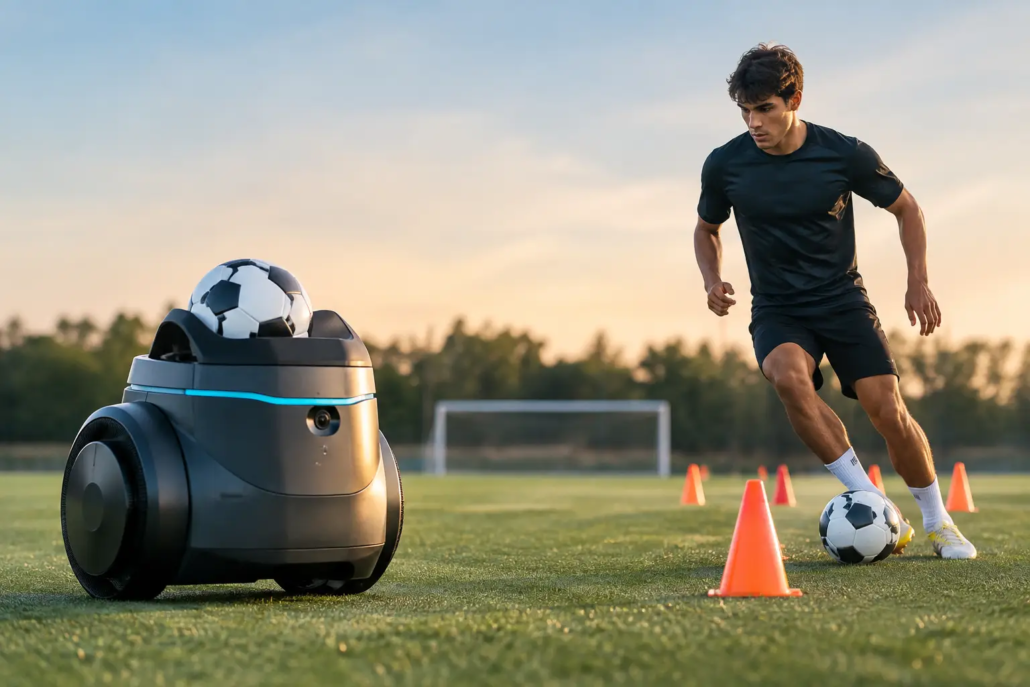
SoccerBot360 training is built around repeated ball contacts with immediate demands on the player. The athlete must read the ball, prepare the body, receive with intention, and return the ball accurately. Because the ball is delivered from multiple angles and at changing tempos, the player is not simply rehearsing a motion. They are practicing the timing and attention required to control a live pass.
That distinction matters. A strong first touch is not just a technical skill. It is a decision made in a fraction of a second. Which foot should receive? Where should the first touch travel? Does the player need to play quickly, protect the ball, or turn away from pressure? Technology-based repetition can create a high volume of these moments while tracking performance and making progress visible.
What SoccerBot360 Can Do Especially Well
SoccerBot360 is particularly effective for players who need more quality touches, faster feet, and greater consistency receiving and passing. A player can work at a level that challenges them without waiting in a long line or losing focus between repetitions. The pace creates urgency, while measurable scores give athletes a standard to chase.
For parents, that measurement has value beyond a number on a screen. It can show whether the player is improving accuracy, handling faster service, or sustaining concentration through an entire work interval. Used correctly, the technology turns practice from “I worked hard” into “I know what I improved.”
Why Traditional Drills Still Matter
Traditional drills remain essential because soccer is not played against a machine or a set of cones. It is played with teammates, opponents, changing spaces, and imperfect moments. A quality coach uses drills to teach body shape, scanning, movement off the ball, defensive pressure, communication, and tactical choices that a player cannot fully learn in an individual technology session.
A passing pattern with teammates, for example, can teach a player when to check away, when to open their hips, and how to support the next action. A 1v1 activity teaches deception, patience, and the relationship between an attacker and a defender. A small-sided game tests whether a player can apply technical work when tired, crowded, and accountable to the team.
Drills are also where coaching has its greatest impact. An experienced coach can identify why a touch is failing. Maybe the player’s hips are closed. Maybe they are watching the ball too long. Maybe the supporting foot is in the wrong position, or the decision is late because the player did not scan before receiving. The best correction is not always more repetitions. Sometimes it is one precise coaching detail, followed by the right repetition.
The weakness of poorly designed drills is not that they are traditional. It is that they become passive. Long lines, low ball contact, and patterns with no clear game purpose can make players look busy without developing game-ready habits. Elite development demands more than activity. It demands intention.
The Best Development Plan Uses Both
The strongest answer to SoccerBot360 versus drills is not a winner-take-all choice. Technology and coached drills solve different parts of the development equation.
SoccerBot360 can raise a player’s technical floor. It gives them repeated chances to sharpen first touch, passing accuracy, foot speed, reaction time, and concentration. This is especially useful for players who need confidence on the ball or competitive athletes who need more demanding repetitions than team training alone can provide.
Coach-led drills build the bridge from isolated execution to soccer intelligence. They teach players how to recognize cues, combine with teammates, respond to pressure, and make choices within a tactical system. Then small-sided games and match play reveal whether the skill transfers when the answer is not obvious.
At Soccer Field Academy, that combination is the point. Technology should support high-level coaching, not replace it. A machine can deliver the ball again and again. A qualified coach can explain what the player should see before the ball arrives, correct the technique, and raise the standard when the work becomes comfortable.
How to Choose the Right Focus for Your Player
The right training choice depends on the player’s current gap, age, and competitive goal. A younger player may need confidence, coordination, and a positive relationship with the ball before they need high-speed performance data. An advanced player preparing for a demanding club season may need sharper receiving under pressure and a training plan that exposes weak-foot limitations.
Choose More SoccerBot360 Work When Consistency Is the Issue
If a player miscontrols routine passes, struggles with their weaker foot, or loses technique as the pace increases, focused technology sessions can help. The volume matters. Repeating an intentional skill hundreds of times with feedback builds familiarity and control that occasional team practices may not provide.
This does not mean chasing a score without purpose. The player should know the technical goal for the session: receive across the body, play with two touches, improve weak-foot accuracy, or maintain posture at a higher speed. Precision comes before pace. Once the movement is clean, the demand can rise.
Choose More Coached Drills When Decisions Are the Issue
A player may look sharp in isolated ball work but disappear in a game. When that happens, the problem is often scanning, positioning, communication, or confidence under pressure. Coached drills with teammates and opponents are the better training environment because they force the athlete to process information instead of simply executing a programmed response.
Players who want to move into more competitive environments also need tactical habits. They must learn how to create angles, recognize space, defend transitions, and make teammates better. These are developed through purposeful coaching and competitive game-based activities.
Use Both When the Goal Is Long-Term Progress
Most committed players benefit from a weekly rhythm that includes technical repetition, coach-led instruction, and game application. The exact balance changes throughout the year. Before tryouts, a player may need intense ball mastery and speed of play. During the season, the focus may shift toward recovery, weak-foot maintenance, or specific corrections from match performance.
The best plan is individualized. It should challenge the player without piling on meaningless volume. More training only helps when the quality is high, the workload is appropriate, and the athlete has time to recover and absorb the coaching.
What Parents Should Look For
Do not judge a training session only by how tired your player looks afterward. Ask whether they received enough quality repetitions, whether someone corrected their technique, and whether the activity connected to a real game action. A productive environment gives players a clear standard and shows them how to reach it.
Look for visible progress over time: cleaner first touches, more willingness to use the weaker foot, quicker decisions, stronger body position, and greater confidence when the ball arrives. Those changes are more meaningful than a single high score or a flashy drill video.
The player who improves fastest is usually not the one searching for a shortcut. It is the player who trains with purpose, accepts correction, and returns ready to raise the standard again.