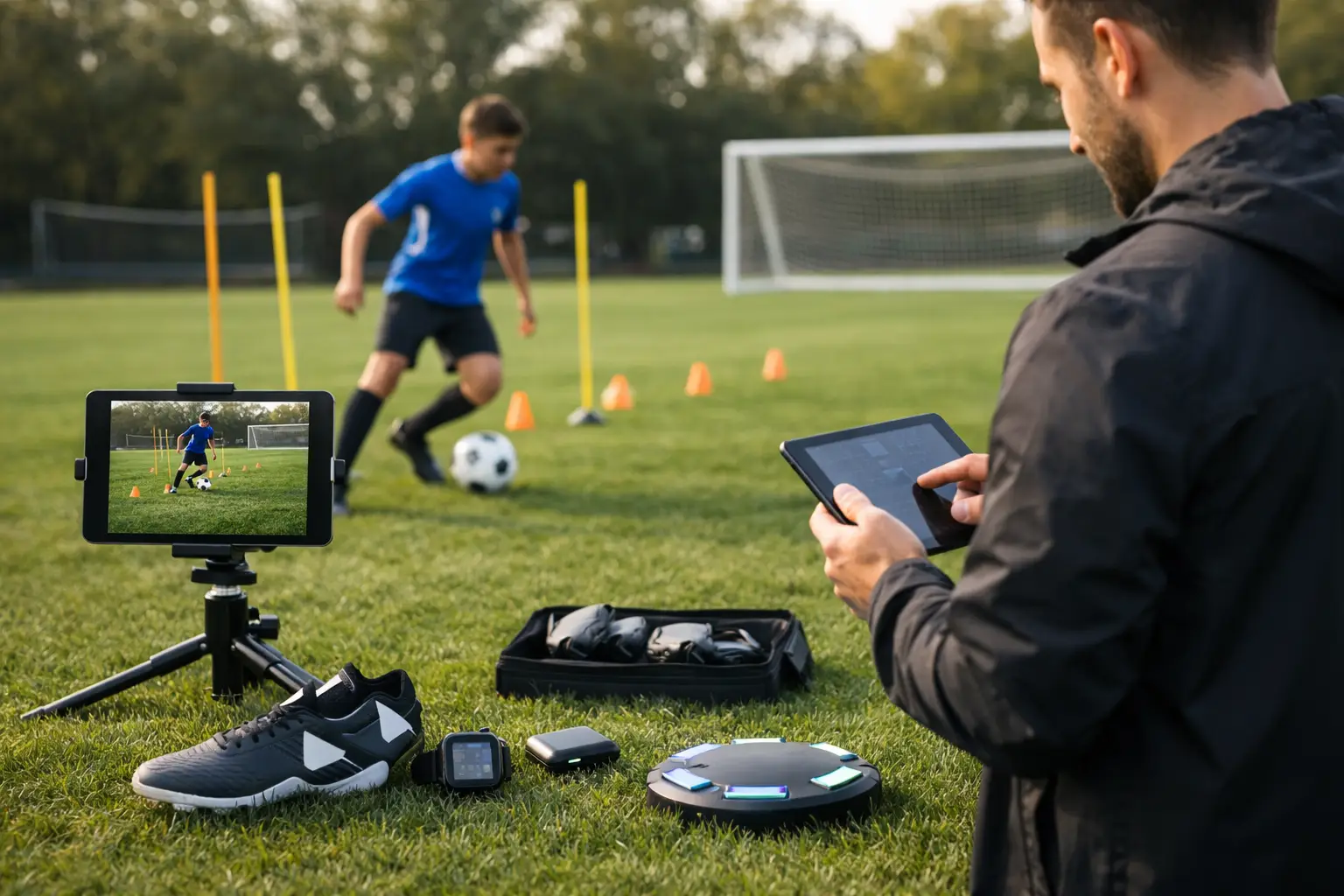
SoccerBot360 Youth Soccer Training That Builds Results
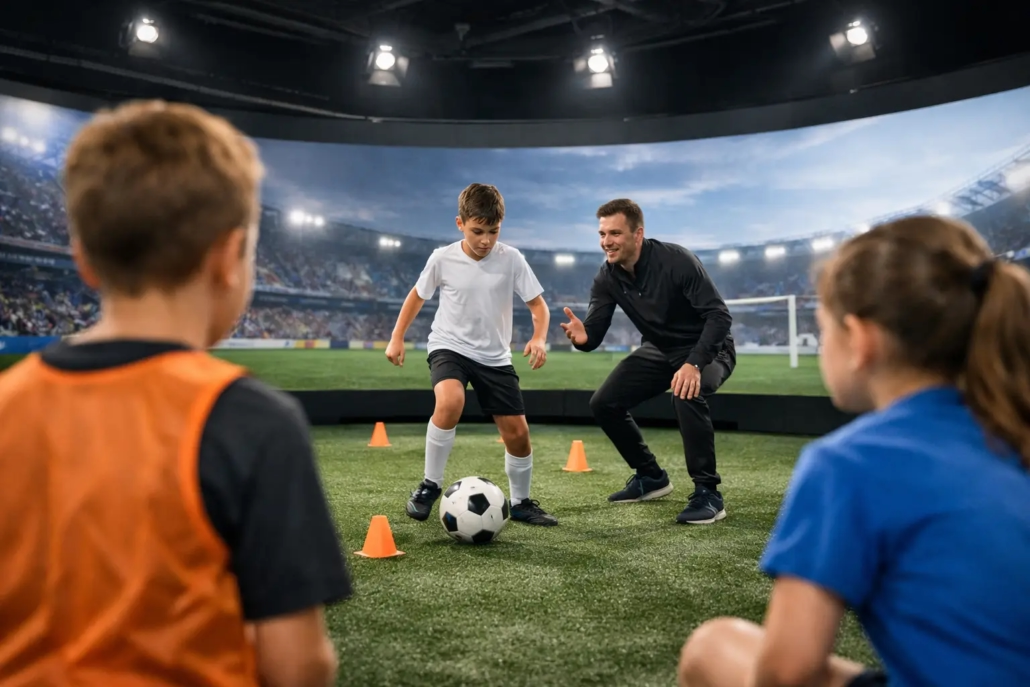
The difference shows up in the first touch.
A player receives the ball under pressure, opens their body, and plays the next pass without hesitation. Another player takes an extra touch, looks down, and loses the moment. That gap is exactly where soccerbot360 youth soccer training earns its value. It is not a gimmick session or a flashy add-on. Used correctly, it is a focused training method that improves technical repetition, scanning habits, reaction speed, and confidence on the ball.
For parents, that matters because improvement should be visible, not vague. For players, it matters because the modern game rewards speed of thought just as much as speed of movement. The strongest development environments do not separate those two pieces. They train them together.
What SoccerBot360 youth soccer training actually develops
SoccerBot360 is built to challenge a player’s technical execution while forcing quick visual processing and decision-making. Instead of repeating touches in a passive way, players must react to cues, adjust body position, and execute the right action on time. That changes the quality of the repetition.
A lot of youth players can look sharp in isolated drills. They can juggle, pass against a wall, or move through cones with no real pressure. Then the game speeds up and their technique drops. Their first touch gets heavy, their head drops, and their decision arrives a second late. That is where technology-based training has real value when it is coached with purpose.
The goal is not just more touches. The goal is better touches under a cognitive demand. When a player has to recognize a cue, reposition, receive, and play quickly, the training starts to reflect match reality. That is how skill work begins to transfer.
Why soccerbot360 youth soccer training fits serious player development
Serious development always comes back to measurable progress. Players need repetition, but they also need standards. Coaches need a way to challenge concentration, clean up technique, and track whether a player is improving over time.
That is one reason soccerbot360 youth soccer training fits well inside a structured academy model. It creates a controlled environment where players can be pushed with intent. A coach can focus on body shape, timing, touch quality, speed of execution, and consistency from rep to rep. Instead of guessing whether a player is getting sharper, you can evaluate output and progression more clearly.
It also helps solve a common youth training problem. Many players train hard, but not always efficiently. They spend time on activities that feel busy without targeting specific weaknesses. A player who needs quicker feet is different from a player who needs cleaner passing surfaces. A player who panics under pressure is different from one who lacks technical consistency. Technology alone does not diagnose that, but it gives coaches another tool to expose it.
That distinction matters. The machine does not replace coaching. It sharpens coaching.
The biggest benefits players feel on the field
The first benefit is confidence. Players who get more quality repetitions at game speed tend to trust their touch more. They stop treating the ball like a problem and start treating it like an advantage. That changes how they receive, turn, and combine.
The second benefit is quicker processing. Young players often hear, “play faster,” but that instruction is incomplete. Most of the time, they do not need to move their feet faster first. They need to see the picture earlier. Training that combines technical work with reaction cues helps build that habit.
The third benefit is consistency. Strong players are not defined by one great action. They are defined by repeating good actions over and over. SoccerBot360 creates a framework where consistency can be trained instead of assumed.
There is also a physical benefit, even though the main focus is technical and cognitive. Efficient footwork, balance, body control, and quick directional adjustment all improve when a player is forced to move with precision. That does not replace true speed and strength work, but it complements it well.
What parents should understand before investing in this type of training
Parents usually ask the right question: will this help my child in real games?
The honest answer is yes, if the training is part of a bigger development plan. No single session format can carry a player’s development by itself. SoccerBot360 is most effective when it supports a complete system that includes coached technical training, decision-making, athletic development, and game application.
That is the trade-off. If a player only does isolated technology sessions with no larger coaching structure, improvement may be limited or narrow. They may get cleaner in a controlled setting but still struggle to apply it under live pressure. On the other hand, when those sessions are integrated into academy training, private coaching, or position-specific work, the results tend to be stronger because each piece reinforces the next.
Age and stage also matter. A younger player may use it to build coordination, comfort on the ball, and attention habits. An older competitive player may use it to sharpen scanning, one-touch play, and speed of execution. The training should not look identical for a 7-year-old beginner and a 16-year-old chasing varsity, academy, or college-level performance.
How elite coaches use SoccerBot360 the right way
The strongest coaches do not use technology for entertainment. They use it to target outcomes.
That means identifying what the player needs, setting the demand level correctly, and coaching details that transfer to the game. A player may be asked to receive on the back foot, play with a specific surface, adjust hip position before contact, or increase tempo without losing accuracy. Those details are where development happens.
This is also why session design matters. If the work is too easy, the player goes through the motions. If it is too difficult, technique breaks down and the rep quality drops. Elite coaching lives in that middle ground where the player is challenged, corrected, and pushed to improve without drifting into chaos.
At Soccer Field Academy, that philosophy aligns with how real long-term development should work. Technology should support a progression model, not replace one. A serious player-development environment uses every tool for a reason, whether that is licensed coaching, private instruction, performance training, or technology sessions that create measurable demands.
SoccerBot360 youth soccer training vs traditional drills
Traditional drills still matter. Players need clean passing mechanics, receiving work, finishing reps, and foundational ball mastery. There is nothing wrong with cone work or patterned repetition when those drills are coached well.
But traditional drills can become too predictable. The player knows where the ball is going, when it is coming, and what action happens next. That predictability lowers the cognitive load. It may improve comfort, but it does not always improve adaptability.
SoccerBot360 changes that by forcing recognition and reaction. The player must process information quickly and execute with less time. That is a closer match to what the game demands.
Still, it depends on the player’s needs. A beginner with poor basic technique may need more simple repetition before higher-speed reaction work becomes useful. An advanced player often benefits immediately because the system exposes the gap between technical ability and game-speed execution. Good development programs know when to simplify and when to raise the demand.
Who benefits most from this training format
Players who want more than casual participation usually benefit the most. That includes the athlete trying to earn more minutes, the player preparing for tryouts, and the serious competitor who needs every detail sharper.
It is also valuable for players who appear athletic but lack composure on the ball. Many youth athletes can run, compete, and cover ground, yet still struggle in tight spaces or under pressure. Technology-driven technical training can help bridge that gap.
For younger players, the biggest win is often confidence and coordination. For middle school and high school players, it is usually speed of play. For advanced players, it becomes about refining margins. At higher levels, those margins decide whether a player keeps possession, breaks pressure, or creates the next action before the defender can recover.
That is why families should think beyond the novelty factor. The real question is not whether the training looks advanced. The real question is whether it builds habits that show up on game day.
The best training environments never rely on hype. They rely on standards, progression, and proof. If a player is becoming cleaner under pressure, quicker in decision-making, and more confident in possession, the work is doing what it should. And when those gains are reinforced week after week, serious results stop being a hope and start becoming the expectation.