
Soccer Skills Progress Tracking That Works
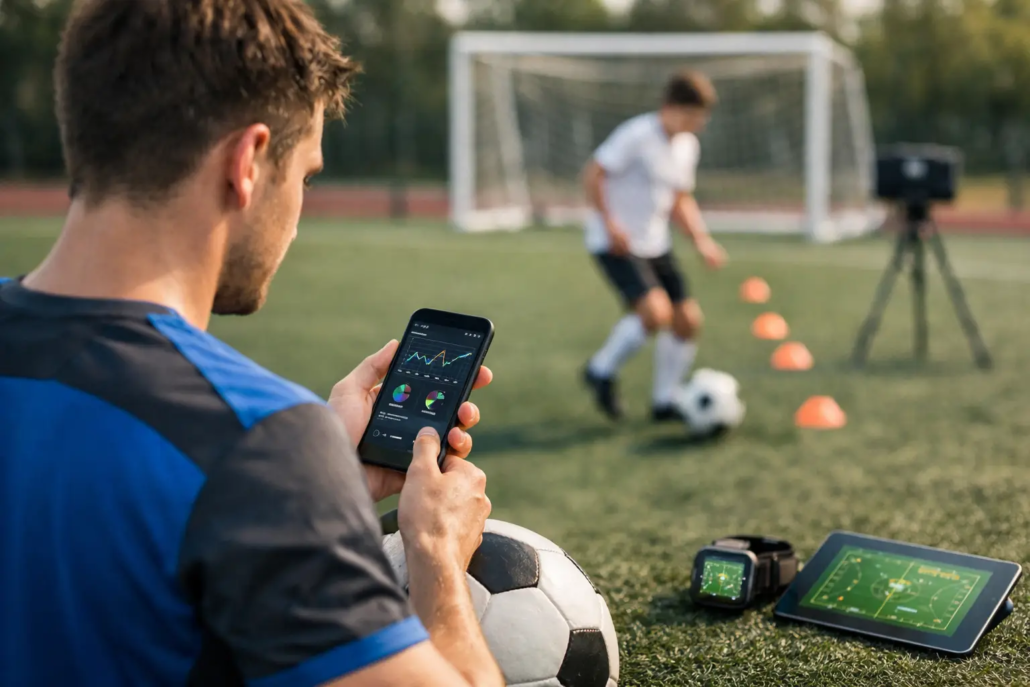
A player trains hard for eight weeks, touches the ball thousands of times, and still hears the same question on the drive home: Are you actually improving? That is where soccer skills progress tracking changes everything. It turns effort into evidence, replaces guesswork with standards, and gives players, parents, and coaches a clear picture of what is moving forward and what still needs work.
At a serious academy, improvement cannot be based on vague impressions. Confidence matters, but confidence without proof fades fast when competition gets stronger. Players need a system that shows whether their first touch is cleaner under pressure, whether their weak foot is becoming reliable, whether their speed of play is improving, and whether technical gains are holding up in real game situations.
Why soccer skills progress tracking matters
Most youth players do not plateau because they stop caring. They plateau because their training and their feedback stop being specific. A player might hear, “move the ball faster” or “be sharper,” but those phrases do not tell a family what has improved, what is behind, or what should be trained next.
Soccer skills progress tracking creates a development pathway. For younger players, that may mean measuring coordination, balance, ball familiarity, and confidence in simple technical actions. For middle-school players, it often shifts toward cleaner execution at speed, better decision-making, and stronger two-footed ability. For advanced athletes, the standard gets higher – precision under pressure, repeatable quality, explosiveness, and consistency across sessions.
That progression matters because age alone does not tell you what a player needs. Two 11-year-olds can have completely different development profiles. One may read the game well but struggle with striking technique. Another may be technically clean but lack acceleration and reaction speed. Without tracking, both players often get the same coaching message. With tracking, training becomes targeted.
What should actually be tracked
Not everything that counts can be reduced to one number, but serious development still needs measurable categories. The best systems combine technical data, physical markers, and coach observation.
Technical execution
This is usually the clearest starting point. A player can be evaluated on first touch, passing accuracy, dribbling control, finishing mechanics, ball striking, receiving across the body, weak-foot usage, and speed of repetition. For younger players, the goal is often clean movement patterns and comfort on the ball. For older players, the standard becomes execution at match tempo.
The trade-off is simple: if you only track repetition volume, you may reward activity instead of quality. If you only track quality in isolated drills, you may miss whether the skill survives pressure. Good tracking balances both.
Speed, agility, and reaction
Technical ability does not exist in a vacuum. Players need to process, react, and move efficiently. Measuring acceleration, change of direction, reaction timing, and foot speed gives useful context. A player may not be losing the ball because of poor technique alone. The real issue might be slow preparation steps or delayed reactions.
This is where technology can help. Tools like SoccerBot360 and Speed Court can reveal how quickly a player sees a cue, adjusts body shape, and completes the action. That matters because modern soccer punishes hesitation.
Match transfer
A player can look excellent in training and still disappear in games. That does not mean training failed. It means tracking must include transfer. Coaches should be asking whether the player is using the trained skill in realistic moments. Is the outside back receiving on the back foot more often? Is the winger attacking space with fewer extra touches? Is the midfielder scanning before the ball arrives?
Some of this can be charted. Some of it requires experienced coach evaluation. That is why the strongest systems use both numbers and football insight.
How to build a soccer skills progress tracking system
Families often make one mistake here: they track too much too soon. The result is a notebook full of random stats and no real direction. A better system is disciplined and simple.
Start with a baseline
Before a player can improve, there has to be a starting point. That baseline should include a few technical tests, a few movement tests, and a coach assessment. Not fifty metrics. Just enough to identify strengths, gaps, and priorities.
For example, a baseline might show strong dribbling control but weak left-foot passing, average reaction speed, and inconsistent finishing under pressure. Now the development plan has shape.
Track the right window
Progress should not be judged day to day. Players have great sessions and flat sessions. Growth shows up over training blocks. Four to eight weeks is usually a better tracking window than one practice or one weekend tournament.
That matters for parents as much as players. Short-term emotion can distort judgment. One bad game can make it feel like nothing is working. One strong performance can make it feel like everything is fixed. Neither is usually true.
Use standards, not just scores
A raw number is useful only when it means something. If a player completes a passing drill in less time than before, that is positive. But standards go further. Was the body shape correct? Was the first touch directional? Was the pass played with the right surface and weight? Elite development is not just faster. It is cleaner.
Review and adjust
Tracking should shape the next phase of training. If weak-foot progress is rising but first-touch quality under pressure is still inconsistent, the next block should reflect that. The point is not to collect data for its own sake. The point is to coach better.
What parents should look for
Parents do not need to become analysts, but they should expect clarity. If a training environment claims development, it should be able to explain how progress is measured.
Look for a program that can answer basic questions with confidence. What is my child’s current level? What are the top two or three priorities right now? How will we know improvement is happening? What does the next stage look like?
Be cautious of environments that use only generic praise. Encouragement matters, especially for younger players, but serious growth needs specificity. “She worked hard” is good to hear. “Her receiving shape and scanning improved, and now we need faster release under pressure” is far more useful.
It also helps to keep expectations realistic. An 8-year-old does not need the same style of progress report as a 16-year-old preparing for high-level competition. Development should be age-appropriate. The measurement system should mature with the player.
What players need to understand
Tracking is not about pressure. It is about ownership. Players who know what they are working on train with more purpose. They stop chasing random highlights and start building complete performance.
That shift is powerful. A player who understands, “My first touch under pressure is my current gap,” is already ahead of the player who just says, “I need to get better.” Specific athletes improve faster because their attention is sharper.
There is also a mental benefit. Measurable progress builds confidence that is harder to shake. When a player knows their passing speed, reaction time, or finishing consistency has improved over the last six weeks, confidence is not based on mood. It is based on work completed.
The balance between data and coaching
Data is valuable, but it is not the coach. Numbers can reveal trends, yet they do not always explain why a player struggles. Maybe a finishing score is dropping because technique is breaking down. Maybe it is because movement before the shot is late. Maybe fatigue is a factor. Maybe the player is rushing because confidence dipped after a poor sequence.
That is why high-level coaching still matters. The best academies combine technology-backed measurement with trained eyes and a clear development model. At Soccer Field Academy, that blend is what allows progress tracking to stay practical instead of becoming noise. The goal is not to impress families with screens and test results. The goal is to turn information into better training and better performance.
Soccer is a long-term game. Some gains come fast. Others take months of disciplined repetition before they show up consistently under pressure. The players who separate themselves are usually not the ones guessing. They are the ones measuring, adjusting, and getting back to work with a clear plan.