12 Best Indoor Soccer Games for Kids
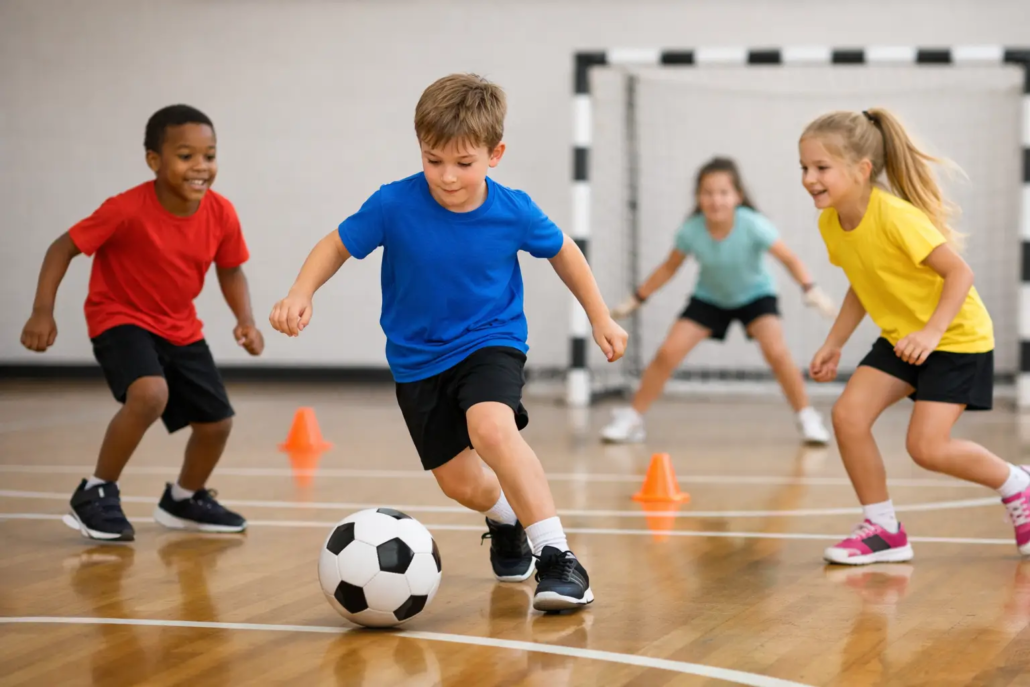
Rainy weekends, winter schedules, and packed family calendars do not have to slow development. The best indoor soccer games for kids keep players active when outdoor sessions are off the table, but more importantly, they can sharpen footwork, decision-making, balance, and confidence in a controlled space. The key is choosing games that feel fun to a child while still training real soccer habits.
Not every indoor game deserves equal time. Some are great for burning energy but teach sloppy touches. Others look simple and quietly build the kind of repetition that improves first touch, body control, and scanning. If you are a parent setting up a basement session or a coach running a winter group, the goal is not just entertainment. It is purposeful play.
What makes the best indoor soccer games for kids?
The best indoor games do three things at once. They create a high number of ball contacts, they force quick problem-solving, and they fit the age and ability of the player. A 4-year-old needs movement, balance, and simple success. A 12-year-old can handle rules, pressure, and competitive constraints that mimic match demands.
Space matters too. A narrow hallway calls for tight-control activities. A gym or indoor turf field opens the door for directional games and small-sided competition. The environment should shape the exercise, not the other way around.
Safety is part of performance. Indoors, use softer balls when needed, create clear boundaries, and remove furniture or obstacles that invite bad movement patterns or unnecessary collisions. High-quality reps only matter if the setting allows players to move freely and confidently.
1. Red Light, Green Light with the Ball
This is one of the most effective entry-level games because it teaches dribbling under control. Players dribble on green, stop the ball on red, and add turns or skill moves on yellow. Younger players build coordination. Older players can be challenged to stop the ball with a specific surface or scan before changing direction.
The value is not in the game itself but in how you coach it. If the player is constantly chasing a loose ball, the speed is too high for their control level. If every stop is clean and easy, add more demands.
2. Cone Gates Dribbling
Set up several small gates across the room or field and have players score points by dribbling through as many as possible in a set time. This works because it rewards change of direction, vision, and close control instead of straight-line speed.
For advanced players, require left foot only, outside touches only, or a pull-push move before each gate. That is where a simple game becomes real technical training.
3. Clean Your Room
Split the space into two sides and place soccer balls on each. On the signal, players pass or dribble balls into the other side. When time ends, the side with fewer balls wins.
This game is excellent for younger kids because it creates nonstop movement without overcomplicated instructions. It can also introduce passing technique if you ask players to strike with the inside of the foot instead of just kicking wildly. That trade-off matters. Keep it playful, but do not let chaos replace quality.
4. Knockout Dribbling
Each player has a ball inside a marked grid and tries to protect their own while knocking out others. If their ball leaves the area, they perform a quick task and re-enter, or they are out depending on the age group.
This is one of the best indoor soccer games for kids who need to become more comfortable in traffic. It teaches shielding, awareness, balance, and reaction speed. It also exposes a common weakness – players who can dribble in open space but panic when pressure arrives.
5. Numbers Game
Divide players into two teams, assign each player a number, and place a ball in the middle. Call a number and those players race out to win the ball and score. Call multiple numbers for more complexity.
This develops acceleration, competitiveness, and 1v1 decision-making. It is especially useful for players who need to attack with more intent instead of waiting for the game to happen around them. Indoors, keep the scoring target small and the area tight to increase precision.
6. Pass and Move Boxes
Create a small grid and have two or more players complete passes while constantly moving to a new side of the box. Add a defender if the group is ready.
This game is less flashy than dribbling contests, but it builds habits that separate recreational players from serious developing athletes. Passing accuracy, body shape, first touch direction, and movement after release all improve here. For older kids, this is where cognitive growth starts to show.
7. Wall Pass Challenge
A wall can become a highly effective training partner if used correctly. Players pass against the wall and receive with a controlled first touch, aiming for a target number of clean reps with each foot.
For younger players, the challenge is rhythm and balance. For advanced players, it becomes a technical standard – one-touch passing, two-touch receiving across the body, or alternating surfaces. The limitation is obvious: it is repetitive. But repetition with purpose is how technique gets cleaner.
8. Simon Says Soccer
For early ages, this is a strong option because it mixes listening skills with basic ball mastery. Simon says toe taps, foundations, pullbacks, sole rolls, or turns. If Simon does not say it, players should hold position.
This game builds coordination and focus without the pressure of direct competition. It is ideal for players who are still learning how to connect instruction to movement. That foundation should not be underestimated.
9. Target Passing
Set up small targets using cones, boxes, or marked zones. Players earn points by passing through or into them from different distances and angles. Indoors, this is one of the cleanest ways to train technique without needing a large area.
The benefit is obvious for players who rush their passes in games. Good target work improves plant foot position, surface selection, and pace of pass. If you want it to transfer better to matches, add movement before the strike rather than letting every rep start from a dead stop.
10. 1v1 to End Zones
Instead of using goals, set up end zones that players must dribble into under pressure. This creates a cleaner indoor setup and forces attackers to beat defenders with timing and control.
This game is demanding. It teaches when to accelerate, when to shield, and when a move is actually needed. Players often discover that speed alone is not enough in tight spaces. Technique under pressure wins more often than raw effort.
11. Juggling Ladder
Have players hit a target number of juggles, then move up the ladder. It might start with one bounce between touches, then fewer bounces, then alternating feet, then thigh-foot combinations.
Juggling is not the same as game performance, but it does improve touch, concentration, and body coordination. The mistake is making it the only skill benchmark. Use it as one tool, not the entire toolbox.
12. Small-Sided Indoor Matches
When space allows, nothing replaces real decision-making like small-sided play. A 2v2, 3v3, or 4v4 indoor game produces repeated attacking and defending moments, more touches, and constant transitions.
This is where many isolated skills either hold up or fall apart. A player may look sharp in drills, then struggle to execute under pressure. That is useful information. Serious development needs both technical repetition and game application.
How to choose the right indoor soccer game by age
For ages 2 to 5, keep instructions simple and the wins frequent. Red Light, Green Light, Simon Says Soccer, and Clean Your Room work well because they build movement patterns and comfort with the ball. Long explanations usually lose this age group before training even begins.
For ages 6 to 9, introduce more competition and directional play. Knockout, cone gates, and target passing begin to develop control with purpose. Players at this stage still need fun, but they are ready for more structure and accountability.
For ages 10 and up, the best indoor soccer games for kids should look more like real soccer problems. 1v1 end zones, pass and move boxes, numbers games, and small-sided matches train execution under speed and pressure. That is where measurable progress becomes more visible.
How to make indoor games actually improve performance
The fastest way to weaken a good activity is to run it without standards. If players are using poor technique, taking random touches, or avoiding their weaker foot, the game may stay exciting while development stalls. Clear rules fix that. Set touch limits, require specific surfaces, or reward clean execution over pure speed.
Coaching detail matters, but so does restraint. Too many stoppages kill intensity. Too little correction lets bad habits settle in. The sweet spot is short coaching interventions followed by high-rep work.
This is also where structured training environments separate themselves. At Soccer Field Academy, indoor development is strongest when games are paired with coach feedback, progression by age and level, and tools that measure reaction speed, technical precision, and decision-making under pressure. Kids enjoy the session more when they can feel themselves improving.
Parents should also watch for one simple sign: transfer. If the game is working, the player should look more composed in real match moments over time. Better first touches. Quicker choices. More confidence receiving under pressure. Indoor training should not just fill the calendar. It should move the player forward.
The best game is not always the loudest one or the easiest one to set up. It is the one that matches the player, fits the space, and builds a skill that shows up when the match gets fast.