
Soccer Private Coaching Results That Matter
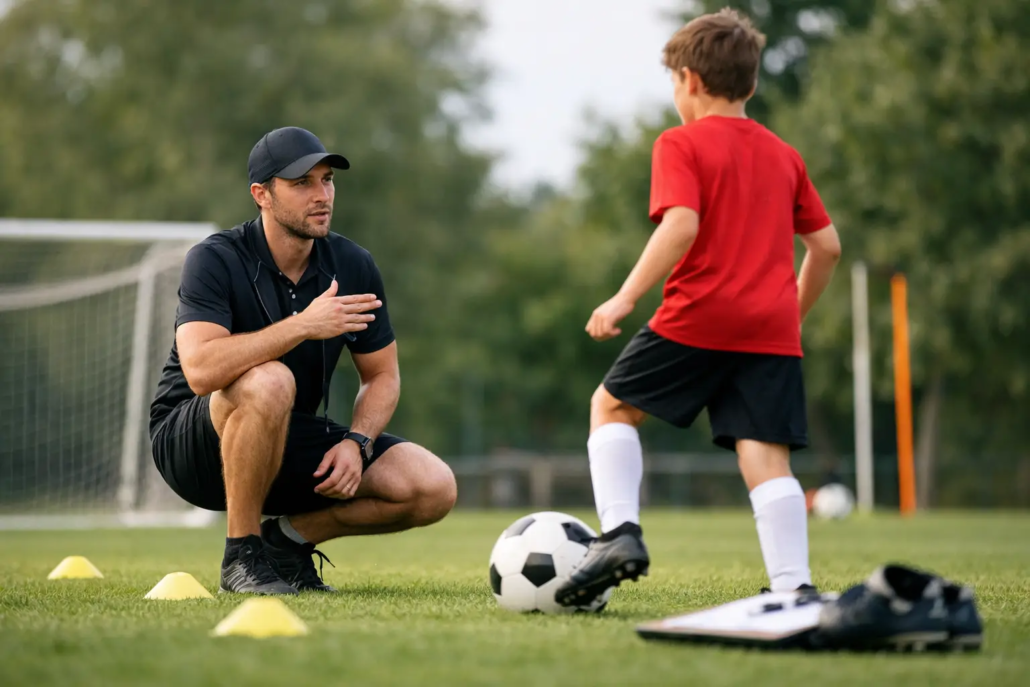
A player who loses the ball every time pressure arrives does not need another lecture about working harder. They need a coach who can identify whether the problem starts with their first touch, body shape, scanning habits, decision speed, or confidence. That is where meaningful soccer private coaching results begin: not with vague promises, but with a clear diagnosis and a plan for changing performance.
Private training is not a shortcut around the work required to become a better player. It is a way to make that work more precise. For serious players, one-on-one coaching creates the focused repetitions, immediate corrections, and accountability that team training cannot always provide. For parents, it provides a clearer view of what their child is improving, why it matters, and what comes next.
What Soccer Private Coaching Results Should Look Like
The strongest results show up in matches, but they are built long before match day. A player should gradually become cleaner on the ball, quicker in their choices, more efficient in movement, and more composed when the game speeds up. Those changes are connected. A better first touch creates more time. More time supports better decisions. Better decisions build confidence.
Technical growth is usually the most visible starting point. A player may improve their ability to receive with the back foot, pass at the right weight, strike with either foot, turn away from pressure, or attack a defender with a purposeful move rather than a hopeful one. The goal is not to collect flashy skills. The goal is to perform reliable actions when an opponent is close and the next decision matters.
Private coaching should also improve the player’s understanding of the game. An advanced player may need to recognize when to play forward, when to protect possession, and how to create a better passing angle before receiving the ball. A younger player may need to learn spacing, awareness, and the habit of looking before the ball arrives. The level changes, but the standard remains the same: training must lead to smarter actions.
Physical progress matters as well, especially as players move into more competitive environments. Acceleration, deceleration, reaction time, balance, coordination, and change of direction all affect whether technical ability can be used at game speed. A player who can execute a move in isolation but cannot stop, react, and explode into the next action needs training that connects skill to athletic performance.
Why Private Sessions Produce Different Results
A quality team session has a major role in player development. It teaches players to compete, communicate, solve problems with teammates, and apply skills within a game. But even a well-run team environment divides attention among many athletes. Private coaching gives the coach room to focus on one player’s specific ceiling and the habits holding them below it.
That level of attention changes the training conversation. Instead of hearing, “Use your left foot more,” a player can be coached through exactly why their left-foot pass is failing. Is the support foot too far from the ball? Is the ankle loose? Is the player waiting too long to prepare? Are they avoiding the foot because they do not trust it under pressure? The correction becomes personal, repeatable, and measurable.
The same applies to confidence. Confidence is not empty praise. It comes from evidence. When players complete difficult repetitions correctly, understand the reason behind the action, and see that progress carry into games, they earn belief in their ability. That belief helps them ask for the ball, recover after mistakes, and compete with more intent.
At Soccer Field Academy, private coaching can pair licensed instruction with technology-led work such as SoccerBot360 and Speed Court training. The value is not the equipment alone. The value is using feedback to sharpen a player’s first touch, reaction, movement quality, and decision-making, then applying those gains in game-relevant situations.
The Results Timeline Depends on the Starting Point
Parents often ask how quickly private coaching will work. The honest answer is that it depends on the player, the goal, and the consistency of the work. A beginner may show noticeable improvement in comfort, coordination, and ball contact within a few sessions. A high-level player refining a weak foot, improving speed mechanics, or preparing for college-level demands may need a longer, more detailed training cycle.
Early changes are often behavioral. The player starts arriving with greater focus, uses feedback without shutting down, and practices with a purpose between sessions. These are not minor wins. They are the habits that make improvement sustainable.
Technical consistency takes longer because the player must move from understanding a correction to executing it without conscious thought. A player may strike the ball cleanly in a controlled drill before they can do it after a sprint, a shoulder check, and a defender closing space. That transition is why private coaching should progress from clean repetition to speed, pressure, and decision-making.
Match transfer can take longer still. Game environments are unpredictable. Players may be tired, nervous, playing a new position, or facing stronger competition. A good coach does not judge development from one game. They look for trends over several weeks: more purposeful touches, fewer rushed clearances, stronger defending in isolation, better movement away from the ball, and improved response after mistakes.
How to Measure Progress Without Chasing Hype
“Better” is too vague for a serious development plan. The player and parent should know what the training is targeting and how progress will be observed. Not every outcome needs a spreadsheet, but coaching should create reference points instead of relying on enthusiasm alone.
Useful measures can include:
- First-touch quality and the number of controlled actions completed under time pressure
- Weak-foot passing and finishing accuracy at realistic distances
- Reaction, acceleration, and change-of-direction performance
- Decision-making in small-sided scenarios, including scanning and speed of play
- Match observations tied to a specific goal, such as receiving between lines or defending 1v1
Numbers can be valuable, but they do not tell the entire story. A player may record a faster Speed Court time while still needing to improve their body control when reacting to the ball. Another may increase passing accuracy but need more courage to attempt the forward pass in a game. The best evaluation combines data, coach observation, player reflection, and match behavior.
What Can Limit Private Coaching Results
Private sessions are powerful, but they cannot replace game experience, team training, recovery, or personal responsibility. A player who trains hard once a week but avoids independent ball work will improve more slowly than a player who reinforces key habits at home. The difference does not require hours every day. Ten focused minutes of weak-foot work, ball mastery, or scanning practice can protect the gains made in coaching.
Training goals also need to match the player’s stage. A 9-year-old does not need a college recruiting conversation before they can consistently receive and pass under control. A 16-year-old aiming for a higher competitive level may need more position-specific training, physical preparation, and an honest assessment of their current demands. The right plan meets the player where they are while setting a higher standard for where they can go.
There is also a trade-off between volume and quality. More sessions are not automatically better if the player is fatigued, overloaded, or unable to apply feedback. A well-designed schedule considers team commitments, school, recovery, and the player’s motivation. Serious development requires discipline, but discipline also means training with intent rather than simply adding hours.
Choosing the Right Focus for Each Player
The most productive private coaching begins with an assessment. The coach should watch how the player moves, receives, passes, reacts, and solves problems. They should also ask about position, team environment, goals, and the moments in games where the player feels least confident.
From there, the plan should stay narrow enough to create real change. A player may work on receiving under pressure and turning into space before adding advanced finishing patterns. Another may prioritize speed mechanics and defensive footwork before moving into more complex tactical tasks. Trying to fix everything at once usually creates activity without mastery.
Parents can support the process by asking better questions after training. Instead of asking only whether the session was fun, ask what the player worked on, what felt difficult, and what they can practice before the next session. This reinforces ownership without turning every car ride into a performance review.
The best private coaching result is not a player who looks impressive for an hour indoors. It is a player who enters the next difficult game more prepared to receive the ball, make a decision, compete through pressure, and keep growing after the whistle. Give development enough time to compound, demand honest feedback, and let serious work create the confidence that lasts.

