
10 Benefits of Indoor Soccer Practice
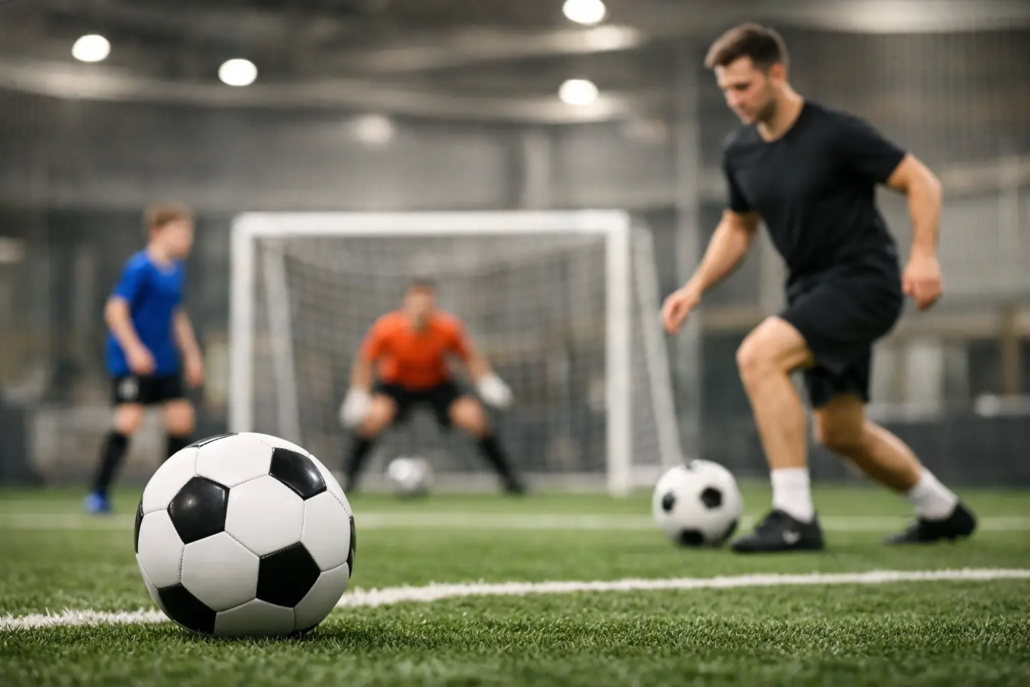
A player who trains hard for eight weeks outdoors can still lose momentum fast if weather keeps canceling sessions. That is one of the clearest benefits of indoor soccer practice: development stays on schedule. For youth players and parents who care about real progress, that consistency is not a luxury. It is often the difference between repeating drills and actually building a higher-level game.
Indoor training is sometimes treated like a backup plan for winter or rain. Serious player development says otherwise. A controlled environment gives coaches more teaching time, more repetitions, and better conditions to correct details that usually get lost in a crowded outdoor session. When the goal is measurable improvement, indoor work becomes a core part of the process, not a substitute.
Why the benefits of indoor soccer practice show up so quickly
Improvement in soccer is driven by repetition, feedback, and concentration. Indoor sessions naturally support all three. There are fewer weather interruptions, fewer bad-field variables, and fewer moments where training energy gets wasted on conditions instead of execution.
That matters most for players still building foundations. Young athletes need touches, structure, and confidence. Older competitive players need precision, speed of play, and sharper decisions under pressure. Indoor training can serve both groups, but the benefits show up differently depending on age and level.
For younger players, the environment feels contained and manageable. They stay engaged longer, coaches can organize activity transitions faster, and the ball is in play more often. For advanced players, the tighter space raises technical standards. First touch, scanning, body shape, and passing speed all get exposed quickly.
1. More touches, fewer wasted minutes
The first major advantage is simple: indoor soccer usually creates more actions per player. In many indoor sessions, the ball stays close, play restarts quickly, and coaches can keep the tempo high. That means more dribbles, more passes, more receptions, and more chances to fix mistakes in real time.
This is especially valuable for players who need technical repetition. A young athlete does not improve by standing in long lines or chasing balls across a huge field. They improve by repeating quality actions at a high frequency. Indoor practice makes that easier to deliver.
2. Year-round consistency builds real progress
One of the most practical benefits of indoor soccer practice is training consistency across the calendar. Skill development does not respond well to long interruptions. Players can work hard in one season and then stall when sessions become irregular.
Indoor facilities protect the rhythm of development. Winter, rain, cold, and field conditions matter less, so players can stay in a structured routine. Parents also benefit from predictability. A consistent training schedule makes it easier to commit to a long-term plan rather than starting and stopping every few weeks.
There is a trade-off here. Indoor work should not completely replace outdoor soccer, because the outdoor game asks for different spacing, longer passing ranges, and more tactical field coverage. But for year-round technical and cognitive growth, indoor training is one of the strongest tools available.
3. Faster decision-making under pressure
Indoor soccer compresses time and space. That forces players to read situations faster. If a player takes an extra touch, fails to scan, or receives the ball with poor body shape, the problem shows up immediately.
That pressure can be frustrating at first, especially for players used to more space outdoors. But that is exactly why it works. Tight environments train players to process information faster and act with purpose. Over time, this sharpens composure, awareness, and speed of play.
For ambitious players, this is where indoor training becomes more than repetition. It becomes cognitive training. The best sessions do not just ask players to move the ball. They ask them to recognize angles, solve pressure, and make cleaner choices at game speed.
4. Technical details get corrected earlier
Indoor sessions make technical flaws easier to identify. A heavy first touch, weak passing surface, poor balance, or slow footwork stands out faster in a tighter environment. That gives coaches more opportunities to step in and correct details before bad habits become permanent.
This matters for every stage of development. A six-year-old learning coordination needs clean fundamentals. A high-level teenager preparing for elite competition needs technical efficiency that holds up under pressure. In both cases, the coaching value increases when players can repeat actions in a controlled setting with immediate feedback.
When indoor training is paired with high-level instruction, the result is often faster technical polish. That is one reason serious development environments use indoor work as part of a broader performance model.
5. Better concentration and session quality
Outdoor training has obvious strengths, but it also comes with distractions – weather, uneven surfaces, long transitions, and sessions that can lose flow. Indoor practice reduces much of that. Players can focus on the task, coaches can manage the group more tightly, and the overall training standard stays higher.
For younger athletes, this often improves attention span. For older players, it increases accountability. Every rep is visible. Every movement has a purpose. Every lapse in concentration gets exposed. In the right environment, that helps build discipline, not just skill.
This is where parents often notice a difference. A quality indoor session feels organized, demanding, and efficient. That matters when families are investing time and money into development and want to see more than simple activity.
6. Confidence grows through controlled challenge
Confidence is not built by empty praise. It is built when players can see themselves executing skills more cleanly and more consistently. Indoor practice supports that because it creates repeatable situations where improvement is easier to track.
A player who struggled with first touch in week one can feel the difference by week four. A young athlete who hesitated on the ball can start playing with more conviction after enough successful repetitions. The environment stays challenging, but it also gives players a clearer way to measure progress.
That said, challenge level matters. If the training is too easy, confidence becomes fragile. If it is too advanced, confidence drops. The best indoor development programs group players appropriately and raise standards at the right pace.
7. Speed, agility, and coordination improve naturally
Not every physical gain needs to come from a weight room. Indoor soccer can improve movement quality through the demands of the game itself. Quick accelerations, balance changes, short bursts, reaction speed, and body control all show up constantly in a strong indoor session.
For younger players, this supports coordination and athletic literacy. For older players, it sharpens movement efficiency that carries into match play. When training includes performance tools and structured movement work, the return can be even stronger.
The key is quality over chaos. Fast movement alone is not enough. Players need coaching that ties footwork and speed to soccer actions, not random exercise for its own sake.
8. Safer, more reliable training conditions
Parents often think about development first, but reliability and safety matter too. Indoor facilities offer a more controlled surface, more predictable scheduling, and fewer weather-related risks. That creates a better platform for focused training.
This does not mean all indoor environments are equal. Space, surface quality, coach supervision, and training design still matter. A poorly run session indoors can still be low value. But a professional indoor setting generally gives players a more dependable place to work, especially during months when outdoor training becomes inconsistent.
For families in markets like Columbus, where seasonal weather can disrupt routines, this reliability is not minor. It supports continuity, and continuity is where development compounds.
9. Indoor work can accelerate outdoor performance
Some parents ask whether indoor training really helps the outdoor game. In most cases, yes – if the coaching understands the difference between the two. Indoor practice sharpens technique, pressure management, and decision speed. Those gains often transfer well outdoors, where players then have more time and space to use improved habits.
The transfer is strongest when indoor training is intentional. Players should not just play in small spaces and hope it carries over. They need coaching that connects indoor repetitions to outdoor realities like spacing, timing, and positional play.
That is why serious academies do not treat indoor training as isolated. They build it into a progression model. Technical work, cognitive work, and physical development should all support the player’s bigger pathway.
10. It creates a stronger development mindset
One overlooked benefit of indoor soccer practice is the mentality it can build. Consistent attendance, high repetition, immediate correction, and measurable standards teach players how to train with purpose. Over time, they stop viewing practice as something to get through and start viewing it as part of their identity.
That shift matters. Players who develop a serious relationship with training usually improve faster than players who rely on games alone. They learn patience. They accept correction. They understand that confidence comes from preparation.
In a high-performance environment, indoor sessions can reinforce those habits powerfully. That is part of why organizations like Soccer Field Academy use indoor training as more than convenience. It is a setting where discipline, focus, and measurable growth can be built week after week.
When indoor soccer practice makes the biggest difference
Indoor practice is especially valuable during developmental windows when players need heavy technical repetition, consistent coaching, and a stable routine. It can be a game-changer for beginners who need confidence on the ball, for growing athletes who need coordination and discipline, and for competitive players trying to sharpen execution under pressure.
It is not magic on its own. The environment has to be matched with serious coaching, appropriate group levels, and a clear plan. But when those pieces are in place, indoor training becomes one of the most efficient ways to move a player forward.
For families who want more than busy sessions and generic instruction, that is the real standard. The goal is not simply to keep kids active when the weather changes. The goal is to keep development moving when it matters most.