
How to Start Toddler Soccer Classes Right
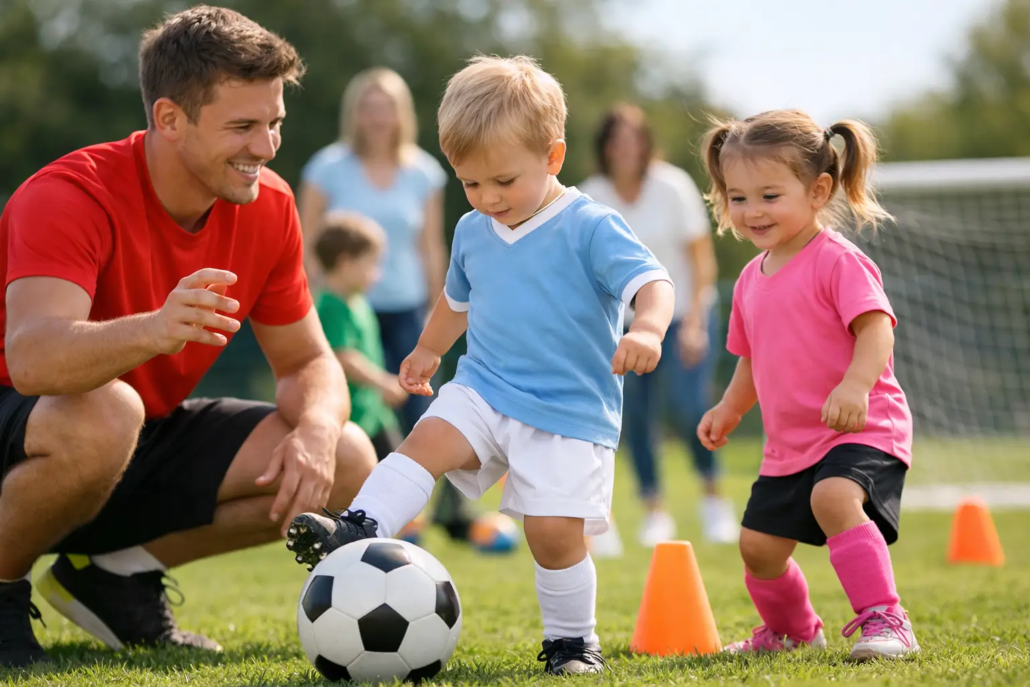
The first toddler session usually tells you everything. One child sprints after the ball. Another clings to a parent’s leg. A third is more interested in the cones than the game. That is exactly why learning how to start toddler soccer classes matters. At ages 2 to 4, the goal is not to create polished players. It is to build movement, listening, confidence, and positive early habits in a structured environment.
Too many beginner programs get this wrong by treating toddlers like small older players. They line them up too long, talk too much, and expect technical execution before basic body control is in place. A strong toddler soccer class starts from a developmental standard, not an adult idea of what practice should look like.
How to start toddler soccer classes with the right foundation
The first decision is not equipment or branding. It is defining what the class is actually designed to develop. For toddlers, soccer is the vehicle, not the entire outcome. A quality class should improve balance, coordination, spatial awareness, listening, turn-taking, and comfort in a group setting. If those pieces improve, ball familiarity and simple soccer actions will follow.
That changes how you build the session. You are not planning around passing patterns or game tactics. You are planning around attention span, emotional regulation, and repetition. The best classes create success in small moments – stopping the ball, changing direction, kicking with intention, following a one-step instruction, and finishing an activity with confidence.
This is also where many parents make a smart distinction between recreation and development. Fun absolutely matters at this age, but fun without structure does not create progress. The right class feels energetic and encouraging while still teaching discipline, body control, and responsiveness to coaching.
Start with the right age group and expectations
Most toddler soccer classes work best for ages 2 to 4, but that range needs internal separation. A newly turned 2-year-old and a confident 4-year-old are not in the same developmental stage, even if both technically qualify for a toddler program.
For ages 2 to 3, parent-assisted or parent-present formats usually work best. Children at this stage often need a familiar anchor while they learn to enter a coached environment. Sessions should be short, simple, and highly active. Expect imitation before independence.
For ages 3 to 4, many children are ready for more coach-led structure. They can usually handle brief transitions, clearer boundaries, and more independent ball work. This is where a progression model becomes valuable. A child should not stay in the same beginner format once they are ready for more challenge.
Parents should also set realistic performance expectations. A good first cycle might not look like “playing soccer” in the traditional sense. It might look like better listening, less hesitation, stronger balance, more willingness to separate, and more confidence around the ball. Those are serious wins because they are the foundation for future training.
Build the class around developmental outcomes
If you want to know how to start toddler soccer classes that actually produce growth, build backward from outcomes. Decide what a child should be able to do after six to eight weeks. Not advanced technique. Basic developmental markers.
A strong beginner class should aim for a few measurable outcomes. A toddler should become more comfortable moving in space, stopping and starting on command, controlling a ball with simple touches, and participating in a group routine without constant redirection. Those outcomes sound basic, but they are not small. They are the base layer of long-term athlete development.
That is why session design matters. Every activity should have a coaching purpose. Running through cones can improve coordination and balance. Dribbling to colors can build perception and listening. Kicking at targets can improve body organization and confidence. Even games that look playful should be training specific responses.
The trade-off is that you cannot pack too much into one class. Toddlers do better with fewer concepts repeated well than with constant novelty. Progress comes from clear structure and repetition, not from trying to impress parents with complexity.
Keep sessions short, active, and highly organized
The fastest way to lose a toddler group is dead time. If children are standing still, waiting in line, or listening to long explanations, the session is already slipping. A high-quality class moves quickly from one activity to the next and keeps each child engaged as often as possible.
For most toddler groups, 30 to 45 minutes is enough. Younger classes often perform better at the shorter end. Older toddlers can usually handle more, especially if the session is well paced. The key is intensity of engagement, not duration for its own sake.
Organization is equally important. Set up stations before class starts. Use clear visual boundaries. Keep equipment simple. Every transition should feel intentional. Toddlers respond well to consistency, and that consistency creates trust. When children know what comes next, behavior improves and learning accelerates.
The environment also matters. Indoor training can be especially valuable for this age because it removes weather disruptions and allows consistency across training cycles. For families trying to establish routine, that consistency often makes the difference between a program that lasts two weeks and one that becomes part of a child’s development.
Choose coaches who can teach toddlers, not just soccer
A great older-age trainer is not automatically a great toddler coach. Coaching young children requires patience, clarity, pace control, and the ability to teach through short cues and demonstration. Technical knowledge matters, but communication skill matters just as much.
The best toddler coaches know how to command attention without creating fear. They can set standards while still keeping the environment positive. They understand when to challenge and when to simplify. Most of all, they know that confidence is built through successful repetition, not pressure.
Parents should look for coaches who understand progression. That means they can identify whether a child needs more support with coordination, focus, separation, or ball mastery, then adjust appropriately. In a serious development environment, even the youngest players should be coached with purpose.
This is where a structured academy model stands apart from drop-in recreation. If there is a defined path from early movement classes into more advanced technical training, parents can trust that today’s beginner session is connected to tomorrow’s development.
How to start toddler soccer classes parents will stay with
Retention matters because toddlers improve through consistency. If families do not stay enrolled, the training plan never has time to work. That means the class has to be built for the child and the parent.
Parents want visible progress, but they also want a smooth experience. Clear schedules, age-appropriate expectations, simple enrollment, and professional communication all matter. So does the way coaches interact with families before and after class. Parents should know what their child is working on and why it matters.
The strongest programs also help parents understand what success looks like. If a parent expects scrimmages and advanced skills on day one, they may misread a developmentally sound class as too simple. Good communication fixes that. Explain the purpose behind the curriculum. Show the progression. Make it obvious that each phase is preparing the child for the next one.
That is one reason high-performance youth training organizations often outperform casual programs, even at the toddler stage. Serious structure does not mean harsh intensity. It means there is a plan, a progression, and a standard.
What to include in a strong first-cycle curriculum
A first-cycle toddler curriculum should focus on a few core themes repeated across multiple weeks. Ball familiarity, running mechanics, stopping and starting, simple direction changes, and listening to cues are all excellent starting points. Add basic social structure like waiting briefly, taking turns, and responding when called.
You do not need full games to create soccer learning. In fact, small individual actions are often more productive early on. Dribble to a cone. Stop the ball on a color. Kick through a gate. Chase, turn, recover. These are the building blocks that later support technical precision.
It also helps to include a predictable class rhythm. Opening movement, individual ball work, guided games, finishing activity. Toddlers thrive on routine. When class has a recognizable structure, energy is easier to manage and confidence builds faster.
If you are operating in a competitive youth market like Columbus, parents will quickly notice the difference between random activity and intentional programming. A serious academy should be able to explain exactly what a toddler is developing in each phase and how that development connects to future soccer training.
Know when a child is ready for the next step
A well-run toddler class should not become a holding pattern. Some children need more time at the introductory level. Others are ready to move on quickly. Advancement should be based on readiness, not just age.
Signs of readiness include consistent participation without parent support, improved balance and coordination, comfort following simple coaching instructions, and stronger control of the ball in basic activities. When those pieces are in place, the child may be ready for a more advanced early-childhood program with greater independence and technical demand.
That transition matters. Push too fast and confidence drops. Wait too long and engagement can flatten. Development works best when challenge rises at the same rate as readiness.
For parents, the best next step is often the program that stretches the child without overwhelming them. That is where thoughtful coaching and a true progression model pay off.
Start small, but start with standards. Toddlers do not need complex soccer. They need a class built on structure, movement quality, confidence, and repetition. Get that right early, and you are not just filling an hour. You are setting the tone for how a young athlete learns, responds, and grows.

