
Early Childhood Soccer Classes That Build Skills
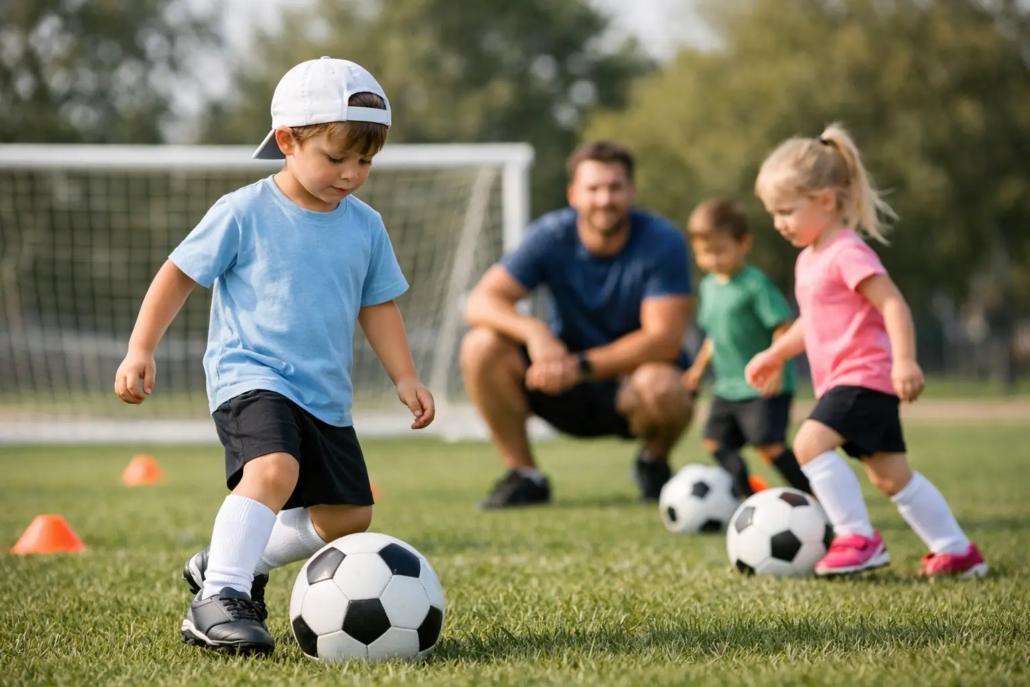
A two-year-old does not need a coach yelling instructions from midfield. A four-year-old does not need a complicated tactical lesson. What young players do need is structure, movement, repetition, and the right coaching environment. The best early childhood soccer classes are built around how kids actually learn at that age – through play, patterning, routine, and positive reinforcement.
For parents, that distinction matters. Many introductory programs look similar from the outside. There are cones, small goals, bright jerseys, and smiling coaches. But the real difference is in what the session is designed to develop. A strong early developmental class is not babysitting with soccer balls. It is the first stage of long-term athletic development.
What early childhood soccer classes should really teach
At ages 2 to 6, soccer is not just about soccer. It is about body control, listening, balance, spatial awareness, and the confidence to move with purpose. A quality class uses the ball as a tool, but the bigger objective is building a foundation that supports every future stage of performance.
That means the session should train more than kicking. Young players need to learn how to stop and start under control, change direction, stay balanced on one foot, react to cues, and coordinate their eyes and feet. They also need to begin understanding simple group behavior – waiting for a turn, following instructions, and working within a structured environment.
This is where coaching quality shows up fast. If the class feels chaotic from start to finish, players may still leave tired, but fatigue is not the same as development. Good coaches know how to keep young children engaged without losing standards. The session should feel fun, but it should also have purpose.
Why structure matters in early childhood soccer classes
Young children thrive on consistency. When class routines are predictable, players become more confident and more coachable. They know where to stand, when to move, and what the next task looks like. That lowers anxiety and improves focus.
In practical terms, that usually means a well-run class has a clear beginning, a middle with short, varied activities, and a simple finish. Coaches move quickly between exercises to match short attention spans. They use direct language, strong demonstrations, and high repetition. They do not over-explain.
Structure also protects the quality of learning. A child who spends half the session waiting in line is not getting enough touches or enough movement. A child who is constantly overwhelmed by noise, numbers, or overly advanced tasks is not building confidence. The right class size, coach-to-player ratio, and progression model make a major difference.
That is one reason serious development programs separate players by age and readiness rather than treating all beginners the same. A three-year-old and a six-year-old are both new to soccer, but they do not process information the same way and they should not be coached the same way.
The difference between recreation and development
There is nothing wrong with a relaxed introduction to the game. For some families, the first goal is simply helping a child enjoy movement and become comfortable in a group setting. But if a parent wants visible progress, class design matters.
A purely recreational model often prioritizes participation over progression. Kids run, laugh, and burn energy, which has value. But a developmental model adds intentional skill-building. Coaches are watching how a player moves, how quickly they respond to cues, whether they can control the ball with both feet, and whether their confidence is growing from week to week.
That does not mean early childhood soccer classes should feel intense in the adult sense of the word. It means the environment should be professional enough to create habits early. Players can have fun and still be taught standards. In fact, the best classes make improvement part of the fun.
What parents should look for before enrolling
A strong first class should answer a few questions quickly. Is the coach experienced with young children, not just older athletes? Is the session organized? Are players active most of the time? Is the instruction age-appropriate? Can you see a logical progression rather than random games?
Parents should also pay attention to how the coach corrects players. At this age, delivery matters. Young athletes need encouragement, but they also need clear feedback. A coach who can calmly redirect behavior, demonstrate a movement, and get a child trying again is doing important developmental work.
The training environment matters too. Indoor consistency can be a major advantage, especially in places like Columbus where weather can interrupt momentum. Young children benefit from regularity. Missed sessions and constant weather adjustments can slow confidence and habit formation.
It is also worth asking what comes next. The strongest programs do not treat early childhood as a standalone offering. They build it as the first step in a larger pathway. That gives parents a clearer sense of how foundational classes can lead to stronger technical training, better athletic movement, and eventually more advanced team play.
How progress looks at ages 2 to 6
Progress in early childhood soccer is rarely dramatic in one session. It is usually seen in small, meaningful wins that compound over time. A player who was once hesitant starts entering activities without clinging to a parent. A child who used to dribble with no control begins keeping the ball close. Another starts recognizing when to stop, turn, and listen.
These changes matter because they are tied to future performance. Technical ability is easier to build on top of coordination and attention than in the absence of them. Confidence grows faster when a child feels capable. Discipline becomes more natural when routines are introduced early.
This is why measurable development should not be reserved only for older players. The metrics look different with young children, but the principle is the same. Coaches should be able to identify whether a player is improving in coordination, confidence, responsiveness, balance, and ball familiarity.
Why the coaching standard matters more than the equipment
Parents are often drawn to visible features – the facility, the gear, the goals, the branding. Those things can support a quality experience, but they do not replace coaching. A professional indoor environment helps. So does access to modern training tools. But at the early childhood stage, the coach is still the most important part of the class.
The right coach understands child development, not just soccer technique. They know when to challenge and when to simplify. They recognize that some children need repetition before speed, while others need help slowing down enough to stay in control. They keep standards high without making the session feel heavy.
At a high-performance academy, that early stage should still reflect the same developmental philosophy used with older players. The objectives change by age, but the expectation of progress should stay consistent. Soccer Field Academy approaches younger players with that same mindset – start with fundamentals, build confidence through structure, and create a clear next step rather than leaving development to chance.
When a child is ready for more
Not every young player should be pushed quickly into the next level. Readiness is about more than talent. A child may have natural coordination but still need time to develop listening habits and emotional comfort in a group. Another may be less advanced technically but highly coachable and ready for more structured repetition.
That is where honest evaluation matters. Good programs know the difference between keeping a child challenged and moving them too soon. The right next step depends on maturity, consistency, and the ability to handle a more demanding training rhythm.
For parents, the goal is not to rush the process. It is to choose an environment where progress is expected and guided. Early childhood soccer classes should create momentum, not pressure. If the foundation is right, the player has a much better chance to grow into technical training, competitive play, and long-term confidence.
The first soccer class may look simple from the stands. A few dribbles, a few races, a lot of redirection. But when it is done well, that hour is doing far more than filling time. It is teaching a young athlete how to move, how to focus, how to respond, and how to enjoy improvement. That is where serious development begins.
