
Soccer Injury Prevention Training for Youth
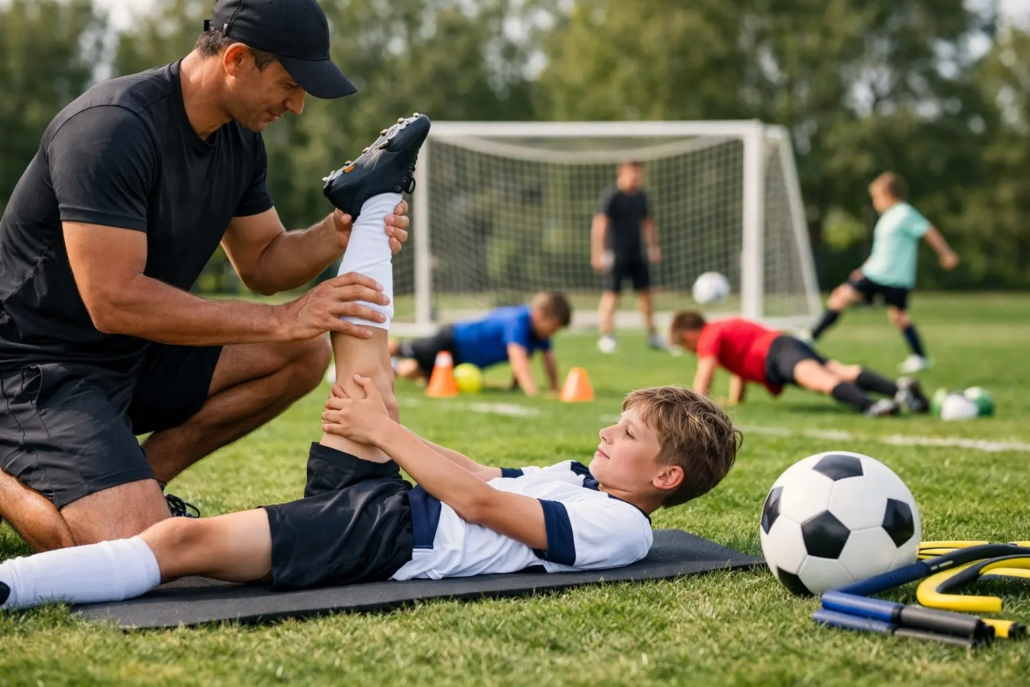
A player who can cut sharply, absorb contact, and stay balanced under fatigue is not just more athletic. That player is usually more available. For families investing real time and money into development, soccer injury prevention training for youth is not a side topic. It is part of serious player progression.
The mistake many programs make is treating injury prevention like a short band routine tacked onto the start of practice. That approach looks organized, but it rarely changes how an athlete moves when the game gets fast. Real prevention work has to improve mechanics, body control, strength, and decision-making under pressure. If the player cannot own those qualities at speed, the risk returns the moment competition starts.
Why soccer injury prevention training youth players need is different
Youth players are not mini professionals. Their bodies are changing quickly, and that changes what smart training looks like. Growth spurts can disrupt coordination, timing, and force absorption. A player who looked smooth three months ago may suddenly seem awkward in deceleration, one-leg landing, or change of direction. That is not laziness. It is development.
This is why soccer injury prevention training youth athletes need must match biological age, training history, and competitive level. A 7-year-old needs movement literacy, balance, and body awareness. A 13-year-old entering peak growth needs closer attention to landing mechanics, hip stability, and workload management. A serious high school player may need structured strength work, sprint mechanics, and return-to-play standards after minor setbacks.
There is also a performance trade-off parents and players should understand. If training always chases speed, power, and more touches without building the body to tolerate those demands, progress can stall. The goal is not to make training softer. The goal is to make athletes more resilient so they can handle harder training and more meaningful minutes.
What actually prevents injuries in youth soccer
The foundation is movement quality. Before a player can accelerate well, they need to control posture, align the trunk over the hips, and stabilize on one leg. Before they can strike cleanly under pressure, they need enough strength and balance to keep positions from collapsing. These are not cosmetic details. Poor control often shows up first as inconsistency, then as overload.
A strong prevention system usually includes four training elements working together.
Dynamic warmups that prepare, not just fill time
A quality warmup raises temperature, activates the right muscle groups, and rehearses soccer-specific movement patterns. It should include acceleration buildups, skipping patterns, lateral movement, controlled deceleration, and low-level plyometric work. The standard matters. Sloppy warmups teach sloppy positions.
For younger players, this may look simple, but simple does not mean random. The best warmups build habits – knees tracking well, hips staying stable, feet contacting the ground with purpose, and eyes staying up.
Strength training that supports the game
Youth strength work is often misunderstood. Parents sometimes hear “strength” and picture heavy lifting too early. In reality, age-appropriate strength training is one of the best tools for reducing avoidable injuries. The focus is not maximal loading. The focus is control, posture, and progressive capacity.
That may include split squats, hinges, calf work, core stability, landing drills, and upper-body strength to handle contact. For advanced players, it can progress into more demanding force production work. Stronger athletes tend to brake better, hold shape better, and recover better between high-intensity actions.
Change-of-direction mechanics
Soccer injuries often happen when players decelerate, plant, twist, or react late. Prevention is not only about getting stronger. It is also about teaching players how to lower their center of mass, organize their feet, and control the trunk before changing direction.
This is where high-level coaching matters. If an athlete keeps cutting with poor shin angles, weak hip control, or excessive inward knee collapse, repetitions alone will not fix it. They need feedback, not just effort.
Recovery and workload management
Some injuries do not come from one bad moment. They come from too much volume layered over too little recovery. Youth players now juggle team training, futsal, private sessions, school sports, speed work, and weekend matches. Ambitious players need structure, not endless activity.
If the legs are heavy every session, if small soreness becomes constant, or if movement quality drops late in practice week after week, the answer is not always more toughness. Sometimes the answer is better scheduling, better sleep, and smarter sequencing of hard days.
The injuries most families should be thinking about
You do not need to train youth players in fear, but you do need to train with clarity. In soccer, the common concerns are ankle sprains, knee issues, groin strains, hamstring problems, and overuse pain around growth areas. Not every age group carries the same risk profile.
Younger children often need general coordination and safe landing habits more than aggressive sport-specific loading. As players enter middle school and early high school, cutting mechanics, sprint exposure, and rapid growth become bigger factors. For older competitive athletes, the conversation gets more specific – asymmetries, chronic tightness, fatigue, and the demands of year-round competition matter more.
That is why one-size-fits-all prevention plans usually fall short. The right program looks at the actual athlete in front of you.
How to build soccer injury prevention training into a real development plan
The best approach is not separate from soccer training. It is built into it. A serious academy environment treats prevention as part of performance development, not as a medical add-on.
Start with movement assessment. You need to know how the player accelerates, decelerates, lands, and balances before you decide what to emphasize. If a player lacks ankle stiffness, struggles to stabilize on one side, or loses posture under fatigue, those issues should shape the training plan.
Then layer prevention into the week. A player might complete a focused dynamic warmup before every field session, two strength sessions per week, and short doses of landing and deceleration work before speed or technical training. The volume does not need to be excessive. It needs to be consistent.
For more advanced players, measurable tools can sharpen the process. Technology such as reaction-based training systems and movement platforms can reveal how players process information, organize their feet, and respond under time pressure. That matters because many soccer injuries occur when physical execution breaks down during fast decisions, not when the athlete is moving in a perfect drill with no pressure.
At Soccer Field Academy, that high-performance model fits naturally because prevention and development should live in the same system. A player who is getting faster, sharper, and more confident should also be getting harder to break down.
What parents should look for in a training program
Parents do not need a clinic full of complicated language. They need to know whether the coaching is precise and whether the plan makes sense. A quality program should be able to explain what it is training, why it matters, and how it progresses by age and level.
Look for coaches who correct mechanics instead of just running players through lines. Look for age-appropriate strength and movement work, not random exhaustion circuits. Look for a structured environment where speed, agility, technical work, and recovery are coordinated rather than piled on.
It also helps to ask a simple question: does this program make my athlete better at soccer while lowering unnecessary risk? That standard matters. Injury prevention that has no transfer to the game gets ignored. Game training with no protection plan burns players out.
The biggest mistake ambitious players make
Many competitive players think pain-free weeks mean they are doing enough prevention. That is a gamble. The better standard is whether the body is becoming more prepared for the next level of demand.
A player who wants more minutes, higher-level competition, or college exposure cannot rely on talent alone. Availability is part of performance. Coaches trust athletes who can train consistently, recover well, and repeat quality actions without breaking down.
That does not mean chasing perfection. Minor setbacks happen in sport. But the right training environment reduces preventable problems and gives players tools to handle the demands of serious soccer.
The players who stay on the field longest are usually not the ones doing the most random extra work. They are the ones in a disciplined system, building quality movement, strength, speed, and control month after month. That is what gives talent a chance to compound.