
Soccer Training With Technology Tools That Work
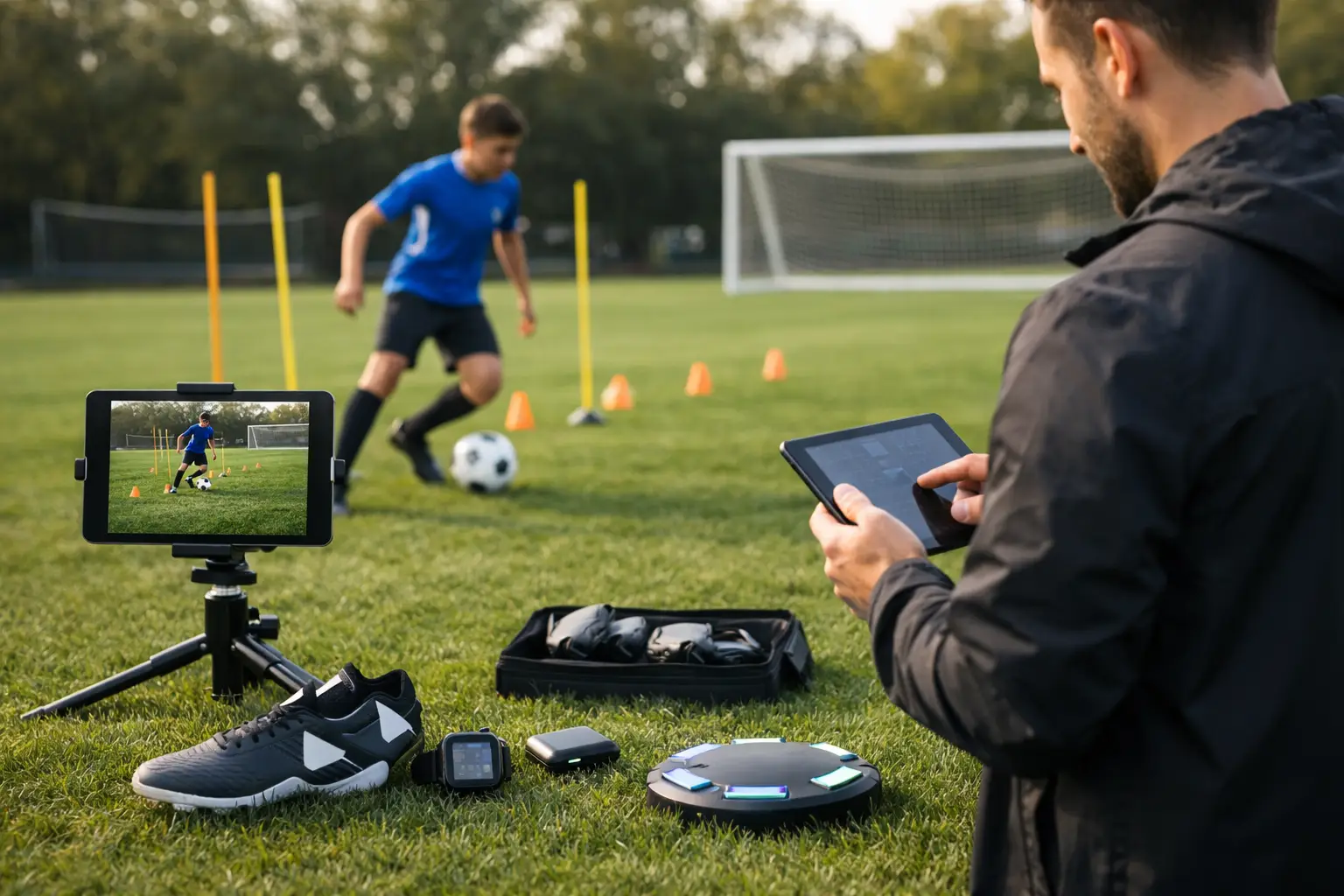
A player can look sharp in warmups, hit ten clean passes in a line, and still struggle when the game speeds up. That gap is exactly why soccer training with technology tools has become so valuable for serious player development. The right technology does not replace coaching. It gives coaches and families clearer proof of what is improving, what is lagging, and how a player responds under pressure.
For youth players, that matters. Parents want to see progress they can trust. Players want training that feels connected to real performance, not random repetition. In a serious development environment, technology creates accountability. It helps turn effort into measurable growth.
Why soccer training with technology tools changes development
Traditional training still matters. Players need touches, repetition, technical correction, and game understanding. But there is a difference between doing a drill and proving that the drill is improving first touch speed, reaction time, passing consistency, or movement efficiency.
That is where technology earns its place.
When a player trains with tools like SoccerBot360 or a Speed Court system, the session becomes more than a collection of reps. Coaches can measure response time, footwork patterns, directional changes, scanning habits, and technical execution under time pressure. Instead of saying, “You look quicker,” a coach can point to a better reaction score or cleaner completion rate. That changes motivation. It also changes trust.
For younger athletes, technology adds engagement. For advanced players, it adds precision. For parents, it answers the biggest question in youth development – is this training actually working?
What technology tools should actually improve
Not every piece of equipment makes a player better. Some tools look impressive but add very little if they are not tied to a real coaching plan. The standard should be simple: the tool must improve performance traits that transfer to matches.
Technical speed under pressure
A player who can pass or receive well in isolation is only partway there. Match performance depends on executing technique while processing information quickly. Technology-based passing and reaction systems can force players to receive, scan, and release at game-like speed. That pressure is useful because many youth players do not break down technically from lack of ability. They break down because the pace exposes weak habits.
Cognitive processing and decision-making
Soccer is not just about feet. It is about recognizing cues, selecting the right action, and doing it on time. Reaction lights, directional prompts, and multi-angle passing systems can train the brain to process faster. This is especially important for midfielders, defenders, and any player expected to operate in tight spaces.
That said, technology can only train part of decision-making. A machine can sharpen recognition speed, but it cannot fully recreate the tactical chaos of a live match. Good academies understand that technology supports game intelligence. It does not replace small-sided play, film review, or coached tactical learning.
Footwork, acceleration, and body control
A lot of youth players think speed means sprinting in a straight line. In soccer, speed is usually about first-step quickness, deceleration, balance, and change of direction. Speed Court-style training can expose how efficiently a player moves and reacts. It can also reveal something many families miss – a player may not be slow, but mechanically inefficient.
When coaches combine movement data with sports performance training, the results become more meaningful. Better movement quality can reduce wasted steps, improve defensive recovery, and help technical skills show up more often in games.
The real value is not the machine. It is the coaching around it.
This is the part families should pay attention to.
A technology-driven session without expert coaching can become a novelty. Players get a score, feel tired, and leave impressed, but improvement stalls. Elite development happens when licensed coaches interpret the data, identify the limiting factor, and adjust the training plan.
Maybe a player’s passing score drops only when reaction demands increase. That suggests the issue is not passing mechanics alone. It may be scanning, composure, or body shape before the ball arrives. Maybe a player’s movement numbers show decent raw speed but poor braking efficiency. That points to coordination and strength work, not just more sprinting.
The best training environments use technology as feedback, not entertainment.
That is why serious academies build these tools into a broader development model. A six-year-old needs confidence, coordination, and clean technical habits. A twelve-year-old may need faster processing and better movement patterns. A sixteen-year-old may need position-specific detail, performance tracking, and training that prepares for elite competition or college demands. The same tool can serve all three, but only if the coaching approach changes with the player.
Who benefits most from soccer training with technology tools?
The short answer is almost every player, but not in the same way.
Young beginners benefit because technology can make repetition more focused and more fun. Instead of mindless touches, they get immediate feedback and clear targets. That can accelerate confidence and attention.
Developing travel players benefit because technology often reveals the exact reason they are plateauing. Maybe their first touch is fine, but their release is late. Maybe they move well with the ball but hesitate when reacting to external cues. Those details matter because they are often the difference between looking good in practice and performing in matches.
High-level players benefit because advanced development is about margins. At that stage, improvement rarely comes from generic training. It comes from refining processing speed, movement efficiency, and technical execution at match tempo. Data-backed sessions help coaches and players chase those margins with more discipline.
There is one important trade-off, though. Technology is most useful for players who are ready to be coached. If a player resists correction, avoids repetition, or expects the tool to do the work, the return is limited. Serious results still come from serious habits.
How parents should evaluate a technology-based training program
Parents do not need to become performance analysts, but they should ask smart questions.
First, ask what the tool is measuring. If the answer is vague, that is a red flag. Strong programs can explain whether they are tracking reaction time, passing accuracy, movement efficiency, or cognitive response.
Second, ask how the results affect the training plan. Numbers alone are not enough. A good coach should be able to explain what the data means and what comes next.
Third, ask whether the technology is age-appropriate. A young player does not need overly complex metrics if foundational coordination and technique are still developing. On the other hand, an older competitive player should not be stuck in sessions that are flashy but too basic.
Finally, look for consistency. Real development comes from repeated exposure, clear progression, and coaching that connects one session to the next. A single technology session can be eye-opening. A structured training pathway is what changes a player.
Soccer training with technology tools works best inside a full pathway
One of the biggest mistakes in youth development is treating training as disconnected events. A camp here, a private lesson there, a random speed class next month. Players stay busy, but progress becomes hard to track.
A stronger model is a progression system where technology fits inside weekly training, private coaching, sports performance work, and age-appropriate competition. In that environment, the data has context. Coaches can compare how a player moves, reacts, and executes over time. Parents can see whether confidence is growing alongside results. Players can feel the difference when training starts showing up on game day.
That is why facilities built around measurable development stand out. At Soccer Field Academy, technology tools are most powerful because they are part of a larger performance ecosystem, not a side attraction. When high-level coaching, structured programming, and measurable feedback work together, players do not just train harder. They train with purpose.
The future of player development will not be coach or technology. It will be coach plus technology, used with discipline. The families who understand that early usually make better training decisions. And the players who embrace it tend to improve with more clarity, more confidence, and fewer wasted months.