Private Soccer Lessons Columbus Ohio Guide
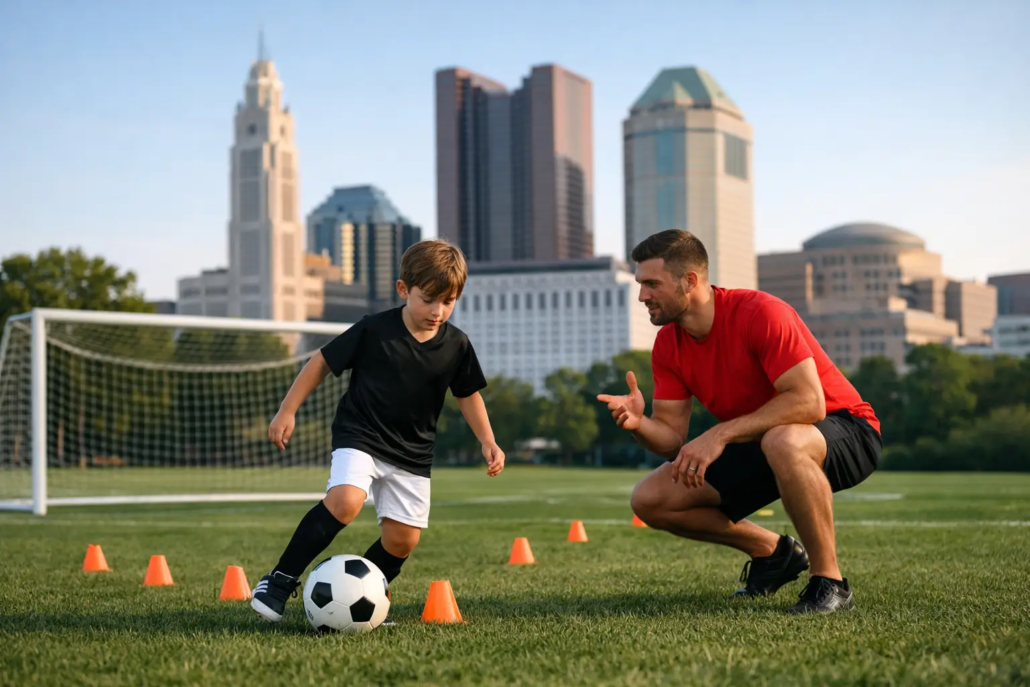
The gap usually shows up in the same places. A player is active, committed, and training with a team, but the first touch still breaks under pressure. Decision-making slows down in tight spaces. Speed improves, yet game speed does not. That is where private soccer lessons Columbus Ohio families look for become valuable – not as extra activity, but as targeted development with a purpose.
Private training works best when it solves a specific problem. For one player, that might be receiving on the half-turn and playing forward faster. For another, it is striking cleanly with both feet, defending 1v1s, or building confidence after falling behind peers physically or technically. The point is not simply more reps. The point is better reps, coached at a level where details are corrected before bad habits become permanent.
Why private soccer lessons in Columbus Ohio matter
Team training has limits, even in strong environments. Coaches have to manage the whole group, the rhythm of the session, and the tactical goals for that day. That means individual technical correction is often brief, and some players can hide inside the flow of practice without truly fixing what is holding them back.
Private soccer lessons in Columbus Ohio give players something different – concentrated attention, immediate feedback, and a training plan built around individual needs. For younger players, that often means coordination, balance, body control, and comfort on the ball. For middle school and high school players, it can mean sharper execution under pressure, better movement patterns, faster reactions, and the kind of technical reliability that earns trust from coaches.
The best private sessions are not random workouts. They are structured to develop repeatable actions at speed. A licensed coach should be able to identify whether a player’s issue is technical, physical, cognitive, or a mix of all three. If the diagnosis is wrong, the session may feel intense but still miss the real problem.
What strong private coaching should actually include
Private training should start with observation, not assumptions. A serious coach watches how a player moves, receives, scans, strikes, changes direction, and responds to instruction. That first read shapes everything that follows.
From there, a quality session usually builds in layers. Technique comes first, because clean mechanics matter. Then the coach adds movement, pressure, timing, and decision-making so the skill transfers into game conditions. If a player can hit a perfect pass standing still with no pressure, that is a baseline, not a result.
The strongest private environments also use measurable tools when they make sense. Technology can help expose reaction speed, footwork efficiency, passing consistency, and cognitive processing. Data is not the whole answer, but it gives parents and players something many local training options do not: proof of progress. When a session combines high-level coaching with measurable feedback, development becomes easier to track and easier to trust.
A professional indoor facility matters too. Weather should not control consistency, especially in a market where winter can cut into technical work for months. Reliable year-round training allows players to stay on schedule instead of losing momentum every time conditions change.
Who benefits most from private soccer lessons Columbus Ohio offers
Not every player needs private training at the same stage, and that matters. For beginners, private sessions can accelerate confidence and prevent frustration. A young player who learns how to strike the ball correctly, stay balanced while dribbling, and understand basic body shape will enjoy the game more and usually progress faster in group settings.
For developing travel players, private coaching often becomes the bridge between participation and impact. These players may already work hard, but they need sharper tools. They need cleaner touches, stronger first-step reactions, and more composure in moments that decide games.
For advanced players, private sessions should be precise and demanding. At that level, broad instruction is not enough. The details matter – receiving across the body, disguising the next action, adjusting stride length before striking, pressing with better angles, or improving repeat sprint mechanics. Older players pursuing varsity roles, elite pathways, or college opportunities benefit most when training is honest, individualized, and tied to clear standards.
Parents should also remember that private lessons are not only for the top player on the roster. Sometimes the player who benefits most is the one who is motivated but stuck. Individual coaching can rebuild confidence because improvement becomes visible faster when the training target is narrow and the feedback is immediate.
How to choose the right private soccer coach
The first thing to examine is coaching quality. Credentials are not everything, but they matter. A coach with high-level licensing and a real development background usually sees the game differently from someone who only runs drills. They can spot technical flaws earlier, explain corrections better, and build progression instead of repetition for repetition’s sake.
Next, look at the training environment. A serious private session should feel organized and purposeful. The facility should support performance, not just provide space. That means enough room to work at speed, quality equipment, and ideally tools that help measure reaction, passing, movement, and athletic output.
Ask how progress is tracked. If a program cannot explain what improvement will look like, it is hard to know whether the investment is working. Good answers sound specific. Better first-touch quality under pressure. Faster release on the pass. More efficient footwork. Increased confidence in 1v1 situations. Better scanning habits before receiving. These are coachable, observable outcomes.
It is also worth asking how private work fits with a player’s current schedule. The right answer is not always more. Some players need weekly 1-on-1 training. Others improve more through a blend of academy sessions, position-specific work, speed training, and occasional private correction. It depends on age, goals, budget, and how much team training the player already has.
Private lessons versus team training
This is not an either-or decision. Team training teaches collective concepts, positioning, chemistry, and tactical application. Private training isolates weaknesses and accelerates individual growth. The best development model uses both.
A player may learn the pressing system with the team, but private coaching can improve the first three steps that make the press effective. A team session may rehearse build-out patterns, while a private lesson sharpens the body shape and first touch needed to execute those patterns under pressure. One setting teaches the game plan. The other builds the tools to carry it out.
That is why serious families tend to think in terms of a development ecosystem, not isolated sessions. Weekly group training creates rhythm. Private coaching corrects individual details. Speed and cognitive work improve athletic transfer. Camps and clinics add repetition. When those pieces connect, progress usually becomes more consistent.
What parents should expect from the investment
Private soccer training should feel intentional from the start. Parents should expect a clear explanation of what the player needs, what the session focus will be, and how improvement will be measured over time. They should not have to guess whether the training is productive.
They should also expect honesty. Not every issue gets fixed in two sessions. Some technical habits take months to change, especially in older players. Real development can be fast, but it is rarely instant. The right coach sets ambitious standards while staying realistic about the work required.
One strong sign of value is transfer. If a player’s confidence, speed of play, ball security, or execution improves in matches, the training is working. If sessions look impressive but games look the same, the plan may need adjustment.
In a serious environment like Soccer Field Academy, private training stands out when it is integrated into a bigger developmental pathway. That matters because players do not just need instruction. They need progression.
When private training makes the biggest difference
There are a few moments when individual coaching can change a player’s trajectory. One is before tryouts, when technical sharpness and confidence need to rise quickly. Another is during growth phases, when coordination temporarily drops and players need help regaining clean movement patterns. A third is after a plateau, when effort is still there but improvement has stalled.
Private sessions are also valuable in the offseason, when players have room to rebuild mechanics without the pressure of weekly matches. That is often when the best technical changes happen, because there is time to slow down, correct, and then rebuild at speed.
The players who gain the most are usually the ones willing to be coached hard. Elite development is not about being told what you already do well. It is about identifying the gap, attacking it with discipline, and repeating the right actions until performance changes.
If you are evaluating private soccer lessons Columbus Ohio options for your child, look past the sales language and focus on the standard. The right training should be demanding, measurable, and built around long-term player development, not quick entertainment. When the coaching is high level and the process is clear, private work becomes more than extra practice. It becomes a real advantage.