
Soccer Clinics for Finishing That Build Scorers
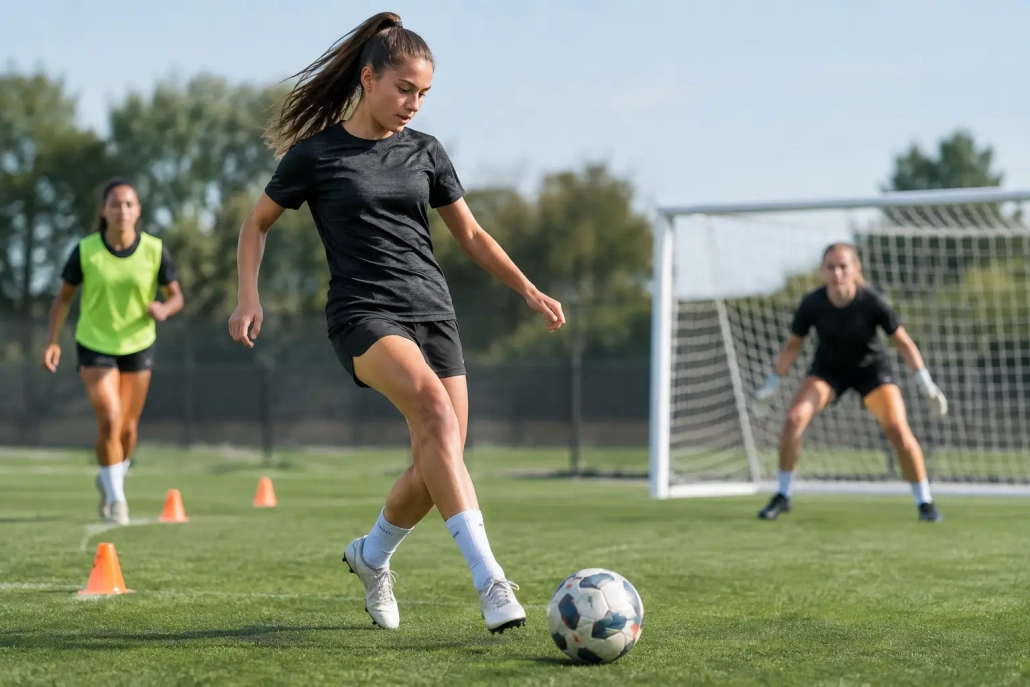
A missed chance can stay with a young player for weeks. The ball arrives, the goal looks open, and suddenly the first touch is heavy or the shot is rushed. Soccer clinics for finishing are built to change that moment by making clean, composed decisions feel familiar – not lucky.
For players who want to score more often, repetition matters. But repetition without coaching can reinforce the wrong habits. A serious finishing clinic gives players a structured environment to improve technique, movement, timing, and confidence under pressure. It helps parents see what goal scoring development should actually look like: not a line of players taking unopposed shots, but a progression that prepares athletes for real game situations.
What Soccer Clinics for Finishing Should Develop
Finishing is more than striking a ball hard. A player who scores consistently recognizes the chance early, positions their body before the ball arrives, selects the right surface, and executes while a defender or goalkeeper is closing space. Those actions happen quickly, which is why finishing must be trained with purpose.
A strong clinic starts with technical details. Players learn how to approach the ball at the right angle, plant the support foot, keep their head stable through contact, and strike with the appropriate part of the foot. Inside-of-the-foot finishes, laces-driven shots, cutbacks, volleys, rebounds, and one-touch finishes all require different body positions. Young players do not need every finish at once. They need the right skill at the right stage, coached until it becomes dependable.
The next layer is decision-making. In a match, the best finish may be a calm pass into the corner rather than a powerful shot. Sometimes the player needs to take one touch across the defender. Sometimes a first-time finish is the only option. Quality coaching teaches athletes to read the goalkeeper, recognize pressure, and understand when the window to score is closing.
Confidence is the final piece. Players who fear missing often hesitate, take an extra touch, or avoid shooting entirely. Productive finishing training creates a standard where players are expected to be brave, learn from misses, and demand more from the next repetition. The goal is not perfection. The goal is a player who wants the ball when the game is on the line.
Why Unopposed Shooting Is Not Enough
Unopposed shooting has a place, especially when players are learning a new technique. It allows a coach to slow the movement down and correct foot placement, posture, and contact. The problem begins when training stops there.
Game goals are rarely scored with unlimited time and a stationary ball. Players have to finish after a sprint, receive at an awkward angle, react to a rebound, or shoot with a defender tracking back. A clinic should gradually add those demands rather than expecting players to transfer a simple drill directly into competition.
A high-level session moves from clean technical work into realistic pressure. Players may receive passes from different angles, finish after changing direction, race a defender to a through ball, or make a decision in a small-sided game. The pace rises, but the coaching remains specific. A player should know not only that they missed, but whether the issue was their first touch, body shape, shot selection, or lack of awareness before the ball arrived.
This is where repetition becomes measurable development. Ten random shots are not the same as ten intentional repetitions with a clear coaching point.
The Finishing Skills That Matter by Age
Finishing development should match the player, not force a 9-year-old into an adult training model. Younger athletes need coordination, balance, and the freedom to strike the ball with confidence. They benefit from games that encourage quick reactions, simple target selection, and a positive relationship with shooting.
As players move into the competitive years, training can become more detailed. They should learn to finish with both feet, receive on the half-turn, attack crosses, and score after combination play. This is also the age when weak-foot work becomes non-negotiable. A player who can only finish on one side gives defenders and goalkeepers an easy answer.
Older competitive players need match-specific challenges. They should be pressed, forced to make decisions in tight spaces, and required to finish while fatigued. They also need to understand their role. A central forward, wide attacker, attacking midfielder, and outside back arriving late in the box do not see the same chances. Position-specific reps help a player build the habits that translate to their actual game.
The trade-off is clear: advanced drills are valuable only when the foundation is stable. If a player cannot consistently strike through a moving ball with balance, adding complicated patterns will not solve the problem. The best clinics challenge players while meeting them where they are.
What a High-Performance Finishing Session Looks Like
A productive session has a clear purpose from the first ball to the final competition. It may begin with ball mastery and movement preparation, then progress into technical striking work. From there, players can train finishing after a pass, dribble, combination, cross, or transition moment.
The strongest sessions include a competitive element because goals have consequences in games. Timed rounds, score-based challenges, and small-sided finishing games raise intensity without losing the technical objective. Players learn to reset after a miss, communicate with teammates, and execute when their heart rate is high.
Coaching ratios matter here. A player needs enough repetitions to improve, but they also need individual feedback. Large groups can create long lines and low-quality touches. A focused clinic keeps players active and gives coaches time to address the details that separate a decent shot from a finish that beats a goalkeeper.
At Soccer Field Academy, players can train in a professional indoor environment where weather does not interrupt development. Technology-supported work through tools such as SoccerBot360 and Speed Court can also sharpen reaction speed, scanning habits, footwork, and the cognitive demands behind finishing. A clean strike is valuable. Seeing the opportunity one second sooner can be the difference that creates it.
How Parents Can Choose the Right Clinic
Parents should look beyond the word “finishing” in the program title. Ask what the player will actually do during the session. Is the clinic structured around technical instruction and game-relevant pressure? Will players receive feedback from qualified coaches? Is the group organized by age and ability so the challenge is appropriate?
The environment matters as well. Players improve faster when they feel safe enough to make mistakes and challenged enough to compete. A good coach does not simply praise every shot. They set a high standard, explain what needs to change, and give the player another opportunity to apply it.
Consider the player’s current needs. A beginner may need confidence striking a ball cleanly before worrying about complex finishing patterns. A club player who creates chances but misses under pressure may need more realistic, high-tempo reps. An advanced attacker may need position-specific work and film-informed feedback. The right clinic is not always the hardest one. It is the one that targets the next meaningful gap in the player’s development.
Turning Training Into More Goals on Game Day
Finishing clinics work best when players carry the habits into their weekly routine. A player can practice scanning before receiving, using both feet, and striking with purpose in team training or at home. Even a short session against a wall or goal can reinforce the details coached in clinic – if the player stays intentional rather than simply blasting balls.
Parents can help by changing the postgame conversation. Instead of asking only, “Did you score?” ask whether the player recognized chances, got into good positions, or made a confident decision. Goals matter, but the behaviors that create goals matter first. A forward who consistently arrives in dangerous spaces will eventually be rewarded.
The player who becomes a reliable scorer is usually not the one who has never missed. It is the player who has trained through hundreds of imperfect reps, accepted direct coaching, and learned to attack the next chance with belief.