Soccer Foundations for Ages 2 to 7
A 3-year-old chasing a ball is not the same as a 7-year-old learning to scan space, and that difference matters. Strong soccer foundations for ages 2 to 7 are not built by rushing kids into tactics, standings, or adult expectations. They are built by training the body, the brain, and the ball relationship in the right sequence.
That sequence is where many early programs miss. Some make sessions feel like unstructured recess. Others push children into drills that are too advanced, too rigid, or too repetitive for their stage of development. If the goal is long-term player growth, early training has to be deliberate. The best foundation work develops coordination, listening, confidence, rhythm, balance, and first-touch comfort before it asks for game sophistication.
What soccer foundations for ages 2 to 7 actually mean
For this age group, foundation work is not about producing a polished player early. It is about building the capacities that allow real development later. A young athlete who can stop and start under control, shift weight efficiently, react to cues, and move comfortably with the ball has a far stronger platform than a child who simply learned to chase play.
The word foundation gets overused, so it helps to define it clearly. In soccer, early foundations include locomotor movement, body control, basic coordination, spatial awareness, listening discipline, emotional confidence, and repeated quality touches on the ball. Those elements work together. A player who struggles with balance will often struggle with striking mechanics. A player who does not yet process verbal instruction well may appear unfocused when the real issue is developmental readiness.
This is also why early wins can be misleading. A bigger or faster 6-year-old may dominate a recreational game without actually having better long-term habits. Meanwhile, another child may be quieter, less explosive, and still be laying down superior technical and cognitive foundations. Parents who understand that difference tend to make better training choices.
Ages 2 to 4 – movement first, soccer second
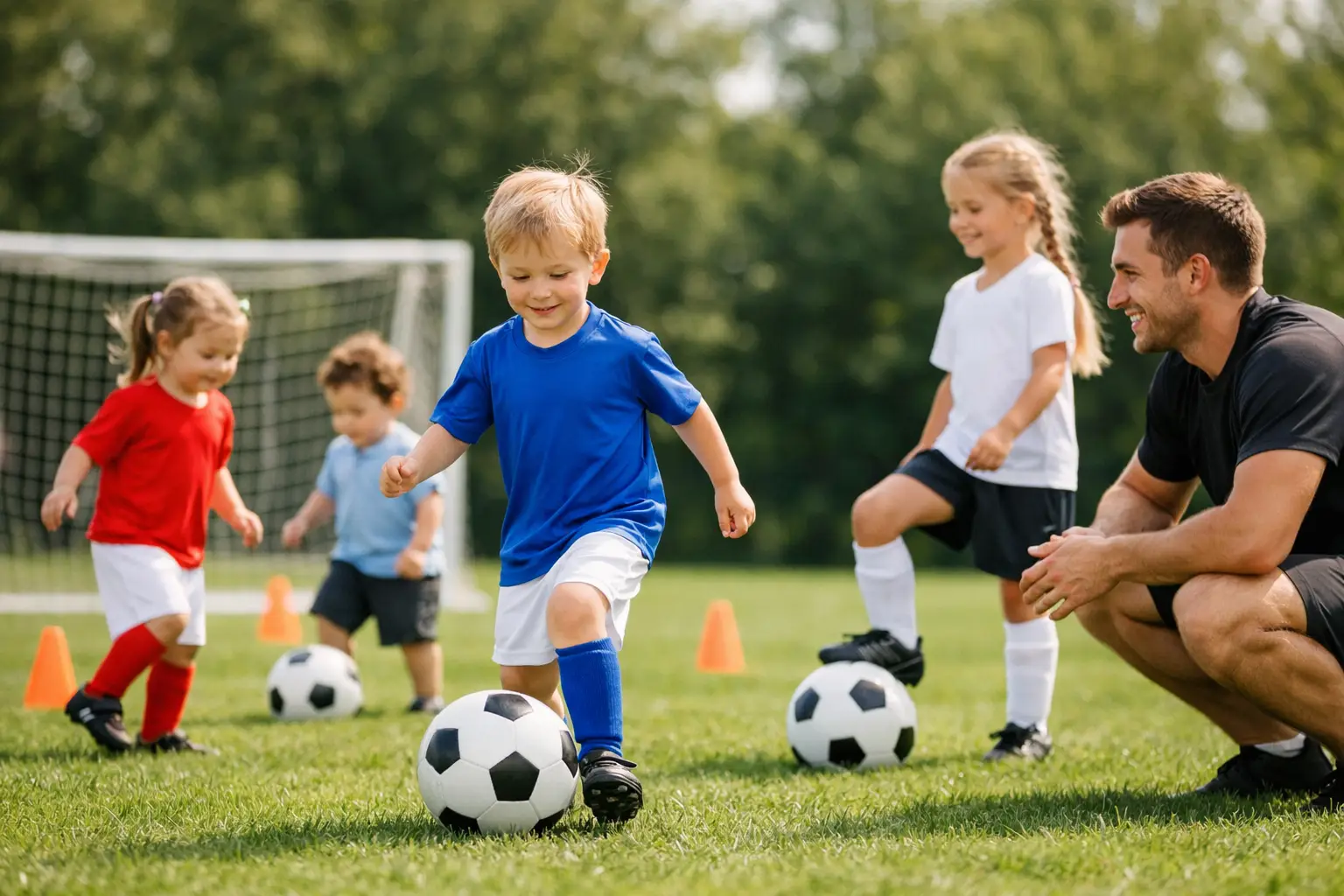
At the youngest end, the mission is simple. Get the child comfortable moving, listening, and interacting with the ball in a positive environment. This stage should feel energetic and engaging, but it still needs structure. The goal is not chaos. The goal is guided exploration.
For ages 2 to 4, the best sessions train basic athletic actions: running, stopping, turning, hopping, balancing, and changing direction. Add a ball, and the child begins connecting those movements to soccer. That might mean toe taps, gentle dribbling through gates, rolling the ball with the sole, or chasing after a coach’s cue. These are small actions, but they matter because they start building coordination and body awareness under light pressure.
Attention span is the major variable here. A great activity can fail if it lasts too long. A simple activity can work extremely well if the coach keeps it moving and gives clear, consistent prompts. At this age, coaching quality is less about tactical instruction and more about pacing, clarity, and control of the environment.
There is also an emotional piece. Kids this young need success early and often. If every activity is too difficult, they disconnect. If every activity is too easy, they stay busy but do not improve. The right level creates visible confidence, and confidence is not a soft benefit. It directly affects willingness to try, repeat, and stay engaged.
Ages 5 to 7 – technique starts to take shape
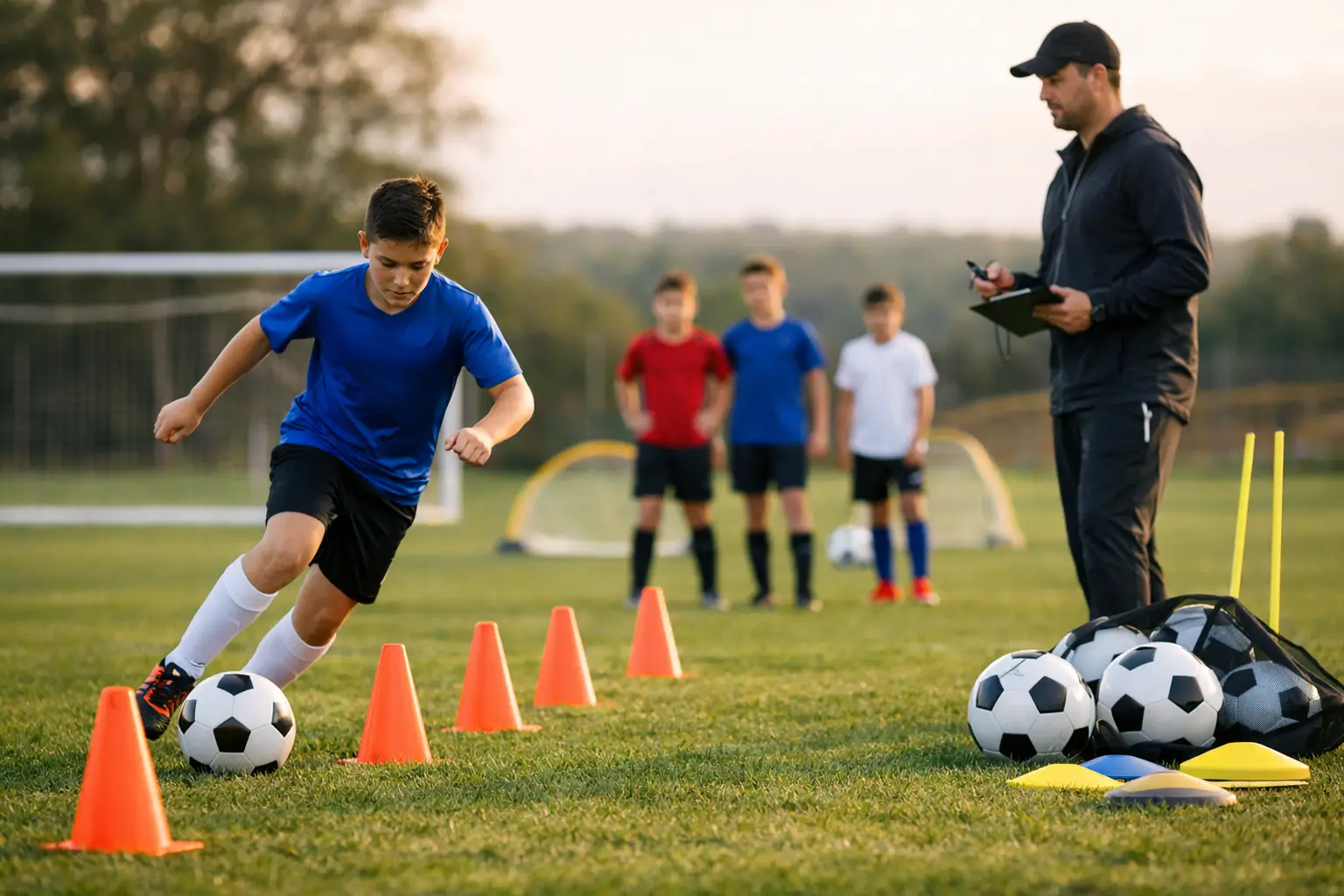
Between 5 and 7, players can handle much more. They are still young, but this is where technical habits begin to stick. It becomes possible to coach details with more intention, especially dribbling mechanics, striking basics, first touch, reaction speed, and awareness of simple space.
This does not mean early specialization into rigid positional soccer. It means introducing technical precision without losing the freedom and joy that make kids want the ball. Players in this age range should begin learning how to use different surfaces of the foot, how to keep the ball close when needed, and when to take bigger touches into open space. They should also begin recognizing cues from teammates, opponents, and coaches.
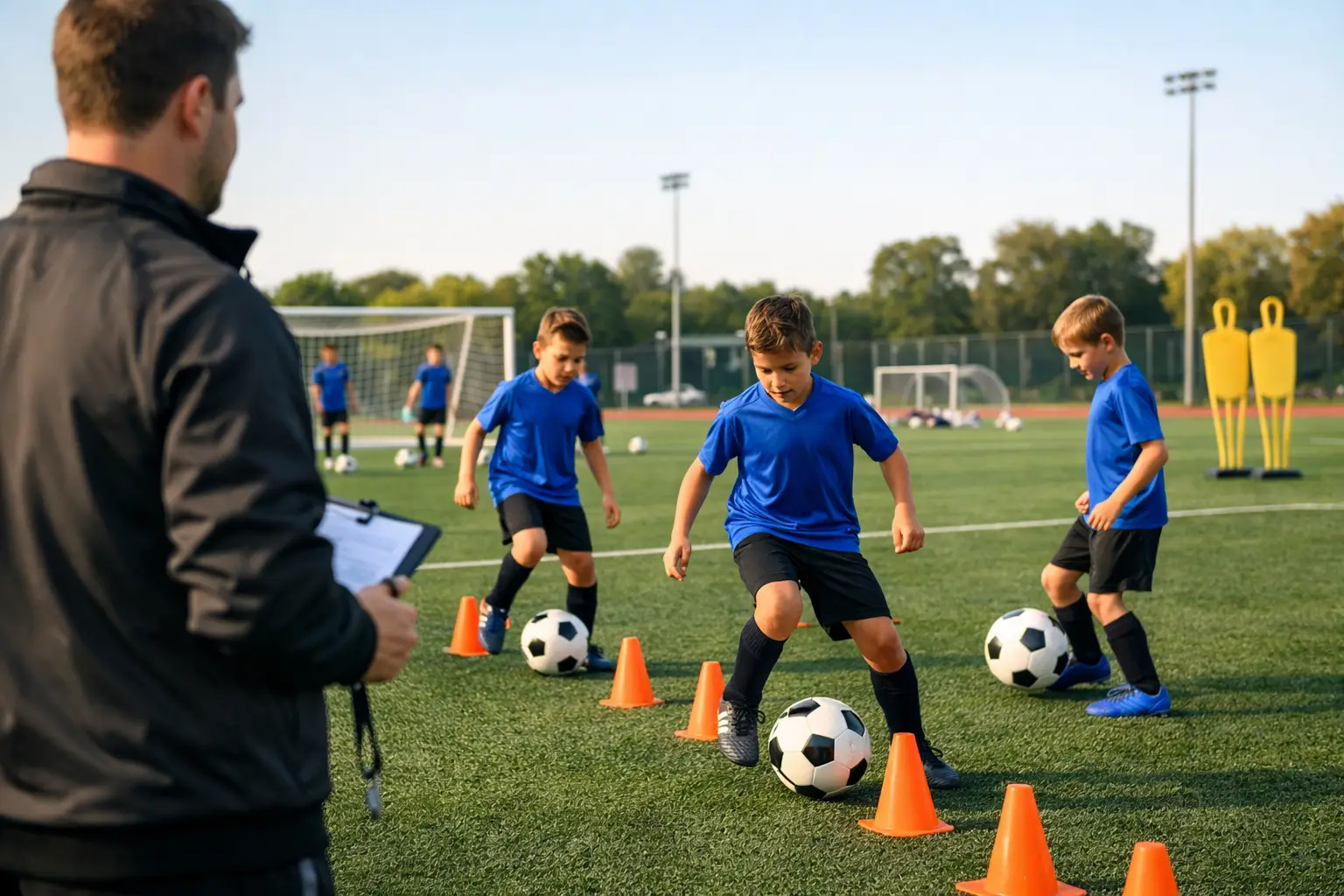
The strongest programs at this stage blend repetition with variation. Repetition matters because skill is built through volume. Variation matters because young players need to solve new movement problems, not just memorize one pattern. A child who can only dribble through the same cones in the same order is not building complete game intelligence.
This is also the age when discipline starts to separate good environments from weak ones. Discipline does not mean shouting or turning training into boot camp. It means players learn how to listen, reset quickly, respect instructions, and work with purpose. That standard supports every technical gain that follows.
The skills that matter most in early development
When parents think about soccer progress, they often look first for goals or game results. For ages 2 to 7, those are unreliable markers. Better indicators are simpler and more developmental.
Ball mastery sits near the top of the list. A young player should steadily become more comfortable touching, moving, stopping, and redirecting the ball. The touch does not need to be perfect. It needs to become more natural over time.
Coordination is just as important. Footwork, rhythm, balance, and directional changes support every technical action in soccer. A child with improving coordination usually becomes easier to coach because the body can actually execute the instruction.
Listening and response speed matter more than many families realize. Early players must learn to process cues, react, and make small decisions under motion. That is the beginning of soccer IQ. Cognitive development in sport starts here, not later.
Confidence is another major piece. Not empty praise, but real confidence built through successful repetition and challenge. Players who trust themselves stay engaged longer, compete harder, and recover faster from mistakes.
What parents should look for in a program
A serious development environment for young players should not look random. Even for beginners, there should be progression. The coach should know what the child is training now, what comes next, and what success looks like at that age.
That usually shows up in a few ways. Sessions are organized. Activities have purpose. Coaches give simple corrections instead of constant noise. The environment is upbeat, but standards are clear. Players get many touches, not long lines. And the program respects age differences instead of treating a 2-year-old and a 7-year-old as if they learn the same way.
Indoor consistency can also make a real difference, especially in places where weather disrupts rhythm. Young players improve through regular exposure. Missed sessions and long breaks slow confidence and retention, which is one reason structured year-round training tends to outperform seasonal stop-and-start participation.
For families who want more than casual recreation, measurable development tools can add value when they are used correctly. Technology should not replace coaching at this age, but it can sharpen reaction training, coordination work, and repeatable technical habits. In the right setting, that blend of coaching and measurement creates a clearer picture of progress.
Why early training should never feel rushed
There is always pressure to move kids forward fast. Parents see older players training intensely and want a head start. The truth is that rushing often creates gaps. A child can learn to play games before learning to control the body and ball well, but those missing pieces usually show up later.
The better approach is ambitious but patient. Demand focus. Demand effort. Demand quality repetition. But match those demands to the athlete’s developmental stage. Serious work produces serious results only when the training load fits the learner.
That is where a structured academy model can help. A true development pathway gives families a clear progression from early movement and confidence building into stronger technical training, then eventually into advanced performance work. At Soccer Field Academy, that long-term view is built into the training ecosystem, which matters for parents who want more than a short-term activity.
The long-term payoff of strong soccer foundations for ages 2 to 7
The biggest return on early training is not that a child looks advanced at six. It is that by eight, ten, and twelve, the player has better mechanics, better learning habits, and better confidence under pressure. That kind of progress compounds.
A strong early foundation gives players more than soccer skill. It teaches them how to enter a session with purpose, respond to coaching, and improve through repetition. Those habits carry into every later stage of development, whether the child stays recreational, moves into academy training, or eventually pursues elite competition.
If you are choosing a program for a young player, look past the short-term excitement and ask a harder question: is this building real ability, or just keeping my child busy? The right foundation does not need to look flashy. It needs to be structured enough to create progress and smart enough to respect the age in front of it.
That is how development starts – not with pressure to be ahead, but with the discipline to build the base correctly.